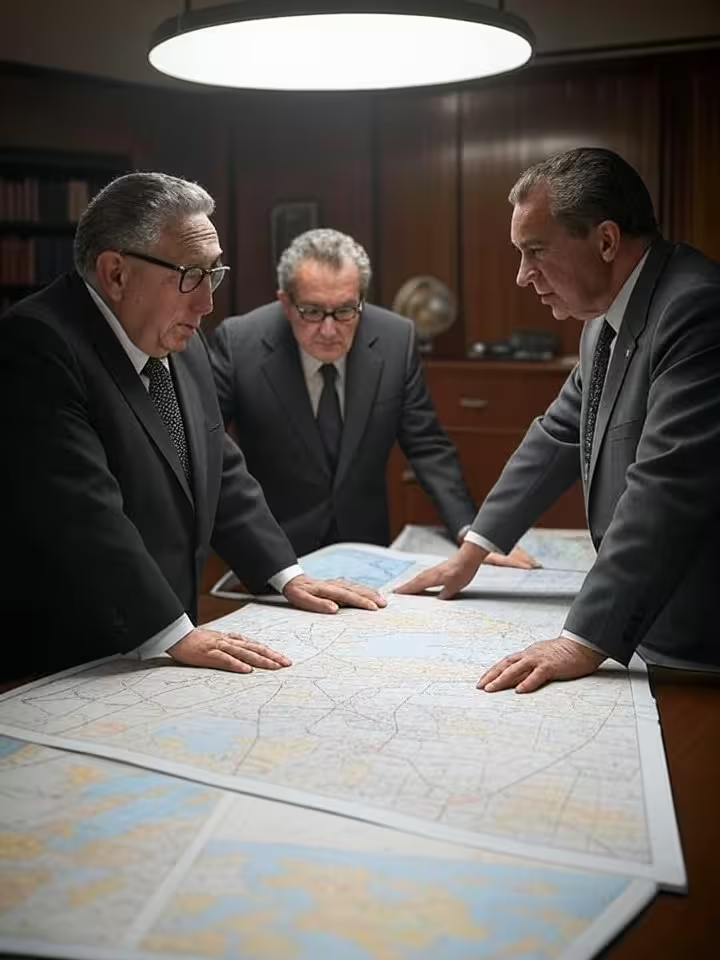
De refugiado nazi a premio Nobel, Henry Kissinger dio forma a seis décadas de política mundial mientras servía como uno de los miembros más antiguos del comité directivo de Bilderberg. Su muerte en 2023 marcó el final de una era en la diplomacia transatlántica.
De refugiado a estadista: Huyó de la Alemania nazi a los 15 años y se convirtió en Secretario de Estado de EE.UU. a los 50
Bilderberg insider: Asistió a la primera reunión en 1957, formó parte del comité directivo durante décadas
Arquitecto diplomático: Apertura orquestada a China, distensión con la URSS, diplomacia itinerante en Oriente Próximo
Legado controvertido: El Premio Nobel de la Paz también es criticado por el bombardeo de Camboya y el apoyo al golpe de Estado en Chile
Influencia de más de 60 años: Asistió a las reuniones de Bilderberg desde la era Eisenhower hasta la administración Trump
Poder del sector privado: Fundó Kissinger Associates, asesoró a empresas y gobiernos hasta su muerte a los 100 años.
Impacto duradero: El último gigante de la Guerra Fría cuya filosofía realista sigue marcando el pensamiento geopolítico
Introducción: El diplomático que unió la función pública y la influencia privada
Cuando Henry Kissinger murió el 29 de noviembre de 2023, a la edad de 100 años, el mundo no sólo perdió a un ex Secretario de Estado de Estados Unidos, sino a una de las figuras más perdurables de las relaciones internacionales de posguerra. Nacido como Heinz Alfred Kissinger en la Alemania nazi, sobrevivió a la persecución, luchó en la Segunda Guerra Mundial y se convirtió en el arquitecto de la política exterior estadounidense durante la tumultuosa época de la Guerra Fría.
Pero la influencia de Kissinger se extendió mucho más allá de sus funciones oficiales en el gobierno. Su participación en la Comité Directivo del Grupo Bilderberg durante más de seis décadas le situó en el nexo del poder transatlántico, donde líderes políticos, directores ejecutivos e intelectuales se reúnen anualmente desde 1954 para debatir los retos mundiales lejos del escrutinio público.
¿Por qué es importante hoy en día? Entender el doble papel de Kissinger como diplomático público y como miembro de Bilderberg revela cómo las redes informales de la élite configuran las conversaciones políticas que acaban influyendo en las acciones oficiales del gobierno. Aunque los teóricos de la conspiración han exagerado a menudo el poder de Bilderberg, la realidad es más matizada: sirve de foro donde los responsables de la toma de decisiones prueban ideas y crean consenso antes de que las políticas se hagan públicas.
En esta completa biografía, descubrirá:
Cómo un refugiado adolescente se convirtió en el diplomático más poderoso de Estados Unidos
Los más de 60 años de participación de Kissinger en Bilderberg y su papel en el comité directivo
Sus triunfos diplomáticos de China a Oriente Medio y sus conexiones con Bilderberg
Las polémicas que hacen de él una de las figuras más polarizantes de la historia
Su influencia duradera en la geopolítica y las relaciones transatlánticas del siglo XXI
Este análisis se basa exclusivamente en fuentes verificadas, entre ellas registros oficiales de Bilderberg, Los documentos de la Comisión Europea, los archivos del Departamento de Estado y las crónicas periodísticas fidedignas evitan la especulación que suele rodear los debates sobre las reuniones de élite.
De Fürth a Harvard: La formación de un estadista
Escapar de la Alemania nazi
Henry Kissinger nació el 27 de mayo de 1923 en Fürth (Baviera), hijo de Louis Kissinger, maestro de escuela, y Paula Stern Kissinger. Crecer como judío en Alemania mientras el partido nazi consolidaba su poder significaba vivir bajo restricciones cada vez más opresivas. En 1938, con la Noche de los Cristales como señal de la escalada de violencia, la familia tomó la desgarradora decisión de huir.
A los 15 años, Heinz Alfred Kissinger llegó a Nueva York con su familia y se instaló en Washington Heights, un barrio lleno de refugiados judíos alemanes. Asistió al instituto George Washington por la noche mientras trabajaba en una fábrica de brochas de afeitar durante el día. La experiencia de perder su patria a manos del totalitarismo marcaría profundamente su posterior filosofía de las relaciones internacionales, que hacía hincapié en la estabilidad y el orden por encima del cambio idealista.
Servicio militar y formación intelectual
En 1943, Kissinger se nacionalizó estadounidense y se alistó en el ejército. Asignado a la 84 División de Infantería, sirvió en la Batalla de las Ardenas y más tarde en inteligencia militar durante la ocupación alemana. Su trabajo en los esfuerzos de desnazificación -interrogando a oficiales nazis y ayudando a restablecer la administración civil- le proporcionó experiencia de primera mano en la reconstrucción de posguerra.
Tras la desmovilización, Kissinger asistió a la Universidad de Harvard con el GI Bill y obtuvo su licenciatura summa cum laude en 1950. Su tesis de licenciatura, “El significado de la Historia”, constaba de 383 páginas, tan largas que Harvard estableció un límite de páginas para futuras tesis. Terminó su doctorado en 1954 con una tesis que analizaba el Congreso de Viena y el sistema de equilibrio de poderes en Europa en el siglo XIX.
Carrera académica y primer contacto con Bilderberg
Kissinger se incorporó al cuerpo docente de Harvard en 1954, dirigiendo el Programa de Estudios de Defensa al tiempo que impartía cursos de gobierno. Su libro “Nuclear Weapons and Foreign Policy” (Armas nucleares y política exterior), publicado en 1957, cuestionaba las estrategias nucleares predominantes de "todo o nada" y defendía doctrinas de guerra nuclear limitada, una postura controvertida que le atrajo la atención nacional.
Ese mismo año, 1957, Kissinger asistió a su primera reunión Bilderberg en St. Simons Island, Georgia. La conferencia se centró en la integración económica europea y el futuro de la OTAN, temas que le interesarían de por vida. A sus 34 años era uno de los participantes más jóvenes, pero sus conocimientos académicos sobre estrategia nuclear y diplomacia europea le convirtieron en una valiosa voz en los debates transatlánticos.
La era Kissinger: La remodelación de la política exterior estadounidense
Consejero de Seguridad Nacional (1969-1975)
El Presidente Richard Nixon nombró a Kissinger Consejero de Seguridad Nacional en enero de 1969, valorando su enfoque realista y su perspectiva europea. Juntos transformaron la diplomacia estadounidense mediante varias iniciativas históricas:
Apertura a China (1971-1972): El viaje secreto de Kissinger a Pekín en julio de 1971 allanó el camino para la histórica visita de Nixon en 1972, que puso fin a dos décadas de hostilidad entre Estados Unidos y China. Este reajuste estratégico pretendía explotar las tensiones chino-soviéticas y crear una influencia diplomática con Moscú.
La distensión con la Unión Soviética: La política de relajación de las tensiones de la Guerra Fría produjo el Tratado de Limitación de Armas Estratégicas (SALT I) en 1972 e incrementó las relaciones comerciales. Las negociaciones de Kissinger con el embajador soviético, Anatoly Dobrynin, se llevaron a cabo sin recurrir a los canales tradicionales del Departamento de Estado.
Gestión de la guerra de Vietnam: Kissinger negoció los Acuerdos de Paz de París firmados en enero de 1973, que técnicamente ponían fin a la participación de Estados Unidos en los combates. Kissinger y el negociador norvietnamita Le Duc Tho compartieron el Premio Nobel de la Paz de 1973, aunque Le Duc Tho lo rechazó por considerar que no se había alcanzado la paz.
Secretario de Estado (1973-1977)
En septiembre de 1973, Kissinger se convirtió en Secretario de Estado y mantuvo su cargo de Consejero de Seguridad Nacional hasta 1975, una concentración de poder diplomático sin precedentes. Su diplomacia itinerante tras la guerra del Yom Kippur de 1973 dio lugar a acuerdos de retirada entre Israel y Egipto, y luego entre Israel y Siria, que sentaron las bases para la firma de tratados de paz.
Durante este periodo, Kissinger se mantuvo activo en los círculos de Bilderberg. La reunión de 1973 en Saltsjöbaden, Suecia, tuvo lugar meses antes de la crisis del petróleo, y los debates sobre seguridad energética resultaron premonitorios. Como Secretario de Estado de EE.UU. y miembro de la dirección de Bilderberg, Kissinger trabajó junto a figuras como David Rockefeller dar forma a las respuestas transatlánticas a los retos económicos.
Operaciones controvertidas
El enfoque de realpolitik de Kissinger generó controversias duraderas:
Bombardeo de Camboya (1969-1973): Se calcula que la campaña secreta de bombardeos con B-52 mató a entre 150.000 y 500.000 camboyanos y desestabilizó el país, contribuyendo al ascenso de los Jemeres Rojos y al posterior genocidio.
Golpe de Estado en Chile (1973): Documentos desclasificados muestran el apoyo estadounidense a las fuerzas militares que derrocaron al presidente democráticamente elegido Salvador Allende, instalando la dictadura de Pinochet. La famosa instrucción de Kissinger de “hacer chillar a la economía” refleja su voluntad de desestabilizar a los gobiernos opuestos a los intereses estadounidenses.
Invasión de Timor Oriental (1975): Kissinger y el Presidente Ford dieron luz verde al indonesio Suharto para la invasión que mató a unos 100.000 timorenses orientales.
Estas acciones, justificadas por Kissinger como medidas necesarias de la Guerra Fría, han llevado a las organizaciones de derechos humanos a calificarlo de criminal de guerra, aunque nunca se enfrentó a cargos formales.
Influencia privada: Kissinger Associates y el papel continuado de Bilderberg
Consultoría Empire (1982-2023)
Tras dejar el gobierno en 1977, Kissinger fundó Kissinger Associates en 1982, una consultora especializada en asesorar a empresas multinacionales y gobiernos sobre riesgos geopolíticos. Entre sus clientes se encontraban American Express, ITT y varias empresas energéticas, aunque la empresa mantenía una estricta confidencialidad.
Este trabajo en el sector privado creaba posibles conflictos de intereses. Cuando formaba parte de comisiones de política exterior o asesoraba a presidentes, las recomendaciones de Kissinger a veces coincidían con los intereses de sus clientes, una pauta que los críticos calificaron de preocupante, pero que sus defensores describieron como la aportación del realismo empresarial al pensamiento gubernamental.
Liderazgo del Comité Directivo de Bilderberg
A lo largo de las décadas de 1980, 1990 y 2000, Kissinger siguió siendo un pilar de Bilderberg, asistiendo regularmente a las reuniones y formando parte del comité directivo. Su presencia aportó memoria institucional y credibilidad transatlántica.
Entre las reuniones más destacadas figuran:
1980 Aquisgrán, Alemania: Debates sobre la unidad de la OTAN en medio de la expansión soviética en Afganistán
1992 Evian, Francia: El orden de la posguerra fría y los retos de la integración europea
2008 Chantilly, Virginia: Proliferación nuclear y respuestas a la crisis financiera
2016 Dresde, Alemania: Amenazas a la ciberseguridad y política populista: los temas que presagiaron la elección de Trump
El papel rector de Kissinger significaba que ayudaba a seleccionar los temas, invitar a los participantes y enmarcar los debates. A diferencia de teorías conspirativas populares que sugieren que Bilderberg dirige los acontecimientos mundiales, Pero la realidad es más sutil: el grupo ofrece un espacio extraoficial para que los líderes exploren ideas antes de comprometerse públicamente.
Autor e intelectual público
Kissinger publicó prolíficamente, con libros como:
Años de la Casa Blanca (1979) y Años de agitación (1982)-memorias que defienden su política
Diplomacia (1994), una amplia historia de las relaciones internacionales desde el siglo XVII.
Sobre China (2011)-análisis de la cultura estratégica china y las relaciones entre China y EE.UU.
Orden mundial (2014), su última gran obra sobre los retos de la gobernanza mundial.
Estas publicaciones a menudo se hacían eco de temas de las discusiones de Bilderberg, aunque Kissinger evitaba escrupulosamente revelar conversaciones específicas de la conferencia, respetando la regla de Chatham House que permite utilizar información pero no atribuirla a los oradores.
Legado: El realista que dio forma a un siglo
Influencia continuada en el siglo XXI
Incluso a sus 90 años, Kissinger siguió siendo una voz activa en asuntos internacionales. Asesoró a múltiples administraciones presidenciales independientemente del partido, reuniéndose con el presidente Obama sobre la política de Oriente Medio y consultando a la administración Trump sobre las estrategias de Rusia y China.
Su comparecencia de mayo de 2022 en el Foro Económico Mundial en Davos generó titulares cuando sugirió que Ucrania podría tener que ceder territorio a Rusia para lograr la paz, una declaración que indignó a los funcionarios ucranianos pero que reflejaba su constante priorización de la estabilidad sobre la autodeterminación.
En 2023, meses antes de su muerte, Kissinger publicó artículos sobre las implicaciones de la inteligencia artificial para la diplomacia, lo que demuestra su compromiso con los nuevos retos incluso a los 100 años.
La evaluación polarizadora
El juicio histórico sobre Kissinger sigue estando profundamente dividido:
Destacan los admiradores:
Evitar la guerra nuclear mediante la distensión y el control de armamentos
Brillantez estratégica en la explotación de la división chino-soviética
Diplomacia en Oriente Medio que creó marcos duraderos durante décadas
Profundidad intelectual en la comprensión de la dinámica del poder
Los críticos destacan:
Cientos de miles de muertos por los bombardeos
Apoyo a dictaduras y golpes de Estado que socavan la democracia
Prioridad moral del poder sobre los derechos humanos
Secretismo y desprecio por la supervisión del Congreso
La ex Secretaria de Estado Hillary Clinton lo calificó de “amigo” y valioso consejero. El periodista Christopher Hitchens tituló su libro de 2001 El juicio de Henry Kissinger, abogando por el enjuiciamiento por crímenes de guerra. Ambas perspectivas son válidas y reflejan la auténtica complejidad de su historial.
La conexión Bilderberg en perspectiva
La participación de Kissinger en Bilderberg ilustra el funcionamiento de las redes de élite en la gobernanza moderna. No asistió a las reuniones para recibir órdenes de marcha o poner en marcha una conspiración global. En cambio, participó en conversaciones francas con líderes europeos y norteamericanos que ayudaron a crear consenso en temas que iban desde la política monetaria hasta la cooperación en materia de seguridad.
La influencia del grupo opera a través de la socialización de los líderes en marcos compartidos, no a través de la emisión de directivas. La presencia de Kissinger proporcionó la perspectiva estadounidense a los europeos y viceversa, facilitando la cooperación transatlántica que caracterizó la posguerra a pesar de las tensiones periódicas.
Tras su muerte, llegaron homenajes de todo el mundo. El Presidente Biden destacó su “feroz intelecto y profundo enfoque estratégico”. El ex canciller alemán Helmut Schmidt lo llamó “un gran estadounidense y un gran amigo de Alemania”. Los críticos mantuvieron su oposición: la activista Medea Benjamin declaró: “Fue un criminal de guerra que mató a millones”.”
Preguntas frecuentes
¿Cuánto tiempo estuvo Henry Kissinger involucrado con el Grupo Bilderberg?
Kissinger asistió a su primera reunión de Bilderberg en 1957 en St. Simons Island, Georgia, y se mantuvo activo durante más de 60 años, asistiendo por última vez en 2016 en Dresde, Alemania. Formó parte del comité directivo durante varias décadas, lo que le convierte en uno de los miembros que más tiempo lleva participando en la historia del grupo. Su participación abarcó desde el gobierno de Eisenhower hasta el de Obama, lo que supuso una continuidad institucional a través de épocas geopolíticas drásticamente diferentes.
¿Qué papel desempeñaba Kissinger en el comité directivo de Bilderberg?
Como miembro del comité directivo, Kissinger ayudó a seleccionar los temas de la conferencia, identificar a los participantes y enmarcar los temas de debate. El comité directivo suele estar formado por 20-30 miembros de distintas nacionalidades y sectores. El papel de Kissinger no consistía en controlar los resultados, sino en asegurarse de que las conversaciones abordaran las preocupaciones transatlánticas más acuciantes con la presencia de las voces expertas adecuadas. Su experiencia diplomática le hizo especialmente valioso para tender puentes entre las perspectivas estadounidense y europea sobre cuestiones de seguridad.
¿Influyó Bilderberg en las decisiones de política exterior de Kissinger?
No hay pruebas de que las reuniones de Bilderberg determinaran directamente la política estadounidense. Sin embargo, es probable que las conversaciones informales influyeran en el pensamiento de Kissinger al exponerle a las perspectivas europeas sobre cuestiones como la seguridad energética, la política monetaria y la cooperación en materia de defensa. Las conferencias le proporcionaron información sobre la dinámica política europea y las preocupaciones empresariales que influyeron en sus estrategias diplomáticas. La influencia fluyó en ambos sentidos: la participación de Kissinger también influyó en la forma en que los líderes europeos entendían las posiciones estadounidenses.
¿Por qué se considera controvertido a Kissinger a pesar de sus logros?
El enfoque de realpolitik de Kissinger priorizaba la estabilidad geopolítica y los intereses estadounidenses sobre los derechos humanos y los valores democráticos. Sus políticas contribuyeron a la muerte masiva de civiles en el Sudeste Asiático, apoyaron golpes de Estado contra gobiernos electos y respaldaron regímenes autoritarios. Mientras que sus defensores argumentan que estas acciones evitaron guerras mayores y sirvieron a necesidades estratégicas durante la Guerra Fría, sus críticos las consideran inmorales y a menudo contraproducentes. La controversia refleja desacuerdos fundamentales sobre si el fin justifica los medios en las relaciones internacionales.
¿Cuál era la relación de Kissinger con David Rockefeller en Bilderberg?
Kissinger y David Rockefeller fueron miembros de Bilderberg durante mucho tiempo y colaboraron en iniciativas transatlánticas. Rockefeller, como presidente del Chase Manhattan Bank y fundador de la Comisión Trilateral, representaba los intereses financieros, mientras que Kissinger aportaba su experiencia gubernamental. Compartían la creencia en la globalización dirigida y en la cooperación internacional liderada por las élites. Su relación ejemplificaba cómo Bilderberg conecta a líderes políticos, empresariales y académicos en redes informales que complementan los canales diplomáticos oficiales.
¿Cómo evolucionó el legado de Kissinger tras dejar el gobierno?
Tras su paso por el gobierno, Kissinger dejó de ser un activo responsable político para convertirse en un anciano estadista y consultor. A través de Kissinger Associates y sus escritos, influyó indirectamente en la política al tiempo que asesoraba a empresas y gobiernos. Su continua participación en Bilderberg mantuvo su posición en las redes transatlánticas. Las generaciones más jóvenes cada vez lo ven de forma más crítica debido a los documentos desclasificados que revelan operaciones controvertidas, mientras que las instituciones de política exterior siguen respetando sus ideas estratégicas. Su muerte en 2023 suscitó un renovado debate sobre su complejo legado que probablemente continuará durante décadas.
Principales conclusiones
De refugiado a agente del poder: El viaje de Kissinger desde la Alemania nazi hasta las cumbres del poder estadounidense demuestra cómo la historia personal moldea la visión del mundo: su énfasis en el orden por encima del idealismo reflejaba su experiencia huyendo del caos totalitario.
El infiltrado más antiguo de Bilderberg: Su participación durante más de 60 años (1957-2016) y su papel en el comité directivo hicieron de Kissinger una de las figuras más duraderas de las redes de élite transatlánticas, proporcionando continuidad a través de múltiples generaciones de líderes.
Arquitecto de realpolitik: El enfoque de Kissinger daba prioridad a los cálculos estratégicos sobre las consideraciones morales, y produjo importantes logros diplomáticos (apertura de China, distensión) junto a operaciones controvertidas (bombardeo de Camboya, apoyo al golpe de Chile).
Redes informales de influencia: Su participación en Bilderberg ilustra cómo los foros de élite configuran la política a través de la socialización de los líderes en marcos compartidos, más que mediante directivas formales o conspiraciones.
Polarización duradera: Kissinger sigue siendo al mismo tiempo celebrado como genio diplomático y condenado como criminal de guerra, una división que refleja desacuerdos fundamentales sobre el poder, la moralidad y el papel de Estados Unidos en el mundo.
Nexo de poder público-privado: Su carrera post-gobierno en Kissinger Associates demostró cómo los antiguos funcionarios aprovechan la experiencia y las conexiones, planteando cuestiones sobre conflictos de intereses cuando asesoran a administraciones posteriores.
Legado más allá de la vida: La muerte de Kissinger a los 100 años, en 2023, no puso fin a los debates sobre su impacto; su filosofía realista sigue influyendo en los responsables políticos, mientras que las nuevas generaciones cuestionan cada vez más los costes de su enfoque.
Conexiones documentadas entre el CFR y el Grupo Bilderberg. Un análisis basado en hechos de la red de élite que vincula a ambas organizaciones desde 1921.
Para ofrecer las mejores experiencias, utilizamos tecnologías como las cookies para almacenar y/o acceder a la información del dispositivo. Consentir estas tecnologías nos permitirá procesar datos como el comportamiento de navegación o identificaciones únicas en este sitio. No consentir o retirar el consentimiento, puede afectar negativamente a ciertas características y funciones.
Funcional
Siempre activo
El almacenamiento o acceso técnico es estrictamente necesario para el fin legítimo de permitir el uso de un servicio específico solicitado explícitamente por el abonado o usuario, o con el único fin de llevar a cabo la transmisión de una comunicación a través de una red de comunicaciones electrónicas.
Preferencias
El almacenamiento o acceso técnico es necesario para el fin legítimo de almacenar preferencias no solicitadas por el abonado o usuario.
Estadísticas
El almacenamiento o acceso técnico que se utiliza exclusivamente con fines estadísticos.El almacenamiento o acceso técnico que se utiliza exclusivamente con fines estadísticos anónimos. Sin una citación judicial, el cumplimiento voluntario por parte de su proveedor de servicios de Internet o registros adicionales de un tercero, la información almacenada o recuperada únicamente con este fin no puede utilizarse normalmente para identificarle.
Marketing
El almacenamiento o acceso técnico es necesario para crear perfiles de usuario para enviar publicidad, o para seguir al usuario en un sitio web o en varios sitios web con fines de marketing similares.