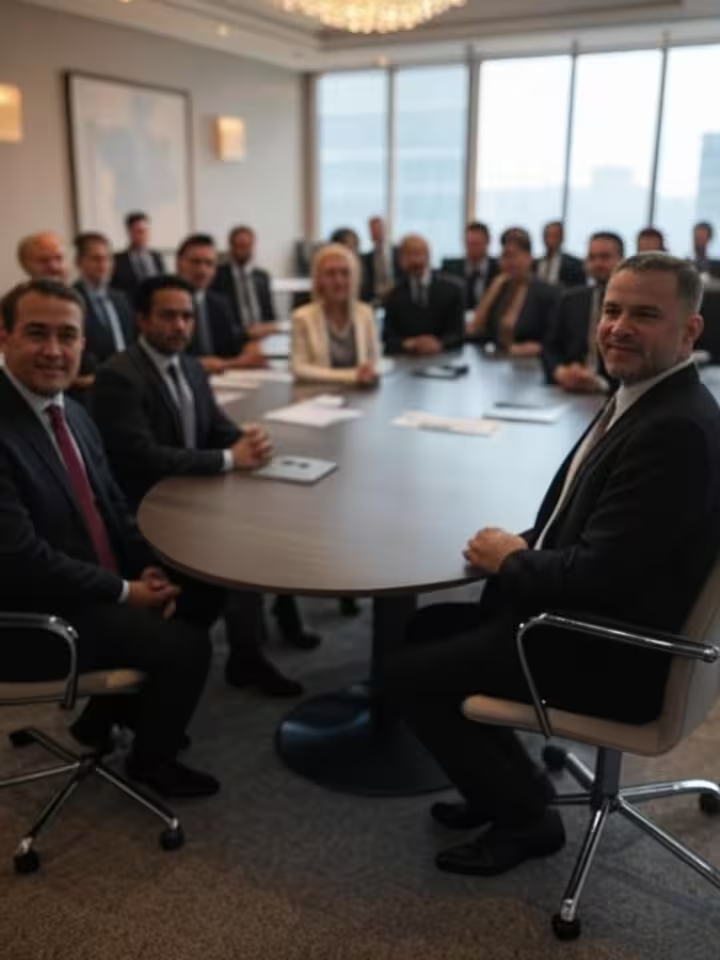
De Bilderberg Groep werd in 1954 opgericht als een initiatief voor trans-Atlantische dialoog en heeft zich ontwikkeld van een vertrouwelijk forum uit de Koude Oorlog tot een van 's werelds meest onder de loep genomen jaarlijkse bijeenkomsten van politieke en economische elites - en toch blijft het grootste deel van zijn geschiedenis onbegrepen.
De eerste Bilderbergbijeenkomst vond plaats op 29-31 mei 1954 in Hotel de Bilderberg in Nederland met 50 afgevaardigden uit 11 landen.
Opgericht door de Poolse diplomaat Józef Retinger en Prins Bernhard der Nederlanden om anti-Amerikaanse sentimenten in het naoorlogse Europa tegen te gaan
Jaarlijkse besloten conferenties hebben sinds 1954 elk jaar plaatsgevonden, met slechts drie uitzonderingen (1976, 1994 en 2020).
De groep stapte over van discussies over de inperking van de Koude Oorlog naar discussies over globalisering, digitale veiligheid en klimaatuitdagingen.
Sinds 2010 publiceert de officiële website deelnemerslijsten en agenda's, waardoor de transparantie toeneemt terwijl de discussies off-the-record blijven.
Bilderberg werkt als een forum voor het uitwisselen van ideeën zonder beslissingsbevoegdheid, hoewel de deelnemers vaak aanzienlijke wereldwijde invloed hebben
Moderne bijeenkomsten over AI, geopolitieke rivaliteiten, energietransities en pandemisch herstel met 120-150 deelnemers per jaar.
Inleiding: Waarom het belangrijk is om de oorsprong van Bilderberg te begrijpen
In mei 1954, terwijl de wereld gefixeerd was op de val van Dien Bien Phu en het opkomende conflict in Vietnam, kwamen 50 van de meest invloedrijke figuren van het Westen in stilte bijeen in een Nederlands hotel. Hun missie: voorkomen dat het trans-Atlantische bondgenootschap zou breken onder druk van de Koude Oorlog.
Zeven decennia later komt die bijeenkomst - die nu bekend staat als de Bilderberg Groep - nog steeds jaarlijks bijeen, met premiers, CEO's, centrale bankiers en leidinggevenden uit de technologiesector. Maar ondanks de lange levensduur blijven er misvattingen bestaan over het doel, de macht en de evolutie.
Inzicht in de oorsprong van Bilderberg biedt een essentiële context voor het evalueren van beweringen over beïnvloedingsnetwerken van de elite. Was het een CIA-operatie? Een voorloper van een wereldregering? Of gewoon een exclusieve praatclub? Het gedocumenteerde verslag onthult iets genuanceerder: een adaptief forum dat belangrijke verschuivingen in de internationale betrekkingen weerspiegelt en daar soms op anticipeert.
In dit artikel leer je het volgende:
De geverifieerde historische omstandigheden die leidden tot de oprichting van Bilderberg in 1954
Hoe de agenda van de groep evolueerde doorheen de verschillende fasen van de Koude Oorlog
De overgang naar het post-Sovjettijdperk met aandachtsgebieden als globalisering en technologie
De rol van de stuurgroep in het handhaven van continuïteit
Op bewijs gebaseerde analyse waarbij gedocumenteerde feiten worden onderscheiden van speculatie
De stichting van 1954: Koude Oorlog en trans-Atlantische spanningen
De geopolitieke context van het Europa van begin jaren 1950
Tegen 1952 stond het Westerse bondgenootschap intern onder druk ondanks de externe eenheid tegen de Sovjetdreiging. Het Marshallplan (1948-1952) had de Europese economieën weer opgebouwd, maar wekte ook wrevel over de Amerikaanse invloed. De oprichting van de NAVO in 1949 zorgde voor militaire structuur, maar de politieke coördinatie bleef zwak.
Poolse emigrant Józef Retinger identificeerde deze kwetsbaarheid. Als politiek adviseur die tijdens de Tweede Wereldoorlog gecoördineerd had met geallieerde regeringen, observeerde Retinger een groeiend anti-Amerikanisme in Europese intellectuele kringen en arbeidersbewegingen. Hij stelde voor om een informeel kanaal te creëren voor een openhartige dialoog tussen Europese en Amerikaanse leiders.
De architecten: Retinger, Prins Bernhard en CIA-ondersteuning
De visie van Retinger vereiste geloofwaardige vergaderkracht. Hij benaderde Prins Bernhard der Nederlanden, gemalin van koningin Juliana, die zowel koninklijke legitimiteit als zakelijke connecties bezat door zijn rol bij Fokker vliegtuigen en Royal Dutch Shell.
Amerikaanse steun kwam door Walter Bedell Smith, toenmalig CIA-directeur en voormalig ambassadeur in Moskou. Smith faciliteerde de logistiek via het American Committee for a United Europe, een door de CIA gefinancierde organisatie die Europese integratie promootte. De rol van het agentschap bleef echter beperkt tot initiële coördinatie; het had geen controle over de agenda of de selectie van deelnemers.
Deze samenwerking weerspiegelde een pragmatische Koude Oorlog-strategie: het versterken van informele elitenetwerken als aanvulling op formele instellingen zoals de NAVO en de ontluikende Europese Gemeenschap voor Kolen en Staal.
De Bilderbergbijeenkomst in Hotel de Bilderberg: 29-31 mei 1954
Ongeveer 50 afgevaardigden uit 11 landen kwamen bijeen in Hotel de Bilderberg in Oosterbeek, Nederland. Deelnemers waren onder andere:
Denis Healey (Brits Labour-politicus, later minister van Defensie)
David Rockefeller (Bestuurslid Chase Manhattan Bank)
Paul Nitze (architect van NSC-68, de Amerikaanse beheersingsstrategie)
Guy Mollet (Franse premier, 1956-1957)
Mediafiguren van grote Europese en Amerikaanse publicaties
Op de agenda stonden drie hoofdthema's:
Europese integratie: Steun voor supranationale instellingen buiten de EGKS
Amerikaans buitenlands beleid: Amerikaanse strategische doelstellingen uitleggen aan Europese sceptici
Communistische expansie: Coördinatie van westerse reacties op invloedsoperaties van de Sovjet-Unie
De conferentie heeft haar eigen formaat: discussies buiten de notulen om zonder formele resoluties of gepubliceerde notulen. Deze Chatham House Rule-benadering was erop gericht een openhartig debat mogelijk te maken zonder diplomatieke beperkingen of mediadistorsie.
Onmiddellijke resultaten en institutionalisering
Het succes van de eerste bijeenkomst leidde tot onmiddellijke plannen voor een jaarlijkse voortzetting. Er werd een stuurgroep gevormd die zich bezighield met uitnodigingen, het opstellen van de agenda en de logistiek. Prins Bernhard nam het voorzitterschap op zich, een rol die hij tot 1976 zou vervullen.
De beslissing om geheimhouding te handhaven bleek toen al controversieel. Critici voerden aan dat het een onberekenbaar machtsnetwerk creëerde. Organisatoren voerden aan dat publiciteit openhartige uitwisselingen zou veranderen in performatieve toespraken.
Deze spanning tussen elitecoördinatie en democratische verantwoordingsplicht zou Bilderberg gedurende zijn hele geschiedenis kenmerken - een dynamiek die in detail wordt onderzocht in onze analyse van Samenzweringstheorieën rond de groep.
Koude Oorlog Evolutie: 1955-1989
Het dekolonisatie-tijdperk (1955-1965)
Terwijl de Europese rijken inkrompen, weerspiegelden de Bilderberg discussies de veranderende machtsdynamiek. De bijeenkomst in Barbizon, Frankrijk, in 1955 vond plaats toen de Bandung Conferentie pas onafhankelijk geworden naties verenigde in ongebondenheid - een uitdaging voor de bipolaire logica van de Koude Oorlog.
De Suez-crisis 1956 overheerste de bijeenkomst van 1957. De Brits-Franse mislukking om het kanaal terug te winnen, geblokkeerd door Amerikaanse druk, bracht de transatlantische verdeeldheid aan het licht. Bilderberg bood een forum om deze strategische nederlaag te verwerken en toekomstige benaderingen van het Midden-Oosten te coördineren.
Begin jaren 1960 verschoven de discussies over dekolonisatie naar strategieën voor economische ontwikkeling. De bijeenkomst in 1961 ging over Afrikaanse onafhankelijkheidsbewegingen en hun kwetsbaarheid voor de invloed van de Sovjet-Unie, wat voorafging aan de Alliantie voor Vooruitgang in Latijns-Amerika van de regering Kennedy.
Détente en zijn ongenoegens (1966-1979)
De bijeenkomst in 1968 in Mont-Tremblant, Canada, vond plaats te midden van buitengewone turbulentie: het Tet Offensief in Vietnam, studentenopstanden in Parijs en de Praagse Lente. De deelnemers debatteerden over de vraag of het Amerikaanse interventionisme de geloofwaardigheid van het Westen ondermijnde - een zeldzaam moment van interne kritiek.
Als detente Bilderberg ontstond onder Nixon en Kissinger en omvatte discussies over Oost-West handel en wapenbeheersing. Tijdens de bijeenkomst in 1973 in Saltsjöbaden, Zweden, werd energiezekerheid al maanden voor het olie-embargo van oktober besproken, hoewel er geen bewijs is dat de groep de beslissing van de OPEC voorspelde of beïnvloedde.
De belangrijkste verstoring van de periode kwam in 1976, toen Prins Bernhard aftrad na onthullingen dat hij $1,1 miljoen had aangenomen van Lockheed Corporation in een omkoopschandaal. Voormalig premier van het Verenigd Koninkrijk Alec Douglas-Home nam de interim-leiding op zich en tijdens de reorganisatie vond er dat jaar geen vergadering plaats.
De Tweede Koude Oorlog (1980-1989)
De herbewapening in het Reagan-tijdperk en de hernieuwde spanningen tussen Oost en West richtten Bilderberg opnieuw op veiligheidskwesties. De bijeenkomst in Montebello, Canada, in 1983 ging over de plaatsing van Pershing II raketten in Europa en het feit dat de Sovjet-Unie zich terugtrok uit wapenbeheersingsbesprekingen.
Economische discussies gingen steeds meer over neoliberale herstructureringderegulering, privatisering en onafhankelijkheid van de centrale bank. Deelnemers als Margaret Thatcher (die aanwezig was voordat hij premier werd in 1979) en Helmut Kohl betekende een generatiewisseling in de richting van marktgericht beleid.
De bijeenkomst in 1986 in Gleneagles, Schotland, ging over opkomende terrorismedreigingen, een voorbode van de veiligheidsuitdagingen na de Koude Oorlog. Aan het eind van de jaren tachtig verkenden de discussies voorzichtig glasnost en perestrojka, hoewel weinigen de snelheid van de ineenstorting van de Sovjet-Unie voorzagen.
Transformatie na de Koude Oorlog: 1990-2010
Het moment van het “einde van de geschiedenis” (1990-2001)
De bijeenkomst in 1990 in Glen Cove, New York, vond plaats toen de val van de Berlijnse Muur nog nazinderde. Duitse hereniging, Oost-Europese integratie in Westerse instellingen en NAVO-uitbreiding domineerden de agenda's.
De Bilderberg-discussies weerspiegelden triomfalistische aannames over de onvermijdelijkheid van de liberale democratie. De agenda van de jaren 1990 gaf prioriteit aan globalisering: NAFTA (ondertekend in 1992), de Wereldhandelsorganisatie (opgericht in 1995) en de Europese Monetaire Unie (met als hoogtepunt de invoering van de euro in 1999).
In 1994 vond er geen bijeenkomst plaats vanwege een andere wisseling in het leiderschap. Étienne Davignon, Belgische politicus en vicevoorzitter van de Europese Commissie, werd voorzitter in 1999, een functie die hij bekleedde tot 2011.
De diversiteit onder de deelnemers nam bescheiden toe, met meer vrouwen en niet-westerse figuren, hoewel de kern Euro-Amerikaanse elites bleef. Critici merkten op dat er geen vertegenwoordigers van arbeiders of maatschappelijke organisaties aanwezig waren.
9/11 en de veiligheidsstaat (2001-2010)
De bijeenkomst in 2002 in Chantilly, Virginia - vlakbij Washington, D.C. - ging over de veiligheidsarchitectuur van na 11 september. Er werd gesproken over operaties in Afghanistan, het opkomende Irak-debat en het vinden van een balans tussen terrorismebestrijding en burgerlijke vrijheden.
De financiële crisis 2008 domineerde de bijeenkomst in 2009 in Vouliagmeni, Griekenland. Bankdirecteuren en ministers van Financiën bespraken hervormingen in de regelgeving, kwantitatieve versoepeling en de risico's van staatsschulden - veelzeggend gezien de crisis die Griekenland het jaar daarop zelf doormaakte.
Rond 2010 vond er een grote verschuiving plaats: Bilderberg lanceerde zijn officiële website, het publiceren van deelnemerslijsten en agenda's. Dit transparantie-initiatief was een antwoord op de toenemende kritiek, terwijl de regels voor discussies buiten de notulen werden gehandhaafd.
Het moderne tijdperk: 2011-heden
Het digitale tijdperk en populisme (2011-2019)
De agenda's van na 2010 weerspiegelden nieuwe machtscentra en uitdagingen. De bijeenkomst in 2013 in Watford, VK, ging over cyberoorlogvoering en gegevensprivacy in de nasleep van de onthullingen van Snowden. Techmanagers zoals Eric Schmidt (Google) en Reid Hoffman (LinkedIn) werden vaste deelnemers.
De bijeenkomst in 2016 in Dresden, Duitsland, vond plaats tijdens de campagne voor het Brexit-referendum en de opkomst van Trump, met sessies over de drijvende krachten achter het populisme. De bijeenkomst van 2018 in Turijn, Italië, ging expliciet over “populisme in Europa” en “de wereld na de waarheid” - thema's die de bezorgdheid van de elite over democratische terugslag weerspiegelen.
Geopolitieke discussies verschoven van terrorismebestrijding naar grote machtscompetitie. De opkomst van China, de assertiviteit van Rusland en de herschikkingen in het Midden-Oosten speelden een belangrijke rol, hoewel de Aziatische deelname beperkt bleef vergeleken met de Europees-Amerikaanse dominantie.
Pandemie en oorlog: 2020-2024
De vergadering van 2020 was geannuleerd vanwege COVID-19-slechts de derde afgelasting in de geschiedenis van Bilderberg. Toen de bijeenkomsten in 2022 in Washington D.C. werden hervat, weerspiegelden de agenda's de nasleep van de pandemie: veerkracht van de toeleveringsketen, geopolitieke herschikkingen en desinformatie.
De Oekraïne oorlog De bijeenkomsten in 2022 en 2023 werden gedomineerd. NAVO-uitbreiding, energiezekerheid en westerse eenheid bij de handhaving van sancties waren belangrijke onderwerpen. De bijeenkomst in Lissabon in 2023 omvatte sessies over “stabiliteit van het banksysteem” na de ineenstorting van de Silicon Valley Bank.
Jens Stoltenberg (Secretaris-generaal van de NAVO)
Ursula von der Leyen (Voorzitter van de Europese Commissie)
Demis Hassabis (Google DeepMind CEO, AI-pionier)
Alex Karp (Palantir CEO)
De stuurgroep, geleid door figuren als Marie-Josée Kravis en inclusief afstammelingen van stichtende families, zorgt voor institutionele continuïteit en past zich tegelijkertijd aan hedendaagse uitdagingen aan.
Huidige relevantie en toekomstig traject
De Bilderberg van vandaag behandelt onderwerpen die in 1954 ondenkbaar waren: bestuur van kunstmatige intelligentie, mechanismen voor klimaatfinanciering, regulering van cryptocurrency en ethiek van biotechnologie. Toch blijft de kern ongewijzigd: 120-150 genodigden, onofficiële discussies, geen resoluties.
Vergelijkingen met het World Economic Forum (Davos) maken de verschillen duidelijk: Davos is een publiek spektakel met duizenden deelnemers; Bilderberg blijft bewust klein en privé. G7 en G20 toppen produceren communiqués; Bilderberg produceert gesprekken.
De invloed van de groep blijft indirect en omstreden. Deelnemers hebben ontegenzeggelijk macht, maar of Bilderbergdiscussies hun latere beslissingen vormgeven, of slechts de heersende eliteconsensus weerspiegelen, is moeilijk empirisch vast te stellen.
Veelgestelde vragen
V: Was de CIA verantwoordelijk voor het oprichten van de Bilderberg Groep?
A: De CIA faciliteerde de logistiek voor de eerste bijeenkomst in 1954 via het Amerikaanse Comité voor een Verenigd Europa, maar heeft Bilderberg niet opgericht of gecontroleerd. Het initiatief kwam van Europese figuren zoals Józef Retinger en Prins Bernhard. De betrokkenheid van de CIA was beperkt tot de eerste coördinatie en weerspiegelde de standaard Koude Oorlog praktijken van het ondersteunen van transatlantische netwerken.
V: Waarom worden Bilderbergbijeenkomsten geheim gehouden?
A: De bijeenkomsten volgen de Chatham House-regels: deelnemers mogen ontvangen informatie gebruiken, maar mogen sprekers of hun banden niet identificeren. De organisatoren beweren dat dit openhartige discussies mogelijk maakt zonder diplomatieke aanmatiging of vertekening door de media. Critici beweren dat dit leidt tot oncontroleerbare elitecoördinatie. Sinds 2010 worden deelnemerslijsten en agenda's gepubliceerd op de officiële website, maar de inhoud van de discussies blijft privé.
V: Worden er op Bilderbergbijeenkomsten beslissingen genomen die invloed hebben op het wereldwijde beleid?
A: Tijdens Bilderbergbijeenkomsten worden geen formele besluiten of resoluties genomen. De groep functioneert als een discussieforum waar ideeën worden uitgewisseld. De deelnemers bekleden echter vaak belangrijke posities in de regering, het bedrijfsleven en de media, zodat de gesprekken indirect hun verdere acties kunnen beïnvloeden. De mate van deze invloed is omstreden en moeilijk empirisch te meten.
V: Wie selecteert elk jaar de deelnemers aan Bilderberg?
A: Een stuurgroep van ongeveer 30 leden schrijft uitnodigingen uit. De commissie bestaat uit voormalige politici, bedrijfsleiders en academici die de institutionele continuïteit waarborgen. Selectiecriteria worden niet openbaar gemaakt, maar leggen meestal de nadruk op actuele beleidsrelevantie en geografisch evenwicht. Ongeveer twee derde van de deelnemers is Europees en een derde Noord-Amerikaans, met een beperkte vertegenwoordiging uit andere regio's.
V: Is de agenda van Bilderberg significant veranderd sinds 1954?
A: Ja, dramatisch. Bijeenkomsten in de Koude Oorlog waren gericht op anticommunisme, Europese integratie en trans-Atlantische militaire coördinatie. Na 1991 verschoof de agenda naar globalisering, opkomende markten en regionale conflicten. Sinds 2010 omvatten de onderwerpen kunstmatige intelligentie, cyberveiligheid, klimaatverandering, populisme en pandemieën - een weerspiegeling van hedendaagse uitdagingen die de oprichters van 1954 zich niet konden voorstellen.
Belangrijkste opmerkingen
Oorsprong van de Koude Oorlog: Bilderberg werd in 1954 opgericht door de Poolse diplomaat Józef Retinger en Prins Bernhard van Nederland om de trans-Atlantische relaties te versterken en de invloed van de Sovjet-Unie tegen te gaan door middel van een informele dialoog tussen de elite.
Institutionele continuïteit: Op slechts drie uitzonderingen na (1976, 1994, 2020) hebben er jaarlijkse besloten bijeenkomsten plaatsgevonden, waarbij de discussieformats off-the-record zijn gebleven en de agenda's zijn aangepast aan de veranderende mondiale uitdagingen.
Evolutionaire aanpassing: De groep maakte de overgang van discussies over beheersing in de Koude Oorlog (1954-1989) naar globalisering en integratie (1990-2001), vervolgens naar veiligheids- en financiële crises (2001-2010) en houdt zich momenteel bezig met digitaal bestuur, klimaat en geopolitieke rivaliteit.
Beperkte toename van transparantie: Sinds 2010 worden op de officiële website de deelnemerslijsten en agenda's gepubliceerd, waarmee wordt gereageerd op kritiek terwijl de vertrouwelijke discussieregels worden gehandhaafd die volgens de organisatoren openhartige uitwisselingen mogelijk maken.
Indirect beïnvloedingsmechanisme: Bilderberg neemt geen formele beslissingen maar faciliteert jaarlijks de uitwisseling van ideeën tussen ongeveer 120-150 invloedrijke deelnemers, waardoor netwerken ontstaan waarvan de invloed op het beleid wordt besproken maar moeilijk te kwantificeren is.
Hardnekkige Euro-Amerikaanse dominantie: Ondanks een bescheiden diversificatie blijft de groep voornamelijk een forum voor de westerse elite, met een beperkte deelname uit Azië, Afrika en Latijns-Amerika in verhouding tot het groeiende mondiale belang van deze regio's.
Aanpassing aan het digitale tijdperk: Moderne bijeenkomsten richten zich steeds meer op technologiebeheer, AI-ethiek, cyberveiligheid en desinformatie, als gevolg van de digitale transformatie van macht en communicatie sinds de oprichting van de groep in het analoge tijdperk.
Bronnen
Officiële documentatie
Archief persberichten Bilderbergbijeenkomsten (2010-2024) - Officiële verklaringen voor elke jaarlijkse bijeenkomst
Historische analyse
Aldrich, Richard J. “OSS, CIA en Europese eenheid: The American Committee on United Europe, 1948-60.” Diplomatieke geschiedenis 26.3 (1997): 184-227.
Wilford, Hugh. De machtige Wurlitzer: Hoe de CIA Amerika bespeelde. Harvard University Press, 2008.
Aubourg, Valérie. “Atlantisch organiseren: De Bilderberg Groep en het Atlantisch Instituut, 1952-1963.” Inlichtingen en nationale veiligheid 18.2 (2003): 92-105.
Gedocumenteerde verbindingen tussen de CFR en de Bilderberg Groep. Een op feiten gebaseerde analyse van het elite netwerk dat beide organisaties verbindt sinds 1921.
Om de beste ervaringen te bieden, gebruiken we technologieën zoals cookies om apparaatinformatie op te slaan en/of te openen. Door toestemming te geven voor deze technologieën kunnen we gegevens zoals surfgedrag of unieke ID's op deze site verwerken. Als u geen toestemming geeft of uw toestemming intrekt, kan dit negatieve gevolgen hebben voor bepaalde functies en kenmerken.
Functioneel
Altijd actief
De technische opslag of toegang is strikt noodzakelijk voor het legitieme doel om het gebruik van een specifieke uitdrukkelijk door de abonnee of gebruiker gevraagde dienst mogelijk te maken, of met als enig doel de uitvoering van de verzending van een communicatie via een elektronisch communicatienetwerk.
Voorkeuren
De technische opslag of toegang is noodzakelijk voor het legitieme doel om voorkeuren op te slaan die niet zijn aangevraagd door de abonnee of gebruiker.
Statistieken
De technische opslag of toegang die uitsluitend wordt gebruikt voor statistische doeleinden.De technische opslag of toegang die uitsluitend wordt gebruikt voor anonieme statistische doeleinden. Zonder een dagvaarding, vrijwillige medewerking van uw internetprovider of aanvullende gegevens van een derde partij kan de informatie die voor dit doel wordt opgeslagen of opgehaald, gewoonlijk niet worden gebruikt om u te identificeren.
Marketing
De technische opslag of toegang is nodig om gebruikersprofielen aan te maken voor het verzenden van reclame of om de gebruiker te volgen op een website of op verschillende websites voor vergelijkbare marketingdoeleinden.