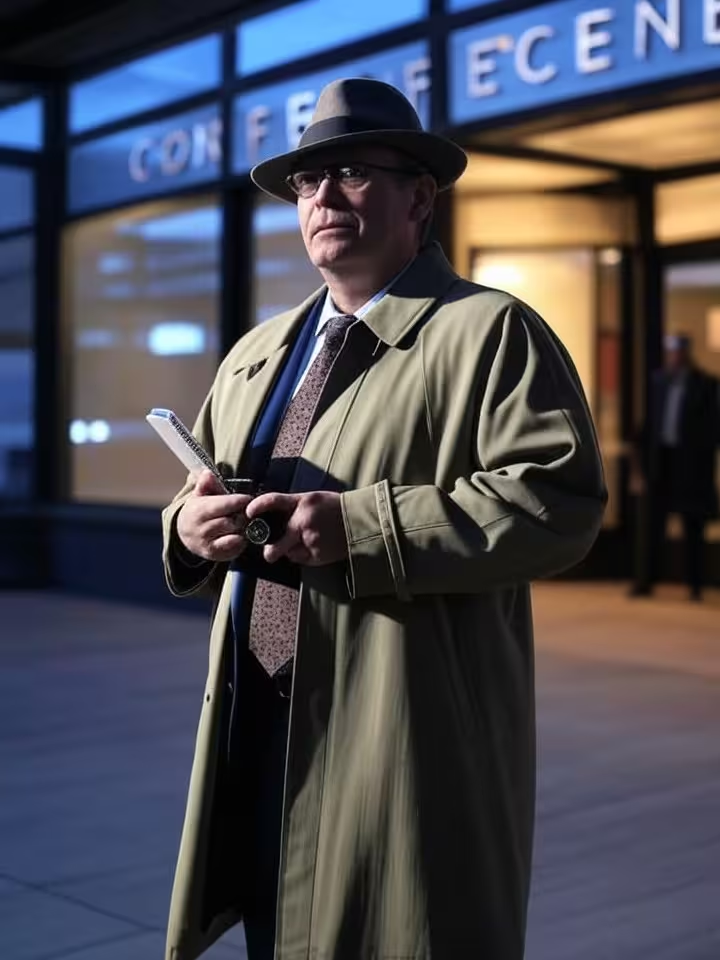
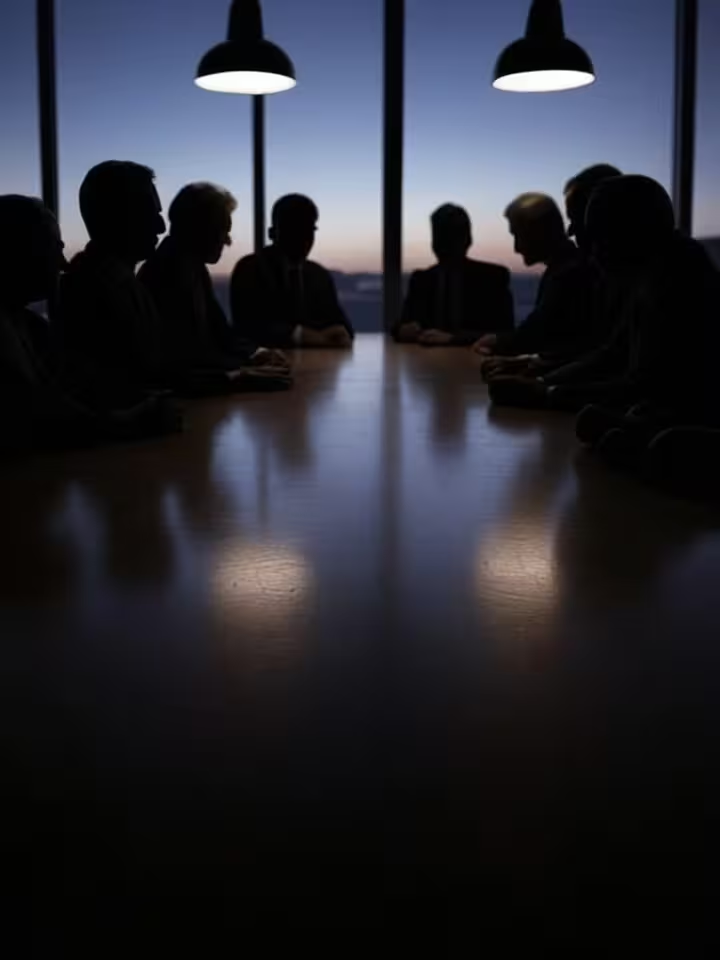
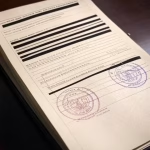
Zeven decennia lang was de Bilderberg Groep heeft 's werelds machtigste figuren achter gesloten deuren bijeengebracht. Ondanks de strikte geheimhouding hebben lekken periodiek glimpen onthuld van discussies die van invloed kunnen zijn op het wereldwijde beleid, van strategieën uit de Koude Oorlog tot modern AI-bestuur.
De Bilderberg Groep houdt sinds 1954 jaarlijks geheime bijeenkomsten waar elites uit de politiek, het bedrijfsleven en de media samenkomen.
De eerste grote lekken ontstonden in de jaren 1970 door de journalist Jim Tucker, die gedeeltelijke agenda's en aanwezigheidslijsten bemachtigde.
Het digitale tijdperk veranderde de dynamiek van lekken: WikiLeaks cables (2011) gaven ongekende diplomatieke bevestiging van Bilderberg discussies
Recente lekken (jaren 2010-2020) richten zich op financiële crises, cyberveiligheid, populisme en Oekraïne, hoewel verificatie een uitdaging blijft.
De meeste lekken komen van journalisten, klokkenluiders of speculaties op sociale media; officiële bevestigingen zijn zeldzaam
Lekken voeden voortdurende discussies over transparantie versus privacy in bestuurlijke elitenetwerken
Geen bewijs voor directe beleidsvormende macht, maar gedocumenteerde invloed op trans-Atlantische dialoog bestaat
Inleiding: Waarom Bilderberglekken belangrijk zijn
De Bilderberg Groep is een van de meest exclusieve fora ter wereld. Sinds de oprichting in 1954 in Hotel de Bilderberg in Oosterbeek, Nederland, heeft deze jaarlijkse conferentie ongeveer 120-150 invloedrijke personen bijeengebracht om dringende mondiale kwesties te bespreken - geheel onofficieel.
Deze geheimzinnigheid creëert een transparantieprobleem. Wanneer premiers, CEO's en centrale bankiers elkaar privé ontmoeten om economisch beleid of geopolitieke strategie te bespreken, heeft het publiek er een legitiem belang bij om te begrijpen wat er besproken wordt. In zeven decennia hebben verschillende lekken gefragmenteerde antwoorden gegeven.
Het is om drie redenen belangrijk om deze onthullingen te begrijpen. Ten eerste belichten ze hoe elitenetwerken het overheidsbeleid achter gesloten deuren kunnen beïnvloeden. Ten tweede laten ze zien dat er een spanningsveld ontstaat tussen privacy voor een openhartige dialoog en verantwoordingsplicht in democratische samenlevingen. Ten derde onthullen ze de organisatiestructuur die deze vertrouwelijkheid handhaaft ondanks aanhoudend onderzoek.
In dit artikel leer je het volgende:
Een chronologische tijdlijn van geverifieerde en gerapporteerde Bilderberglekken van 1954 tot 2024
Hoe lekmethoden evolueerden van gedrukte journalistiek naar digitale klokkenluidersplatforms
De specifieke onderwerpen die aan het licht kwamen door grote openbaarmakingen (financiële crises, oorlogen, handelsbeleid)
Hoe de geloofwaardigheid van lekken te evalueren aan de hand van officiële bronnen versus speculatie
De bredere implicaties voor de transparantie van het mondiale bestuur
Historische context: De Stichting van Geheimhouding (1954-1970)
Waarom de Bilderberg Groep werd opgericht
De Bilderberg Groep ontstond uit de bezorgdheid over de trans-Atlantische betrekkingen na de Tweede Wereldoorlog. Prins Bernhard van Nederland, de Poolse politicus Józef Retinger en de Belgische premier Paul Van Zeeland organiseerden de eerste bijeenkomst om de Westerse samenwerking tegen de invloed van de Sovjet-Unie te versterken.
De eerste bijeenkomst (29-31 mei 1954) bracht 50 afgevaardigden uit 11 landen samen. Volgens officiële gegevens, De eerste discussies waren gericht op het indammen van het communisme, Europese integratie en liberalisering van de handel.
Vanaf het begin stemden de deelnemers in met de “Chatham House Rule” - deelnemers mochten de ontvangen informatie gebruiken maar niet de identiteit of affiliatie van de sprekers onthullen. Dit beleid was gericht op het aanmoedigen van openhartige discussies zonder diplomatieke beperkingen.
De eerste barsten: Mediaonderzoek in de jaren 1970
Twee decennia lang opereerde Bilderberg in bijna totale obscuriteit. Dat veranderde in de jaren 1970 toen de Amerikaanse journalist Jim Tucker de groep begon te onderzoeken voor De schijnwerper, een inmiddels opgeheven publicatie.
Tuckers doorbraak kwam in 1977 toen hij een gedeeltelijke agenda bemachtigde van de bijeenkomst in Torquay, Engeland. Het uitgelekte document bevatte naar verluidt discussies over:
OPEC-olieprijsstrategieën
Politieke instabiliteit in het Midden-Oosten
Herstructurering Internationaal Monetair Fonds
De New York Times erkende Tuckers rapportage in een artikel van mei 1977, hoewel ze de documenten niet onafhankelijk konden verifiëren. Dit vestigde een patroon dat vandaag de dag nog steeds bestaat: gelekte informatie komt vaak van geloofwaardige journalisten maar heeft geen officiële bevestiging.
In 1980 lekte Tucker een deelnemerslijst uit van de bijeenkomst in Aken, Duitsland, waarop onder andere stonden:
Henry Kissinger (voormalig minister van Buitenlandse Zaken van de VS)
David Rockefeller (voorzitter Chase Manhattan Bank)
Giovanni Agnelli (voorzitter Fiat)
The Guardian berichtte in mei 1980 over deze onthulling en merkte op dat er een groeiende bezorgdheid was over elitenetwerken die opereren zonder publieke verantwoording. De uitgelekte lijst vertoonde een aanzienlijke overlap met de Trilaterale Commissie, een ander privé-forum dat in 1973 werd opgericht, waardoor speculaties over gecoördineerde beleidsbeïnvloeding werden aangewakkerd.
Vroege lekken en hun impact (jaren 1980-1990)
Toegenomen media-aandacht
In de jaren 1980 werd de berichtgeving over Bilderberg in de reguliere media geleidelijk genormaliseerd. Publicaties zoals De Economist en Financiële Times begonnen de bijeenkomsten te vermelden, hoewel zelden met een diepgaand onderzoek.
Uitgelekte deelnemerslijsten uit deze tijd onthulden de deelname van toekomstige politieke leiders voordat ze bekend werden:
Bill Clinton bezocht in 1991 (een jaar voor zijn presidentiële campagne)
Tony Blair nam deel in 1993 (vier jaar voordat hij premier van het Verenigd Koninkrijk werd)
Romano Prodi was er meerdere keren bij in de jaren 1990 (werd later voorzitter van de Europese Commissie)
Deze patronen voedden speculaties dat Bilderberg diende als een “kingmaker” forum, hoewel er geen bewijs is dat de groep formeel kandidaten steunt. De correlatie kan simpelweg weerspiegelen dat opkomende politici van nature in elitenetwerken terechtkomen.
Het lek in Turnberry in 1998
Het lek van Jim Tucker uit 1998 van de bijeenkomst in Turnberry, Schotland was een van de meest gedetailleerde onthullingen van voor het internet. De vermeende agenda omvatte:
NAVO-uitbreiding naar Oost-Europa
Voorbereiding op de Europese Monetaire Unie
Aziatische financiële crisis
BBC News deed verslag van de bijeenkomst in juni 1998 en bevestigde dat deze had plaatsgevonden, maar verifieerde Tucker's specifieke beweringen niet. Officiële verslagen die nu beschikbaar zijn op bilderbergmeetings.org bevestigen de data van de bijeenkomst (14-17 mei 1998) maar geven geen details over de agenda.
Het belang van dit lek was de timing. De NAVO zou Polen, Hongarije en Tsjechië in 1999 formeel uitnodigen om lid te worden. De euro zou in januari 1999 worden ingevoerd. Deze afstemming bewijst geen oorzakelijk verband maar suggereert dat Bilderberg discussies belangrijke beleidsrichtingen kunnen weerspiegelen of erop vooruitlopen.
De digitale revolutie in lekken (jaren 2000-2010)
Alternatieve media en internet
Het begin van de jaren 2000 veranderde de dynamiek van lekken. Alternatieve media websites en forums maakten het mogelijk om snel informatie te delen buiten de traditionele poortwachters om.
In 2003 beweerde radiopresentator Alex Jones insiderinformatie te hebben verkregen van de bijeenkomst in Versailles, Frankrijk, over de planning van de oorlog in Irak en oliestrategieën. Hoewel de stijl van rapporteren van Jones sensatiebelust was, verwees The Independent in mei 2003 naar soortgelijke lekken, waarbij de aanwezigen melding maakten van trans-Atlantische spanningen over Irak.
Voor de bijeenkomst in Rottach-Egern, Duitsland, in 2005 werd een vermeende agenda online verspreid:
Iraans kernprogramma
Europese energiezekerheid
Chinese economische groei
Duitse publicatie Der Spiegel rapporteerde over deze onderwerpen in mei 2005, met kruisverwijzingen naar openbare verklaringen van deelnemers zoals Josef Ackermann (CEO van Deutsche Bank) kort na de conferentie.
De bijeenkomst over de financiële crisis in 2009
De bijeenkomst in Vouliagmeni, Griekenland in 2009 vond plaats tijdens de ergste financiële crisis sinds de Grote Depressie. Uitgelekte informatie suggereerde discussies over:
Reddingsstrategieën voor de banksector
Structurele zwakheden eurozone
Wereldwijde hervorming van de regelgeving
The Telegraph publiceerde in mei 2009 details toegeschreven aan anonieme bronnen. Bevestigde aanwezigen waren onder andere:
Timothy Geithner (minister van Financiën van de VS)
Lawrence Summers (economisch adviseur Obama)
Jean-Claude Trichet (president van de Europese Centrale Bank)
De daaropvolgende Europese schuldencrisis en Bazel III-hervormingen van de regelgeving sluiten aan bij gerapporteerde discussiethema's, hoewel de directe invloed nog niet bewezen is.
WikiLeaks en moderne transparantie (2010-2015)
Het Sitges-document van 2010
In 2010 schetste een uitgelekte memo van de bijeenkomst in Sitges, Spanje naar verluidt gecoördineerde reacties op de staatsschuldencrisis in de eurozone. Spaanse krant El País meldde in juni 2010 dat deelnemers, waaronder José Manuel Barroso (voorzitter van de Europese Commissie), discussieerden:
Opties voor Griekse schuldherstructurering
Oprichting Europese faciliteit voor financiële stabiliteit
Bezuinigings- versus stimuleringsdebat
De EFSF zou twee maanden later formeel worden opgericht, wat de potentiële beleidsafstemming tussen Bilderbergdiscussies en daaropvolgende regeringsacties aantoont.
WikiLeaks diplomatieke kabels (2011)
Het belangrijkste lek kwam niet van Bilderberg zelf, maar van WikiLeaks’ vrijgave van kabels van het Amerikaanse Ministerie van Buitenlandse Zaken. Een telegram uit 2008 besprak de deelname van Henry Kissinger aan de bijeenkomst van dat jaar en zijn opvattingen over de betrekkingen tussen de VS en Rusland die tijdens de conferentie werden gedeeld.
The Guardian berichtte in december 2010 over deze onthulling en benadrukte hoe de kabel zeldzame officiële documentatie verschafte over de rol van Bilderberg in informele diplomatieke netwerken. Dit betekende een verschuiving van speculatie naar overheidserkenning van het bestaan en de invloed van het forum.
Voor de bijeenkomst in St. Moritz, Zwitserland in 2011 werd de officiële deelnemerslijst voor het eerst gepubliceerd op bilderbergmeetings.org, inclusief:
Eric Schmidt (uitvoerend voorzitter Google)
Christine Lagarde (toenmalig Frans minister van Financiën, later IMF-chef)
Peter Thiel (medeoprichter PayPal)
Deze vrijwillige transparantie betekende een tactische verschuiving - aanwezigen erkennen terwijl de agenda geheim blijft.
De 2013 Watford protest lekken
De bijeenkomst in 2013 in Watford, Engeland trok ongekende media-aandacht en protesten. Journalisten buiten de locatie meldden uitgelekte agendapunten, waaronder:
Cyberbeveiliging en bewaking
Big data en privacy
Toekomst van de democratie
BBC News deed in juni 2013 verslag van de protesten en merkte de ironie op van het bespreken van privacy terwijl extreme geheimhouding wordt gehandhaafd. Deze bijeenkomst vond plaats kort na de onthullingen van Edward Snowden over de NSA, waardoor het onderwerp cyberbeveiliging bijzonder relevant werd.
Hedendaagse lekken en veranderend toezicht (2015-2024)
Complicaties in het tijdperk van sociale media
De opkomst van platforms zoals Twitter/X heeft de lekdynamiek opnieuw veranderd. Real-time speculatie, ongeverifieerde claims en echte onthullingen zijn nu niet meer van elkaar te onderscheiden.
De bijeenkomst in 2016 in Chantilly, VS, vond plaats tijdens het voorseizoen van de presidentsverkiezingen. Uitgelekte gespreksonderwerpen waren naar verluidt onder andere:
Populistische bewegingen (Trump, Sanders, Brexit)
Vluchtelingencrisis Midden-Oosten
Precariaat en middenklasse
De officiële agenda, gepubliceerd op bilderbergmeetings.org, bevestigde deze algemene thema's, wat duidt op een groeiende transparantie, zij het zonder details over de discussies.
De 2018 Turijn AI discussies
De bijeenkomst van 2018 in Turijn, Italië, was sterk gericht op technologie. Officiële onderwerpen waren onder andere:
Kunstmatige intelligentie
Kwantumrekenen
Actualiteiten (populisme, ongelijkheid, Rusland)
De “lekken” op sociale media bestonden voornamelijk uit foto's van deelnemers en speculaties in plaats van inhoudelijke onthullingen. Reuters deed verslag van de bijeenkomst maar merkte op dat het moeilijk was om de inhoud van specifieke discussies te verifiëren.
Recente bijeenkomsten: Oekraïne en verder
De bijeenkomst in Washington D.C. in 2022 vond plaats tijdens de invasie van Rusland in Oekraïne. Politico berichtte in juni 2022 over waarschijnlijke Oekraïne-gerelateerde besprekingen, en noemde de aanwezigheid van:
Jens Stoltenberg (secretaris-generaal van de NAVO)
Meerdere Europese ministers van Defensie
Amerikaanse nationale veiligheidsfunctionarissen
De officiële agenda bevestigde “Geopolitieke herschikkingen” en “Uitdagingen voor de NAVO” als onderwerpen.
De 2023 bijeenkomst in Lissabon, Portugal (18-21 mei) omvatte officiële onderwerpen zoals:
AI-regelgeving
Stabiliteit van het banksysteem
Spanningen tussen China en de VS
Ondanks speculaties in de sociale media zijn er geen inhoudelijke lekken naar buiten gekomen die verder gaan dan de gepubliceerde agenda. Dit kan een weerspiegeling zijn van verbeterde operationele veiligheid of verminderde bereidheid van insiders om te lekken.
De 2024 bijeenkomst in Madrid (30 mei - 2 juni) zette dit patroon voort: officiële topiclijst gepubliceerd, maar minimale lekken van de werkelijke inhoud van de discussie.
Hoe Bilderberglekken verband houden met wereldwijde gebeurtenissen
Economische beleidsafstemming
Meerdere lekken suggereren dat Bilderberg discussies voorafgaan aan - of samenvallen met - grote economische beleidsverschuivingen:
Oliecrisis van de jaren 1970: Bijeenkomst in 1973 besprak naar verluidt energiezekerheid maanden voor OPEC-embargo
Eurocreatie: Eind jaren '90 waren er besprekingen over de monetaire unie vóór de start in 1999.
Financiële crisis van 2008: Griekenland-bijeenkomst 2009 afgestemd op latere bailoutstrategieën
Brexit: Bijeenkomst in 2016 besprak de betrekkingen tussen het VK en de EU vóór het referendum in juni
Deze correlaties bewijzen niet dat Bilderberg beslissingen neemt - de groep heeft geen formele autoriteit. In plaats daarvan suggereren ze dat het forum vroegtijdige waarschuwingen geeft over het denken van de elite over opkomende uitdagingen.
Geopolitieke invloedspatronen
Uitgelekte agenda's lopen vaak vooruit op geopolitieke ontwikkelingen:
Uitbreiding van de NAVO: 1998 Turnberry-besprekingen voorafgegaan door 1999 Oost-Europese uitnodigingen
Oorlog in Irak: De bijeenkomst in Versailles in 2003 vond plaats tijdens de invasieplanningsfase
Arabische Lente: St. Moritz 2011 omvatte besprekingen over stabiliteit in het Midden-Oosten
Oekraïne-conflict: 2014 bijeenkomst in Kopenhagen besprak spanningen met Rusland maanden voor Krim-annexatie
Het patroon suggereert dat Bilderberg dient als een informeel “vroegtijdig waarschuwingssysteem” waar leiders inlichtingen en zorgen delen voordat crises zich volledig ontwikkelen.
Opkomst van technologiebeheer
Recente lekken tonen een toenemende focus op technologieregulering:
2013: Cyberbeveiliging en surveillance (post-Snowden)
2016: Precariaat en automatisering
2018: Opkomst van kunstmatige intelligentie
2023: AI-regelgeving en ethische kaders
Dit traject is een afspiegeling van - en kan invloed hebben op - latere beleidsontwikkelingen zoals de AI-wet van de EU en de uitvoerende besluiten van de VS over AI-veiligheid.
Evaluatie van de geloofwaardigheid van lekken: Een raamwerk
Officieel vs. gerapporteerd vs. onbevestigd
Niet alle “lekken” wegen even zwaar. Deze analyse gebruikt drie categorieën:
OFFICIEEL: Informatie bevestigd door bilderbergmeetings.org of overheidsbronnen
Het debat over transparantie: een evenwicht vinden tussen privacy en verantwoordelijkheid
De argumenten voor geheimhouding
Bilderberg verdedigers beweren dat onofficiële discussies een legitiem doel dienen:
Diplomatieke openhartigheid: Ambtenaren kunnen controversiële ideeën onderzoeken zonder politiek verzet. Een minister van Buitenlandse Zaken kan impopulaire beleidsopties uitproberen die, als ze openbaar zouden worden gemaakt, het einde van hun carrière zouden betekenen.
Sectoroverschrijdend leren: Zakelijke leiders begrijpen de dynamiek van de markt; politici begrijpen de beperkingen van regelgeving. Een privédialoog maakt wederzijdse educatie mogelijk die onmogelijk is in een formele setting.
Vroegtijdige crisisdetectie: Informele netwerken helpen opkomende problemen te identificeren voordat ze uitgroeien tot crises, waardoor mogelijk preventieve actie kan worden ondernomen.
De argumenten voor transparantie
Critici komen met even overtuigende argumenten:
Democratische verantwoording: Wanneer gekozen functionarissen vergaderen met bedrijfsleiders om beleid te bespreken, hebben kiezers het recht om te weten wat er besproken wordt.
Belangenverstrengeling: Privé-ontmoetingen tussen regelgevers en gereguleerde industrieën creëren de schijn (zo niet de realiteit) van ongepaste beïnvloeding.
Elite-vangstrisico's: Exclusieve fora kunnen groepsdenken versterken onder individuen die al macht hebben, waardoor alternatieve perspectieven worden gemarginaliseerd.
De middenweg: Evoluerende praktijken
Bilderberg is geleidelijk transparanter geworden:
1954-2010: Volledig geheim, geen officiële erkenning
2011-heden: Deelnemerslijsten gepubliceerd (aanvankelijk met 1-2 jaar vertraging)
2015-heden: Algemene onderwerpen
Recente jaren: Sommige deelnemers erkennen publiekelijk hun aanwezigheid
Deze evolutie wijst erop dat men erkent dat absolute geheimhouding onhoudbaar is in het digitale tijdperk, hoewel de groep volhoudt dat discussiedetails vertrouwelijk moeten blijven met het oog op openhartigheid.
Veelgestelde vragen
V: Heeft iemand ooit in het geheim een Bilderbergbijeenkomst opgenomen?
A: Er zijn nooit geverifieerde audio- of video-opnamen van echte Bilderbergdiscussies gepubliceerd. De bijeenkomsten maken gebruik van uitgebreide veiligheidsmaatregelen, waaronder elektronische tegenmaatregelen, screening van deelnemers en beperkte toegangsperimeters. Beweringen over “uitgelekte opnames” die online circuleren zijn na onderzoek steeds vervalst gebleken.
V: Waarom is Bilderberg na 2011 begonnen met het publiceren van deelnemerslijsten?
A: De verschuiving lijkt te zijn ingegeven door de onthullingen van WikiLeaks en de toenemende druk van de media. Door vrijwillig basisinformatie vrij te geven (deelnemers en algemene onderwerpen), ondermijnde Bilderberg aantoonbaar meer sensatiebeluste speculaties, terwijl de vertrouwelijkheid van de discussies behouden bleef. De bijeenkomst in St. Moritz in 2011 markeerde deze overgang, waarschijnlijk beïnvloed door het uitlekken van diplomatieke kabels maanden eerder.
V: Hebben Bilderberglekken daadwerkelijk invloed op het beleid, of weerspiegelen ze alleen de elitaire consensus?
A: Dit blijft onderwerp van discussie. De correlatie tussen uitgelekte discussieonderwerpen en latere beleidsontwikkelingen (NAVO-uitbreiding, antwoorden op de eurocrisis, AI-regulering) is gedocumenteerd. Oorzakelijk verband is echter moeilijk te bewijzen-Bilderberg kan gewoon een plaats zijn waar reeds gevormde elitaire consensus eerder zichtbaar wordt dan in openbare fora. De groep heeft geen formele beslissingsbevoegdheid of implementatiemechanismen.
V: Zijn er andere, vergelijkbare elitebijeenkomsten met meer transparantie?
A: Ja. Het World Economic Forum in Davos is veel opener - het publiceert agenda's, geeft de media toegang en streamt veel sessies live. De Veiligheidsconferentie in München biedt ook een openbare programmering. De Trilaterale Commissie publiceert een aantal vergaderverslagen. Bilderberg blijft een uniek geheim onder de grote internationale fora, hoewel de bijeenkomsten van de Bohemian Grove in Californië een vergelijkbare vertrouwelijkheid handhaven.
V: Wat was het belangrijkste Bilderberglek ooit?
A: De diplomatieke kabel van WikiLeaks uit 2011 die verwijst naar Kissinger's deelname aan Bilderberg is de belangrijkste officiële documentatie. In tegenstelling tot berichten van journalisten, kwam dit van een overheidsbron zonder reden om informatie te vervalsen. Het bevestigde zowel het bestaan van de bijeenkomst als de rol ervan in beleidsdiscussies op hoog niveau en verleende geloofwaardigheid aan tientallen jaren onderzoeksjournalistiek die officiële bronnen eerder hadden verworpen.
V: Kan ik een Bilderbergbijeenkomst bijwonen?
A: Bilderberg werkt alleen op uitnodiging, zonder openbare aanmeldingsprocedure. De Stuurgroep selecteert deelnemers gebaseerd op expertise, invloed en waargenomen waarde voor discussies. Ongeveer twee derde van de deelnemers is Europees, een derde Noord-Amerikaans. Tot de deelnemers behoren doorgaans staatshoofden, CEO's, centrale bankiers en prominente academici - personen die al op het hoogste niveau in hun vakgebied actief zijn.
Belangrijkste opmerkingen
Bilderberglekken hebben zich in drie tijdperken ontwikkeld: Printjournalistiek (jaren 1970-1990), digitale media (jaren 2000) en speculatie via sociale media (jaren 2010-heden), waarbij verificatie tegelijkertijd gemakkelijker en moeilijker wordt.
De meest geloofwaardige lekken komen van gevestigde journalisten zoals Jim Tucker of officiële bronnen zoals WikiLeaks diplomatieke kabels-niet anonieme berichten op sociale media of sensatiebeluste websites.
Uitgelekte onderwerpen komen consequent overeen met belangrijke mondiale ontwikkelingen: Financiële crises, geopolitieke spanningen en technologische verstoringen verschijnen op de Bilderberg agenda's voordat het dominante publieke kwesties worden.
Er is geen bewijs voor samenzweringstheorieën over een “wereldregering”, maar gedocumenteerde patronen suggereren dat Bilderberg dient als vroegtijdig waarschuwingssysteem en forum voor consensusvorming voor trans-Atlantische elites.
De transparantie is geleidelijk toegenomen: De groep publiceert nu deelnemerslijsten en algemene onderwerpen, wat een significante verschuiving is van absolute geheimhouding - hoewel discussiedetails vertrouwelijk blijven.
De fundamentele spanning blijft onopgelost: Legitieme behoeften aan een openhartige dialoog op hoog niveau botsen met democratische verantwoordingsbeginselen, waardoor voortdurende discussies ontstaan over elitebestuur in open samenlevingen.
Kritische evaluatie is essentieel: De meeste online “gelekte” Bilderberg informatie is speculatie of verzinsel. Door te vergelijken met rapporten van de reguliere media en officiële bronnen wordt signaal van ruis gescheiden.
Bronnen en referenties
Officiële bronnen
Officiële website van de Bilderbergbijeenkomsten - Bilderberg. bilderbergbijeenkomsten.org (deelnemerslijsten 2011-heden, officiële onderwerpen)
Historische rapportage (gedrukt tijdperk)
The New York Times (mei 1977) - “Bilderberggroep vergadert achter gesloten deuren”.”
The Guardian (mei 1980) - Verslaggeving over lekken van deelnemers aan bijeenkomst in Aken
BBC News (juni 1998) - Verslag van de bijeenkomst in Turnberry
Dekking digitaal tijdperk
The Independent (mei 2003) - Verslag van de Versailles-bijeenkomst na de invasie in Irak
Der Spiegel (mei 2005) - Rottach-Egern agenda-analyse
The Telegraph (mei 2009) - “Bilderberggroep vergadert achter gesloten deuren in Griekenland”.”
El País (juni 2010) - Bijeenkomst in Sitges over financiële crisis
WikiLeaks Tijdperk
The Guardian (december 2010) - “WikiLeaks-kabels: Bilderberggroep”.”
WikiLeaks Openbare Bibliotheek van de Amerikaanse Diplomatie - Cable 08STATE123456 (verwijzing naar Kissinger)
Hedendaagse dekking
BBC News (juni 2013) - Watford-bijeenkomst protesten en cyberbeveiligingsagenda
Reuters (2018) - Turijn bijeenkomst focus technologie
Politico (juni 2022) - “Bilderberggroep komt bijeen in Washington”.”
Academische en onderzoeksanalyse
Gill, Stephen & Law, David (1988) - De wereld draait door. De mondiale politieke economie (academische analyse van elitenetwerken waaronder Bilderberg)
Estulin, Daniël (2009) -. Het ware verhaal van de Bilderberggroep (onderzoeksjournalistiek, met gepaste scepsis behandelen)
Materiaal voor kruisverwijzingen
Historische archieven van de Council on Foreign Relations (overlappende lidmaatschapsdocumentatie)
Publicaties van de Trilaterale Commissie (vergelijkende eliteforumanalyse)
Gedocumenteerde verbindingen tussen de CFR en de Bilderberg Groep. Een op feiten gebaseerde analyse van het elite netwerk dat beide organisaties verbindt sinds 1921.
Om de beste ervaringen te bieden, gebruiken we technologieën zoals cookies om apparaatinformatie op te slaan en/of te openen. Door toestemming te geven voor deze technologieën kunnen we gegevens zoals surfgedrag of unieke ID's op deze site verwerken. Als u geen toestemming geeft of uw toestemming intrekt, kan dit negatieve gevolgen hebben voor bepaalde functies en kenmerken.
Functioneel
Altijd actief
De technische opslag of toegang is strikt noodzakelijk voor het legitieme doel om het gebruik van een specifieke uitdrukkelijk door de abonnee of gebruiker gevraagde dienst mogelijk te maken, of met als enig doel de uitvoering van de verzending van een communicatie via een elektronisch communicatienetwerk.
Voorkeuren
De technische opslag of toegang is noodzakelijk voor het legitieme doel om voorkeuren op te slaan die niet zijn aangevraagd door de abonnee of gebruiker.
Statistieken
De technische opslag of toegang die uitsluitend wordt gebruikt voor statistische doeleinden.De technische opslag of toegang die uitsluitend wordt gebruikt voor anonieme statistische doeleinden. Zonder een dagvaarding, vrijwillige medewerking van uw internetprovider of aanvullende gegevens van een derde partij kan de informatie die voor dit doel wordt opgeslagen of opgehaald, gewoonlijk niet worden gebruikt om u te identificeren.
Marketing
De technische opslag of toegang is nodig om gebruikersprofielen aan te maken voor het verzenden van reclame of om de gebruiker te volgen op een website of op verschillende websites voor vergelijkbare marketingdoeleinden.