
Seit 1954 finden die Bilderberg-Treffen nach einem Protokoll aus der viktorianischen Ära statt, das es den mächtigsten Persönlichkeiten der Welt erlaubt, globale Angelegenheiten ohne Namensnennung zu diskutieren. Diese umfassende Analyse untersucht, wie die Chatham House Rule funktioniert, warum sie wichtig ist und was sie über die Entscheidungsnetzwerke der Eliten verrät.
TL;DR
- Die Chatham House Rule, die 1927 eingeführt wurde, erlaubt die Weitergabe von Sitzungsinformationen, ohne die Identität oder Zugehörigkeit der Redner preiszugeben.
- Bilderberg hat dieses Protokoll seit seiner Gründung verwendet, um offene Diskussionen zwischen 130 führenden Persönlichkeiten der Welt zu ermöglichen.
- Die Teilnehmer können Informationen aus Sitzungen verwenden, aber keine Aussagen bestimmten Personen zuordnen
- Die Regelung ermöglicht inoffizielle Gespräche über sensible Themen wie Geldpolitik, Technologieregulierung und geopolitische Strategie
- Kritiker argumentieren, dass dadurch ein unkontrollierbarer Einfluss entsteht, während Befürworter behaupten, dass dies die notwendige diplomatische Offenheit ermöglicht.
- Im Gegensatz zur totalen Geheimhaltung erlaubt die Regel, dass Ideen öffentlich zirkulieren können, während die Quellen geschützt werden.
- Das Protokoll wurde von zahlreichen internationalen Foren über Bilderberg und Chatham House hinaus angenommen
Einleitung: Warum Anonymität in globalen Machtzirkeln wichtig ist
Wenn sich jedes Jahr etwa 130 der einflussreichsten Persönlichkeiten der Welt in geheimen Luxushotels treffen, gilt eine täuschend einfache Regel: Sie können mitteilen, was gesagt wurde, aber niemals, wer es gesagt hat. Dies ist die Essenz der Chatham House Rule, eines Protokolls, das den Diskurs der Elite seit fast einem Jahrhundert prägt.
Die Regel ist wichtig, weil sie einen einzigartigen Raum schafft, in dem Premierminister mit CEOs aus der Technologiebranche debattieren, Zentralbanker Unternehmensleiter herausfordern und Geheimdienstmitarbeiter offen mit Journalisten sprechen können - und das alles ohne den Zwang zur öffentlichen Namensnennung. Diese Gespräche haben potenziell Einfluss auf die Politik, die Milliarden von Menschen betrifft, von der europäischen Integration in den 1960er Jahren bis hin zu aktuellen Debatten über die Steuerung künstlicher Intelligenz.
Das Verständnis dieses Protokolls ist für jeden wichtig, der verstehen will, wie globale Stromnetze funktionieren hinter verschlossenen Türen. In diesem Artikel erfahren Sie mehr:
- Die historischen Ursprünge und die genaue Definition der Chatham-House-Regel
- Wie Bilderberg dieses Protokoll bei seinen jährlichen Konferenzen anwendet
- Die praktischen Auswirkungen auf Transparenz und Rechenschaftspflicht in der Global Governance
- Evidenzbasierte Analyse von Kritik und Verteidigung des Systems
- Wie diese Regel mit breiteren Elitenetzwerken wie dem Council on Foreign Relations zusammenhängt

Ursprünge und Definition der Chatham House Rule
Die Innovation von 1927 im diplomatischen Diskurs
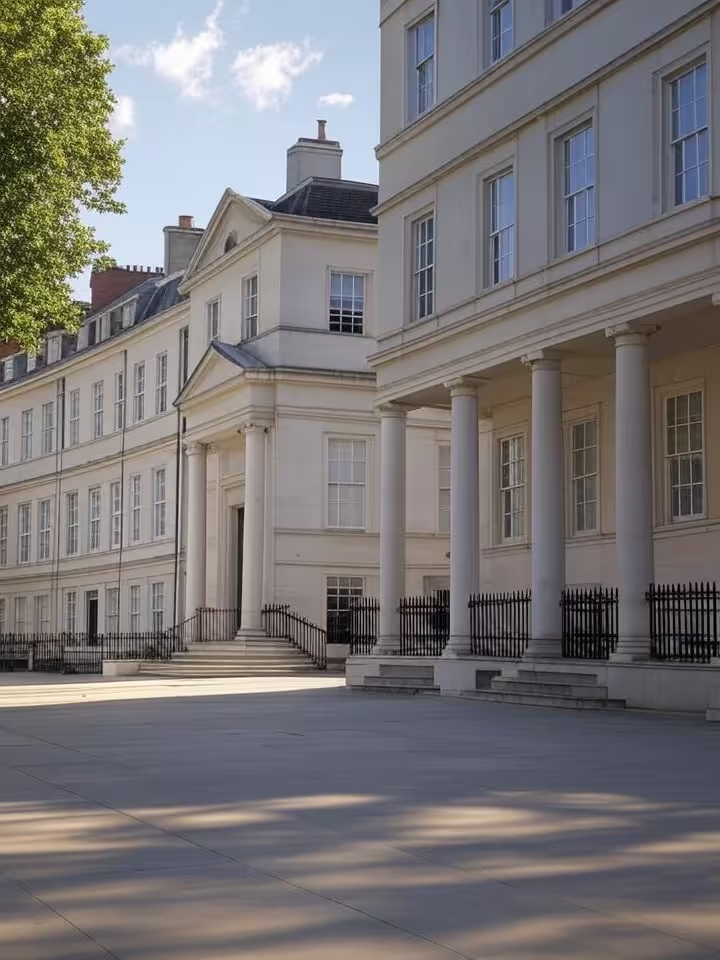
Die Chatham House Rule geht auf das Royal Institute of International Affairs in London zurück, das nach seinem Hauptsitz am St. James's Square gemeinhin als Chatham House bekannt ist. Im Jahr 1927 formulierte der Gründer Lionel Curtis das Protokoll, um eine entscheidende Herausforderung der Diplomatie nach dem Ersten Weltkrieg zu bewältigen: die Frage, wie eine ehrliche Diskussion sensibler internationaler Themen erleichtert werden kann, ohne dass es zu diplomatischen Zwischenfällen durch Zuschreibungen kommt.
Der offizielle Wortlaut der Regel, der 1992 verfeinert und 2002 präzisiert wurde, lautet wie folgt: “Wenn eine Sitzung oder ein Teil davon nach der Chatham-House-Regel abgehalten wird, steht es den Teilnehmern frei, die erhaltenen Informationen zu nutzen, aber weder die Identität noch die Zugehörigkeit des/der Redner(s) noch die eines anderen Teilnehmers darf preisgegeben werden.”
Durch diese präzise Formulierung unterscheidet sich das Protokoll von vollständigen Geheimhaltungsvereinbarungen. Die Teilnehmer sind nicht zu völliger Geheimhaltung verpflichtet - sie können Erkenntnisse weitergeben, Positionen zitieren und Argumente anführen. Das einzige Verbot ist die Offenlegung von Quellen.
Wie die Regel in der Praxis funktioniert
Die praktische Anwendung umfasst mehrere Schlüsselelemente. Erstens müssen die Organisatoren eines Treffens zu Beginn ausdrücklich darauf hinweisen, dass die Chatham-House-Regel gilt - dies geschieht nicht automatisch. Zweitens müssen alle Teilnehmer den Bedingungen zustimmen, bevor die Diskussionen beginnen.
Drittens beruht die Durchsetzung ausschließlich auf dem beruflichen Ansehen und dem gegenseitigen Vertrauen. Es gibt keine rechtlichen Sanktionen für Verstöße, aber Verstöße können zum dauerhaften Ausschluss aus Eliteforen führen. Ein Artikel von 2017 in Der Wirtschaftswissenschaftler stellte fest, dass dies “ein System der Selbstkontrolle unter denjenigen schafft, denen der Zugang zu diesen Gesprächen wichtig ist”.”
Chatham House selbst wendet die Regel selektiv an. Laut seinen Jahresberichten berufen sich jährlich über 200 Veranstaltungen auf das Protokoll, wobei Themen von Klimaverhandlungen bis zu Cybersicherheitsstrategien behandelt werden. Nicht bei jeder Veranstaltung von Chatham House wird die Regel angewandt - bei öffentlichen Konferenzen und veröffentlichten Forschungsarbeiten gilt die übliche Namensnennung.
Globale Adoption jenseits von Chatham House
Die Nützlichkeit der Regel hat zu einer weit verbreiteten Übernahme geführt. Das Weltwirtschaftsforum verwendet sie für ausgewählte Sitzungen in Davos. Die Gremien der Vereinten Nationen berufen sich bei sensiblen Sicherheitsdiskussionen auf sie. Der Rat für auswärtige Beziehungen verwendet ähnliche Protokolle für inoffizielle Briefings.
Diese Verbreitung spiegelt den grundlegenden Vorteil der Regel wider: Sie ermöglicht es den Menschen, als Individuen und nicht als Vertreter von Institutionen zu sprechen. Ein Zentralbanker kann unkonventionelle geldpolitische Ideen erkunden, ohne dass die Märkte dies als offizielle Leitlinien interpretieren. Ein Unternehmensleiter kann Probleme in der Branche einräumen, ohne dass die Aktionäre dies als Eingeständnis des Unternehmens werten.
Wie Bilderberg die Chatham-House-Regel umsetzt
Grundlegende Prinzipien und kontinuierliche Anwendung
Die Bilderberg-Treffen haben die Chatham House Rule seit ihrer Gründung im Mai 1954 im Hotel de Bilderberg in Oosterbeek, Niederlande, übernommen. Die Gründer, darunter Prinz Bernhard der Niederlande und der polnische Politikberater Józef Retinger, wählten dieses Protokoll ausdrücklich, um während der Spannungen des Kalten Krieges einen transatlantischen Dialog zu ermöglichen.
Laut der offiziellen Bilderberg-Website werden die Treffen “zur Förderung des Dialogs zwischen Europa und Nordamerika” unter Bedingungen abgehalten, bei denen “die Teilnehmer die erhaltenen Informationen frei verwenden können, aber weder die Identität noch die Zugehörigkeit des/der Redner(s) offengelegt werden darf”. Dies ist bei allen 68 Konferenzen bis 2023 unverändert geblieben.
Die Beständigkeit ist wichtig. Im Gegensatz zu anderen Foren, die die Vertraulichkeit selektiv anwenden, gilt diese Regel für jede Bilderberg-Sitzung. Wenn etwa 130 Teilnehmer zu dreitägigen Diskussionen zusammenkommen, fällt alles Gesagte unter den Schutz des Protokolls.
Praktische Logistik und Sicherheitsmaßnahmen
Die Durchführung der Bilderberg-Konferenz erfordert eine strenge operative Sicherheit. Die Konferenzorte werden erst Wochen im Voraus bekannt gegeben. Journalisten erhalten keinen Zugang zu den Räumlichkeiten. Die Teilnehmer kommen und gehen durch gesicherte Eingänge. Das Sicherheitspersonal, das häufig durch die örtliche Polizei ergänzt wird, sichert die Hotels ab.
Eine BBC-Untersuchung aus dem Jahr 2019 dokumentierte diese Maßnahmen auf dem Treffen in Montreux, Schweiz, und stellte fest, dass trotz des angeblich privaten Charakters der Konferenz “eine für Gipfeltreffen von Staatschefs typischere Sicherheitspräsenz” herrschte. Diese physische Sicherheit verstärkt die informationelle Sicherheit, die die Chatham-House-Regel bietet.
Nach jedem Treffen veröffentlichen die Organisatoren zwei Informationen: eine Teilnehmerliste und eine Themenliste. Auf der Konferenz 2023 in Lissabon, die vom 18. bis 21. Mai stattfand, wurden neben Themen wie “Stabilität des Bankensystems” und “KI-Regulierung” auch Teilnehmer wie CEOs, Finanzminister und Technologieführer genannt. Unveröffentlicht bleibt jedoch, wer was zu diesen Themen gesagt hat.
Bemerkenswerte historische Beispiele
Die Auswirkungen der Regel auf Bilderberg lassen sich anhand von dokumentierten Beispielen nachvollziehen. David Rockefeller nahm an fast jeder Sitzung teil Von den 1950er bis in die 2000er Jahre diskutierte er alles, von der europäischen Währungsunion bis zur wirtschaftlichen Integration Chinas - immer unter dem Schutz der Regel.
Henry Kissinger, ein weiterer regelmäßiger Teilnehmer seit den 1950er Jahren, hat öffentlich zugegeben, dass er an den Bilderberg-Treffen teilgenommen hat, lehnte es jedoch ab, über konkrete Gespräche zu sprechen. In Archivinterviews mit der New York Times beschrieb Kissinger die Treffen als “wertvoll”, um Ideen in einem “nicht zurechenbaren Rahmen” zu testen.”
Bill Clinton nahm 1991 an dem Treffen in Baden-Baden, Deutschland, teil, Monate bevor er seine Präsidentschaftskampagne ankündigte. Dies nährte zwar die Spekulationen über den Einfluss der Bilderberger (die in unserem evidenzbasierte Analyse von Verschwörungstheorien), bedeutet die Chatham-House-Regel, dass Clintons spezifische Aussagen und die Antworten, die er erhalten hat, unbekannt bleiben.
Vergleiche mit anderen Elite-Foren
Bilderbergs Anwendung unterscheidet sich von ähnlichen Organisationen eher durch das Ausmaß als durch die Art. Die Trilaterale Kommission, die 1973 zum Teil von Bilderberg-Veteranen gegründet wurde, verwendet vergleichbare Vertraulichkeitsprotokolle, trifft sich aber häufiger mit größeren Mitgliederzahlen. Das Weltwirtschaftsforum in Davos bietet sowohl öffentliche als auch private Sitzungen an, wobei nur bei letzteren die Regeln des Chatham House zur Anwendung kommen.
Was die Bilderberger auszeichnet, ist die völlige Konsequenz und der totale Ausschluss der Presse. Selbst geschlossene Sitzungen in Davos lassen gelegentlich ausgewählte Journalisten unter Embargo zu. Bilderberg erlaubt keinen solchen Zugang und ist damit vielleicht die strengste Anwendung der Chatham House Rule unter den großen internationalen Foren.
Auswirkungen auf Transparenz und demokratische Rechenschaftspflicht
Die Frage des Einflusses
Die wichtigste Auswirkung betrifft den nicht zurechenbaren Einfluss auf die öffentliche Politik. Wenn Finanzminister in Bilderberg zusammen mit den Führungskräften, die sie regulieren, über die Regulierung des Bankwesens diskutieren, und zwar unter Bedingungen, die eine öffentliche Kontrolle darüber verhindern, wer für welche Positionen plädiert hat, stellen sich berechtigte Fragen der Verantwortlichkeit.
Eine Untersuchung des Guardian aus dem Jahr 2014 dokumentierte dieses Spannungsverhältnis und stellte fest, dass Unternehmensführer, die an den Bilderberg-Konferenzen teilnahmen, unter Ausschluss der Öffentlichkeit über Regelungen diskutieren konnten, die ihre Branche betreffen. Die Untersuchung fand keine Beweise für explizite Quid-pro-Quo-Vereinbarungen, wies aber auf das Problem der Intransparenz hin: Wenn spätere politische Entscheidungen mit den Interessen der Unternehmen übereinstimmen, kann die Öffentlichkeit nicht wissen, ob Bilderberg-Gespräche eine Rolle gespielt haben.
In der offiziellen Stellungnahme der Bilderberger heißt es, dass “keine Resolutionen vorgeschlagen, keine Abstimmungen durchgeführt und keine politischen Erklärungen abgegeben werden”. Dies unterscheidet sie von G7-Gipfeln oder NATO-Treffen, die handlungsfähige Kommuniqués hervorbringen. Diese Verteidigung geht jedoch nicht auf die Frage ein, ob der informelle Konsens bei den Bilderbergern spätere formelle Entscheidungen in anderen Gremien beeinflusst.
Vorteile für den diplomatischen und geschäftlichen Diskurs
Die Befürworter argumentieren, dass die Regel Gespräche ermöglicht, die ohne Namensnennung unmöglich wären. Ein Premierminister kann politisch unpopuläre Ideen äußern, ohne dass die Medien sofort zurückschlagen. Ein CEO eines Technologieunternehmens kann Probleme in der Branche einräumen, ohne dass dies zu Klagen von Aktionären führt. Ein Geheimdienstmitarbeiter kann Bedrohungseinschätzungen weitergeben, ohne Quellen und Methoden preiszugeben.
Historische Beispiele stützen dieses Argument. Diskussionen bei den Bilderberg-Treffen in den 1960er Jahren über die europäische Wirtschaftsintegration trugen dazu bei, das Denken zu prägen, aus dem schließlich die Europäische Wirtschaftsgemeinschaft hervorging, so die historischen Archive der EU. Zwar lässt sich kein direkter Zusammenhang nachweisen - gerade wegen der Chatham House Rule -, doch gaben die Teilnehmer dieser Treffen später zu, dass die Gespräche ihre spätere politische Arbeit beeinflusst haben.
Eine Umfrage des Pew Research Center aus dem Jahr 2022 zu globalen Eliteforen ergab, dass zwar 67% der Befragten Transparenz schätzen, 54% aber auch die Notwendigkeit von “Räumen, in denen führende Persönlichkeiten offen sprechen können, ohne dass dies unmittelbare politische Konsequenzen hat”, anerkennen. Diese Ambivalenz spiegelt echte Spannungen in der demokratischen Regierungsführung wider.
Die journalistische Herausforderung
Die Chatham House Rule stellt Journalisten, die über Bilderberg berichten, vor besondere Herausforderungen. Reporter versammeln sich außerhalb des Veranstaltungsgeländes und fotografieren die An- und Abreise, haben aber keinen Zugang zu wesentlichen Informationen über die Diskussionen.
Dies führt zu Berichterstattungsmustern, die in der Mainstream-Berichterstattung sichtbar sind. Ein CNN-Artikel über das Treffen in Lissabon im Jahr 2023 stützte sich ausschließlich auf die offizielle Pressemitteilung und Spekulationen externer Experten. Reuters berichtete 2018 über die Konferenz in Turin, indem sie Demonstranten außerhalb des Tagungsortes interviewte, anstatt über tatsächliche Inhalte aus dem Inneren zu berichten.
Einige Journalisten argumentieren, dass sie sich damit auf spekulatives Terrain begeben und möglicherweise Verschwörungstheorien nähren, die sie lieber mit konkreten Informationen widerlegen würden. Andere merken an, dass die Regel zumindest Hintergrundgespräche mit Teilnehmern nach Abschluss der Sitzungen erlaubt, auch wenn die Namensnennung verboten bleibt.
Öffentliche Wahrnehmung und demokratische Legitimität
Die öffentliche Haltung gegenüber der Geheimhaltung der Bilderberger offenbart allgemeinere Bedenken über die Regierungsführung der Elite. Die Suche in den sozialen Medien auf X (früher Twitter) nach #Bilderberg ergibt jährlich Tausende von Beiträgen, die von maßvoller Kritik an mangelnder Transparenz bis zu unbegründeten Verschwörungstheorien über die Weltregierung reichen.
Die Analyse dieser Diskussionen zeigt, dass die Chatham House Rule selbst oft falsch dargestellt wird. In vielen Beiträgen werden die Bilderberger als unter “totaler Geheimhaltung” oder “Schweigegelübde” arbeitend beschrieben, was das Protokoll nicht korrekt beschreibt. Die Regel erlaubt die Weitergabe von Informationen bei gleichzeitigem Schutz der Quellen - aber diese Nuance geht im öffentlichen Diskurs oft unter.
Eine Analyse von Politico Europe stellt fest, dass dies zu einem “Legitimitätsparadoxon” führt: Die Regel ermöglicht produktive Diskussionen, untergräbt aber das öffentliche Vertrauen in den Prozess. Wenn einflussreiche Persönlichkeiten privat zusammenkommen, um Themen zu besprechen, die alle betreffen, begünstigen demokratische Normen die Transparenz. Wenn dieselben Persönlichkeiten kontroverse Ideen ehrlich erforschen müssen, benötigen sie Schutz vor unmittelbarer Zuschreibung.
Evidenzbasierte Kritik und Verteidigung
Dokumentierte Besorgnisse von Forschern
Akademische Forscher, die sich mit Global Governance beschäftigen, haben spezifische Probleme mit der Anwendung der Chatham House Rule durch die Bilderberger ausgemacht. Die Hauptsorge gilt Interessenkonflikten, wenn Regulierungsbehörden und regulierte Parteien privat über Politik diskutieren.
Auf der Bilderberg-Tagesordnung 2018 stand beispielsweise “Die Zukunft der Arbeit”, und zu den Teilnehmern gehörten sowohl Arbeitsminister als auch Führungskräfte von Unternehmen wie Amazon und Google, deren Arbeitspraktiken auf dem Prüfstand stehen. Die Chatham-House-Regel bedeutet, dass die Öffentlichkeit nicht erfahren kann, ob Minister Unternehmenspraktiken in Frage stellen oder ob Führungskräfte von Unternehmen das Denken der Minister beeinflussen.
A Papier der Brookings Institution über Eliteforen stellte fest, dass dadurch “Lücken in der Rechenschaftspflicht” entstehen, in denen der Einfluss in alle Richtungen fließen kann, ohne dass dies für die Öffentlichkeit sichtbar ist. Die Forscher betonten, dass sie keine Beweise für Korruption oder Verschwörung gefunden haben, argumentierten aber, dass die strukturelle Undurchsichtigkeit selbst die demokratische Aufsicht problematisiert.
Antworten von Teilnehmern und Veranstaltern
Bilderberg-Teilnehmer, die sich öffentlich geäußert haben, verteidigen die Regel in der Regel aus praktischen Gründen. In verschiedenen Interviews, die über Jahrzehnte hinweg veröffentlicht wurden, haben die Teilnehmer argumentiert:
- Zurechnungsdruck zwingt die Menschen dazu, in die Defensive zu gehen und eine Position einzunehmen, anstatt forschend zu denken
- Sektorenübergreifende Gespräche (Wirtschaft - Regierung - Wissenschaft) erfordern Schutz vor den Erwartungen der Interessengruppen
- Internationale Diskussionen müssen von innenpolitischer Effekthascherei isoliert werden
- Die Alternative zu Treffen nach der Chatham-House-Regel ist nicht Transparenz, sondern gar keine Treffen.
Auf der offiziellen Bilderberg-Website wird auf Transparenzbedenken eingegangen, indem darauf hingewiesen wird, dass Teilnehmerlisten und Themen veröffentlicht werden, was die Veranstaltung von wirklich geheimen Foren unterscheidet. In einer Pressemitteilung von 2016 heißt es: “Bei der Chatham-House-Regel geht es nicht um Verschwörung, sondern darum, Bedingungen für einen echten Austausch zu schaffen.”
Perspektiven für den Mittelweg
Einige Analysten schlagen ausgewogene Ansichten vor, die sowohl die Vorteile als auch die Kosten anerkennen. Die Vorschrift ermöglicht einen wertvollen Diskurs, während sie gleichzeitig berechtigte Bedenken hinsichtlich der Rechenschaftspflicht weckt. Es stellt sich die Frage, ob durch Änderungen die Vorteile erhalten und gleichzeitig die Kosten angegangen werden können.
Zu den vorgeschlagenen Änderungen gehören: die Veröffentlichung detaillierterer (aber immer noch nicht zugeordneter) Zusammenfassungen der Diskussionen; die Einbeziehung von Vertretern der Zivilgesellschaft neben den Teilnehmern von Unternehmen und Regierungen; oder die Schaffung formeller Follow-up-Mechanismen, bei denen die Bilderberg-Diskussionen Informationen liefern, aber nicht die nachfolgenden öffentlichen politischen Prozesse bestimmen.
Keine dieser Änderungen wurde angenommen. Bilderberg behält sein ursprüngliches Format bei und argumentiert, dass jede Verwässerung des Schutzes der Chatham House Rule die Offenheit untergraben würde, die die Treffen so wertvoll macht.
Verbindungen zu breiteren Elitenetzwerken
Überschneidungen bei Mitgliedschaften und Protokollen
Bilderberg existiert innerhalb eines Ökosystems von Eliteforen, die ähnliche Vertraulichkeitsprotokolle verwenden. Der Rat für auswärtige Beziehungen in New York hält regelmäßig inoffizielle Besprechungen nach Regeln ab, die denen von Chatham House ähneln. Die Trilaterale Kommission, die von Bilderberg-Veteranen wie David Rockefeller gegründet wurde, wendet eine vergleichbare Geheimhaltungspolitik an.
Diese sich überschneidenden Mitgliedschaften und gemeinsamen Protokolle schaffen das, was Forscher “transnationale Elitenetzwerke” nennen. Dieselben Personen bewegen sich in mehreren Foren und führen nicht zugeordnete Gespräche, die ihre Weltanschauungen und politischen Präferenzen gemeinsam prägen.
Eine Analyse der Teilnehmerlisten zeigt beispielsweise, dass etwa 30-40% der jährlichen Bilderberg-Teilnehmer auch an Sitzungen des Weltwirtschaftsforums, des Council on Foreign Relations oder der Trilateralen Kommission teilnehmen. Diese Konzentration bedeutet, dass eine relativ kleine Gruppe von Personen an mehreren Ebenen des geschützten Diskurses teilnimmt.
Historische Entwicklung der Protokolle von Elite-Foren
Die Chatham-House-Regel hat sich an die sich verändernden Kommunikationstechnologien angepasst, ohne ihr Grundprinzip aufzugeben. Die Klarstellungen von 1992 und 2002 befassten sich mit Fragen zu E-Mail, aufgezeichneten Interviews und frühen sozialen Medien. Ein Leitfaden von Chatham House aus dem Jahr 2010 befasst sich mit Twitter und Facebook und bekräftigt, dass die Regel für alle Formen der Kommunikation gilt.
Bilderberg ist diesen Anpassungen gefolgt. In den 1950er und 1960er Jahren schützte die Regel vor der Nennung in Zeitungen und im Radio. In den 1990er Jahren wurde sie auf Fernsehinterviews ausgedehnt. Heute gilt sie für Beiträge in sozialen Medien, Blogs und Podcasts - für jede Form der öffentlichen Kommunikation.
Diese technologische Entwicklung verdeutlicht sowohl die Flexibilität der Regel als auch ihr grundlegendes Spannungsverhältnis zu zeitgenössischen Transparenznormen. In dem Maße, in dem sich die Kommunikation demokratisiert hat und die Erwartungen an die Offenheit gestiegen sind, hat die Chatham-House-Regel gleichzeitig an Bedeutung gewonnen (Schutz vor viraler Zuschreibung) und ist umstrittener geworden (Widerspruch zu den Transparenzerwartungen).
Häufig gestellte Fragen
F: Können Bilderberg-Teilnehmer rechtlich daran gehindert werden, das Besprochene zu veröffentlichen?
A: Nein. Die Chatham-House-Regel ist keine rechtliche Vereinbarung mit einklagbaren Sanktionen. Es handelt sich um ein berufliches Protokoll, das auf gegenseitigem Einverständnis und Ansehen beruht. Teilnehmer, die dagegen verstoßen, müssen mit sozialen und beruflichen Konsequenzen rechnen - dem Ausschluss von künftigen Treffen und dem Verlust ihres Ansehens unter Kollegen -, aber nicht mit rechtlichen Schritten. Die Macht der Regel kommt daher, dass die Teilnehmer den kontinuierlichen Zugang zu diesen Foren schätzen.
F: Worin unterscheidet sich die Chatham House Rule von der “off the record”-Regel im Journalismus?
A: Journalistisches “inoffiziell” bedeutet in der Regel, dass Informationen überhaupt nicht veröffentlicht werden dürfen, während “im Hintergrund” bedeutet, dass sie ohne direkte Nennung der Quelle veröffentlicht werden können. Die Chatham-House-Regel ähnelt der “On Background”-Regel, gilt aber für alle Teilnehmer gemeinsam und nicht für eine Beziehung zwischen Journalist und Quelle. Jeder, der an einer Sitzung nach der Chatham-House-Regel teilnimmt, kann die Informationen öffentlich verwenden, aber niemand kann sie bestimmten Personen oder deren Organisationen zuordnen.
F: Wurde jemals jemand von Bilderberg ausgeschlossen, weil er die Regel verletzt hat?
A: Bilderberg veröffentlicht keine Durchsetzungsmaßnahmen, um dem Grundsatz der Vertraulichkeit gerecht zu werden. Forscher haben jedoch festgestellt, dass einige Personen ein- oder zweimal teilgenommen haben und nie wieder zurückgekehrt sind, was auf mögliche Verstöße hinweist. Kein bestätigter Fall eines Ausschlusses wegen Regelverstoßes wurde in den gängigen Quellen dokumentiert, obwohl das Fehlen von Beweisen angesichts der Vertraulichkeit des Forums kein Beweis für die Abwesenheit ist.
F: Sprechen die Bilderberg-Teilnehmer nach den Treffen jemals öffentlich darüber?
A: Ja, aber vorsichtig. Einige Teilnehmer haben in Interviews allgemeine Eindrücke geschildert - ”wertvolle Gespräche”, “vielfältige Perspektiven” -, ohne bestimmte Argumente oder Positionen zu nennen. Ehemalige Teilnehmer haben beispielsweise bestätigt, dass bestimmte Themen besprochen wurden, sich aber geweigert zu sagen, wer welche Positionen vertrat. Dies steht im Einklang mit dem Buchstaben der Regel: Weitergabe von Informationen ohne Namensnennung.
F: Wie können Journalisten über Bilderberg berichten, wenn die Chatham House Rule eine Namensnennung verhindert?
A: Journalisten berichten in der Regel auf der Grundlage öffentlich zugänglicher Informationen: Teilnehmerlisten, offizielle Themen, Veranstaltungsorte und externe Expertenanalysen zu potenziellen Diskussionsbereichen. Einige Journalisten führen nach den Treffen Hintergrundgespräche mit den Teilnehmern, um Erkenntnisse zu gewinnen, die in die Berichterstattung einfließen, ohne sie direkt zu zitieren. Auf diese Weise entstehen Artikel, die sich eher auf den Kontext und die Bedeutung als auf spezifische Aussagen konzentrieren, was sowohl die Journalisten als auch die Leser frustriert, die detaillierte Rechenschaft ablegen wollen.
Wichtigste Erkenntnisse
- Die 1927 aufgestellte Chatham-House-Regel erlaubt die öffentliche Weitergabe von Sitzungsinformationen, verbietet aber die Nennung bestimmter Redner oder deren Zugehörigkeit - es geht nicht um totale Geheimhaltung, sondern um kontrollierte Anonymität.
- Die Bilderberg-Treffen wenden dieses Protokoll seit 1954 konsequent an und ermöglichen es jährlich etwa 130 einflussreichen Persönlichkeiten, globale Themen von der Geldpolitik bis zur Technologieregulierung zu erörtern, ohne dass sie unter Druck gesetzt werden.
- Die Regel schafft echte Vorteile für einen offenen Diskurs, indem sie es den Teilnehmern ermöglicht, kontroverse Ideen zu erforschen und sich gegenseitig über die Grenzen der einzelnen Sektoren (Regierung - Wirtschaft - Wissenschaft) hinweg herauszufordern, ohne dass dies unmittelbare politische oder berufliche Konsequenzen hat.
- Erhebliche Bedenken hinsichtlich der Rechenschaftspflicht ergeben sich, wenn Regulierungsbehörden und regulierte Parteien oder Beamte und betroffene Interessengruppen die Politik privat erörtern, ohne dass für die Öffentlichkeit ersichtlich ist, wer für welche Positionen plädiert.
- Das Protokoll steht für ein ungelöstes Spannungsverhältnis in der demokratischen Staatsführung zwischen dem Wert eines geschützten Raums für einen ehrlichen Dialog und der Notwendigkeit von Transparenz bei der Beeinflussung der öffentlichen Politik durch mächtige Persönlichkeiten.
- Die Durchsetzung beruht ausschließlich auf der beruflichen Reputation und dem gegenseitigen Einverständnis - Verstöße werden nicht geahndet, können aber zu einem dauerhaften Ausschluss aus den von den Teilnehmern geschätzten Eliteforen führen.
- Diese Regel hat sich auch außerhalb von Bilderberg und Chatham House durchgesetzt und ein Ökosystem von Eliteforen geschaffen, in denen ähnliche Gespräche unter vergleichbarem Schutz stattfinden und sich der nicht zuordenbare Einfluss auf ein relativ kleines transnationales Netzwerk konzentriert.
Quellen und weiterführende Literatur
Offizielle Quellen
- Offizielle Chatham House-Regel Beschreibung - Königliches Institut für Internationale Angelegenheiten
- Chatham House Jahresberichte (2015-2023) - Verfügbar unter chathamhouse.org
Mainstream-Berichterstattung
- “Einblicke in die geheimnisvollste Konferenz der Welt” - The Guardian, Mai 2014
- “Das Bilderberg-Mysterium: Warum glauben die Menschen an Kabalen?” - BBC Nachrichten, Juni 2011
- “Was ist die Chatham-House-Regel?” - The Economist, Oktober 2017
- “Bilderberg-Treffen kehrt zu geheimen Wurzeln zurück” - Reuters, Juni 2018
- “What Happens at Bilderberg?” - CNN International, Mai 2023
- “Bilderberg 2019: Die Agenda und Teilnehmer” - Politico Europe, Mai 2019
Forschung und Analyse
- “Internationale Haltungen in Zeiten der Krise” - Pew Research Center, Juni 2022
- “Elite-Foren und demokratische Rechenschaftspflicht” - Brookings Institution, 2018
- Council on Foreign Relations Off-the-Record Policy - Verfügbar unter cfr.org
- Historisches Archiv der Europäischen Union zur europäischen Integration - verfügbar auf europa.eu
Historischer Kontext
- Historische Dokumente des Chatham House (1920-1950) - Royal Institute Archives
- New York Times Archives - Kissinger-Interviews mit Bezug auf Bilderberg (verschiedene Daten 1970-2010)
- Washington Post Archives - Bill Clintons Anwesenheit 1991 (veröffentlicht 1992)