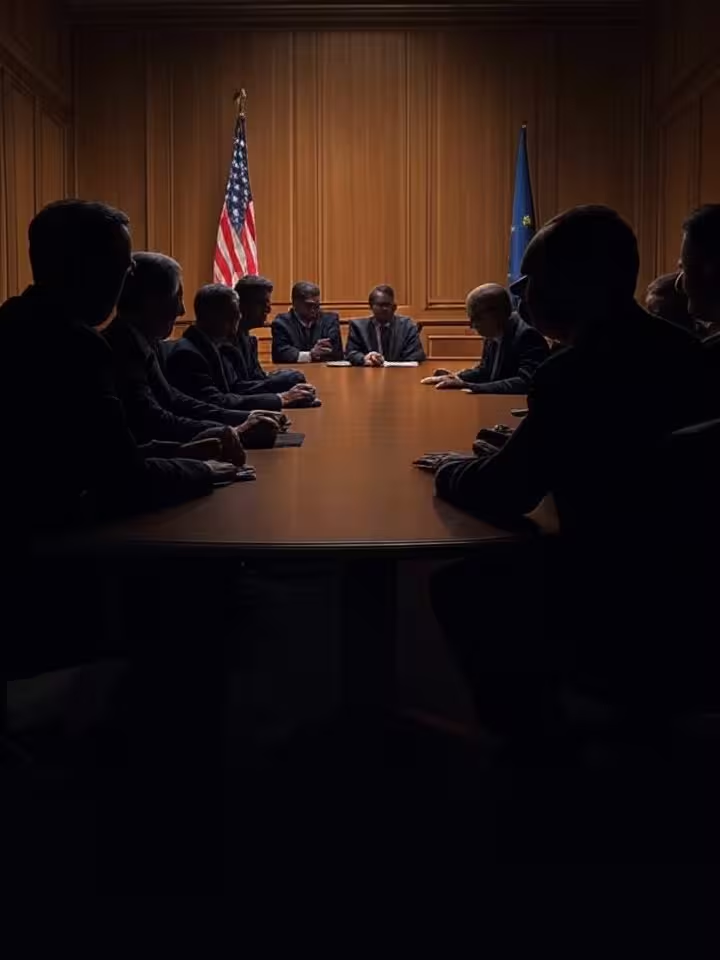
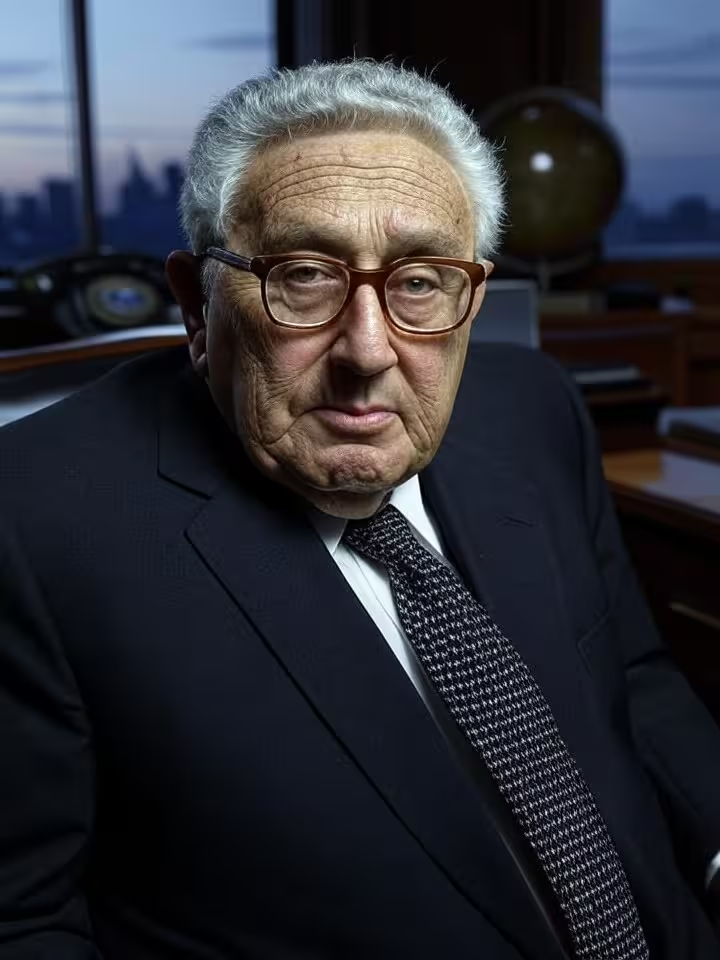
Des membres fondateurs comme David Rockefeller aux leaders technologiques actuels comme Eric Schmidt, les États-Unis font partie intégrante du groupe Bilderberg depuis sept décennies. Cette enquête approfondie révèle l'histoire documentée de la participation américaine au forum transatlantique le plus exclusif au monde.
Les États-Unis ont contribué à la création du Bilderberg en 1954, avec un financement soutenu par la CIA et 11 participants américains à la réunion inaugurale.
Des personnalités comme Henry Kissinger, David Rockefeller et Bill Clinton y ont participé avant d'assumer des rôles politiques majeurs.
Les États-Unis ont accueilli six réunions du Bilderberg sur leur territoire (1957, 1964, 1971, 1978, 1985, 2008).
Les Américains représentent systématiquement un tiers des participants, parmi lesquels des dirigeants politiques, des chefs d'entreprise et des innovateurs technologiques.
Parmi les participants américains récents figurent des directeurs des services de renseignement, des PDG de la Silicon Valley et des personnalités politiques de tous bords.
Les réunions restent privées, mais les listes de participants et les ordres du jour sont rendus publics depuis 2010.
Les réunions ne débouchent pas sur des mandats politiques directs, mais des réseaux d'influence s'étendent à travers les gouvernements et les entreprises.
Lorsque 50 personnalités influentes se sont réunies dans un hôtel néerlandais en mai 1954, près d'un quart d'entre elles étaient américaines. Ce n'est pas une coïncidence : les États-Unis ont joué un rôle essentiel dans la création de ce qui allait devenir la conférence annuelle la plus exclusive au monde.
Le groupe Bilderberg réunit chaque année environ 130 personnalités influentes pour discuter des défis mondiaux en toute confidentialité. Contrairement aux forums publics ou aux sommets officiels, les participants s'expriment sans attribution, créant ainsi un environnement propice à un dialogue franc sur tous les sujets, de la prolifération nucléaire à l'intelligence artificielle.
Il est important de comprendre l'implication américaine dans le Bilderberg pour plusieurs raisons. Tout d'abord, elle met en lumière la manière dont les réseaux d'élite transatlantiques fonctionnent au-delà des canaux diplomatiques officiels. Deuxièmement, elle révèle quels Américains ont accès à ces discussions exclusives - et à quel moment de leur carrière. Enfin, elle montre comment les forums privés complètent l'élaboration des politiques publiques, notamment en ce qui concerne l'OTAN, la coopération économique et les technologies émergentes.
Dans cette enquête, vous découvrirez
Les origines de l'implication des États-Unis dans la création du Bilderberg, soutenues par la CIA
Quels sont les présidents américains, les secrétaires d'État et les chefs d'entreprise qui ont participé à la conférence ?
Comment les réunions de Bilderberg tenues sur le sol américain ont façonné les relations transatlantiques
L'évolution des discussions sur la sécurité pendant la guerre froide vers les débats sur les technologies modernes et l'IA
Réseaux vérifiés reliant les participants au Bilderberg aux institutions politiques américaines
Cet article s'appuie exclusivement sur les documents officiels du Bilderberg, les rapports des médias grand public et des sources historiques documentées. Lorsque des informations ne peuvent être vérifiées, elles sont explicitement signalées ou exclues.
Origines et fondation : Le rôle des Américains soutenus par la CIA dans la création du Bilderberg
Le contexte de la guerre froide pour la coopération transatlantique
En 1952, le conseiller politique polonais Joseph Retinger a constaté qu'un dangereux fossé se creusait entre les États-Unis et l'Europe occidentale. Le sentiment anti-américain grandit à travers le continent, menaçant l'unité nécessaire pour contrer l'expansion soviétique.
Retinger s'est approché David Rockefeller et d'autres dirigeants américains avec une proposition : créer une conférence privée annuelle où les élites européennes et américaines pourraient discuter de leurs préoccupations communes sans protocole diplomatique ni examen public.
Financement de la CIA et Comité américain pour une Europe unie
L'initiative a reçu le soutien crucial de l'American Committee on a United Europe (ACUE), dirigé par William Donovan, ancien chef de l'Office of Strategic Services (OSS). Des documents déclassifiés révèlent que L'ACUE a reçu un financement de la CIA promouvoir une intégration européenne conforme aux intérêts des États-Unis.
Ce soutien a permis de mettre en place l'infrastructure organisationnelle et les ressources financières nécessaires à ce qui allait devenir la première réunion de Bilderberg. Des conseillers américains ont aidé à structurer la réunion pour maximiser le dialogue informel tout en évitant les engagements officiels qui pourraient contraindre les participants.
La réunion inaugurale de 1954 : 11 Américains parmi les 50 participants
Du 29 au 31 mai 1954, l'hôtel de Bilderberg à Oosterbeek, aux Pays-Bas, a accueilli une réunion sans précédent. Les 11 participants américains étaient les suivants :
David Rockefeller - Banquier qui présidera le comité directeur pendant des décennies
C.D. Jackson - Expert en guerre psychologique et conseiller de l'administration Eisenhower
Dean Rusk - Président de la Fondation Rockefeller, puis secrétaire d'État
Joseph E. Johnson - Président de la Fondation Carnegie pour la paix internationale
L'ordre du jour était axé sur l'attitude des Européens à l'égard du communisme, les politiques économiques et le renforcement des alliances avec l'OTAN. Ces sujets reflétaient directement les priorités de la politique étrangère américaine au plus fort des tensions de la guerre froide.
Sources de financement des premiers temps de l'Amérique
Au-delà des canaux de la CIA, la Fondation Ford a soutenu le secrétariat du groupe tout au long des années 1950. Cet accord de financement a permis à l'organisation de fonctionner de manière indépendante tout en maintenant des liens étroits avec les États-Unis.
En 1957, les États-Unis ont accueilli la première réunion du Bilderberg sur l'île de St Simons, en Géorgie. Simons Island, en Géorgie, ce qui témoigne de l'évolution du groupe, qui est passé d'une initiative européenne soutenue par les États-Unis à une véritable institution transatlantique.
L'ère de la guerre froide : Les intérêts stratégiques américains et les principaux acteurs
Les 46 ans d'assiduité d'Henry Kissinger
Lorsque Henry Kissinger, professeur à Harvard, a assisté à sa première réunion du Bilderberg en 1957, peu de gens auraient pu prédire l'influence qu'il exercerait par la suite sur la politique étrangère américaine. Kissinger a assisté à presque toutes les réunions de 1957 à 2003, assurant ainsi une continuité entre plusieurs administrations.
Sa participation a coïncidé avec son passage du statut d'universitaire à celui de conseiller à la sécurité nationale (1969-1975) et de secrétaire d'État (1973-1977). Bien qu'aucune décision politique directe n'ait découlé des réunions du Bilderberg, les relations que Kissinger a cultivées avec les dirigeants européens ont sans aucun doute influencé ses stratégies diplomatiques.
Réunions du Bilderberg sur le sol américain
Les États-Unis ont accueilli six réunions pendant la période de la guerre froide :
1957 - St. Simons Island, Géorgie : Priorité au renforcement de l'OTAN et à l'intégration européenne
1964 - Williamsburg, Virginie : Relations Est-Ouest et politique monétaire dans le contexte de l'escalade vietnamienne
1971 - Woodstock, Vermont : Les systèmes monétaires internationaux après l'effondrement de Bretton Woods
1978 - Princeton, New Jersey : Crises énergétiques et politique au Moyen-Orient
1985 - Rye Brook, New York : Contrôle de l'armement et stratégies de relance économique
Chaque réunion organisée par les États-Unis a permis aux participants américains d'orienter l'ordre du jour en fonction des préoccupations urgentes en matière de sécurité nationale, tout en nouant des relations avec leurs homologues européens.
Participants américains notables et leurs carrières ultérieures
Plusieurs Américains ont participé au Bilderberg avant d'occuper des fonctions politiques importantes :
Gerald Ford - A participé en 1964 et 1966 en tant que leader de la minorité parlementaire, est devenu président en 1974
Bill Clinton - Il est devenu gouverneur de l'Arkansas en 1991 et a été élu président en 1992.
Condoleezza Rice - A étudié dans les années 1990 avant de devenir conseiller à la sécurité nationale et secrétaire d'État
Les chefs d'entreprise américains sont devenus des habitués des réunions de l'époque de la guerre froide :
Des cadres d'Exxon, d'IBM et de grandes banques y ont participé régulièrement tout au long des années 1970
Des éditeurs de médias comme Katharine Graham du Washington Post ont participé dans les années 1970
Des leaders financiers tels que David Rockefeller et Felix Rohatyn ont influencé les discussions sur l'économie internationale.
Cette participation des entreprises reflète l'importance accordée par Bilderberg à la coopération économique, parallèlement aux préoccupations en matière de sécurité.
La transformation de l'après-guerre froide : De la sécurité à la mondialisation
Changement d'ordre du jour dans les années 1990
L'effondrement de l'Union soviétique a transformé les discussions du Bilderberg. Au lieu d'une stratégie d'endiguement, les réunions des années 1990 se sont concentrées sur :
Expansion de l'OTAN vers l'Est
Élargissement de l'Union européenne
Mondialisation du commerce et de la finance
Marchés émergents et développement
Parmi les participants américains de cette période figuraient des fonctionnaires de l'administration Clinton et des chefs d'entreprise qui se positionnaient en fonction des opportunités du marché mondial.
La sécurité après le 11 septembre et le Moyen-Orient
Après le 11 septembre 2001, l'ordre du jour des réunions du Bilderberg est revenu sur les questions de sécurité, mais dans un contexte différent de celui des discussions de la guerre froide. Les réunions des années 2000 ont abordé les questions suivantes
Coopération antiterroriste
Stabilité du Moyen-Orient et guerre en Irak
Sécurité énergétique et politique pétrolière
Prolifération nucléaire en Iran et en Corée du Nord
Les participants américains comprenaient des fonctionnaires de la défense et des conseillers en matière de renseignement, bien que les listes de participants de cette période fassent état d'un nombre moins élevé de hauts fonctionnaires par rapport aux décennies précédentes.
La réunion de Chantilly 2008 : Discussions sur la crise financière
La réunion de 2008 à Chantilly, en Virginie, la première organisée par les États-Unis en 23 ans, s'est déroulée quelques mois avant que la crise financière mondiale n'éclate au grand jour. Parmi les participants figurait Timothy Geithner, alors président de la Réserve fédérale de New York, qui allait devenir secrétaire au Trésor sous la présidence d'Obama.
Parmi les sujets abordés figuraient la cybersécurité, les défis énergétiques et la stabilité du système financier. Bien qu'aucun document public ne fasse état de discussions spécifiques, le moment choisi a suscité des questions quant à savoir si les participants de l'élite avaient anticipé la crise à venir.
L'ère moderne : Leaders technologiques et défis contemporains
La Silicon Valley se joint à la conversation
Les années 2010 ont été marquées par une représentation importante de l'industrie technologique américaine au Bilderberg :
Eric Schmidt - Président de Google, première participation en 2011
Peter Thiel - Cofondateur de PayPal et investisseur en capital-risque
Reed Hastings - PDG de Netflix
Sheryl Sandberg - Facebook/Meta COO
Satya Nadella - PDG de Microsoft
Ce changement reflète la reconnaissance par Bilderberg du fait que les entreprises technologiques exercent désormais une influence comparable à celle des gouvernements traditionnels et des institutions financières.
Participants américains récents et sujets d'actualité
La réunion de Lisbonne de 2023 comptait 19 Américains parmi les quelque 130 participants :
Avril Haines - Directeur du renseignement national
Stacey Abrams - Dirigeant politique et militant du droit de vote
Peter Thiel - Investisseur en capital-risque et donateur politique
Alex Karp - PDG de Palantir
Eric Schmidt - Ancien PDG de Google
Les sujets à l'ordre du jour sont les suivants
Gouvernance et réglementation de l'IA
Le conflit ukrainien et la sécurité européenne
Changement climatique et transition énergétique
Compétition technologique entre les États-Unis et la Chine
Stabilité du secteur bancaire après l'effondrement de la SVB
Transparence accrue depuis 2010
En réponse à l'intérêt croissant du public et aux critiques, le Bilderberg a commencé à publier des communiqués de presse officiels, des listes de participants et des ordres du jour généraux chaque année à partir de 2010. Il s'agit d'un changement important par rapport au secret total des décennies précédentes.
Toutefois, le contenu des discussions reste confidentiel en vertu de la “règle de Chatham House”, qui permet aux participants d'utiliser les informations reçues mais interdit l'attribution à des personnes ou à des organisations spécifiques.
Réseaux d'influence : Les institutions américaines liées au Bilderberg
Conseil des relations extérieures Chevauchement
Il existe un chevauchement important entre les participants au Bilderberg et les membres du Council on Foreign Relations (CFR), l'organisation de politique étrangère la plus influente des États-Unis. De nombreux participants américains au Bilderberg siègent au conseil d'administration du CFR ou en tant qu'associés principaux.
Ce lien crée des réseaux où les individus passent de discussions privées au Bilderberg à des recommandations politiques par le biais de publications et de témoignages du CFR.
Le lien avec la Commission trilatérale
David Rockefeller a fondé la Commission trilatérale en 1973, réunissant des dirigeants d'Amérique du Nord, d'Europe et du Japon. De nombreux participants au Bilderberg appartiennent également à la Commission trilatérale, créant ainsi des réseaux imbriqués de coordination des élites transatlantiques.
Représentation des universités et des groupes de réflexion
Des universités et des groupes de réflexion américains envoient régulièrement des participants :
Membres de la faculté de l'Université de Harvard
Chercheurs de la Brookings Institution
Boursiers du Conseil des relations extérieures
Chercheurs de Stanford et du MIT
Cette participation universitaire garantit que la recherche de pointe en matière d'économie, de technologie et de sécurité atteigne les décideurs politiques et les chefs d'entreprise dans des cadres informels.
Relations avec les médias et couverture médiatique
Les dirigeants des médias américains assistent au Bilderberg depuis des décennies, y compris les éditeurs et rédacteurs en chef du Washington Post, du New York Times et des principaux réseaux de télévision. Cela crée des conflits d'intérêts potentiels lorsque ces mêmes médias couvrent (ou ne couvrent pas) les activités du Bilderberg.
Toutefois, la couverture par les médias grand public a augmenté depuis 2010, les organes de presse fournissant des informations factuelles sur les réunions sans tomber dans le sensationnalisme.
Questions fréquemment posées
Q : Un président américain en exercice a-t-il participé au Bilderberg ?
R : Aucun président américain en exercice n'a jamais participé à une réunion du Bilderberg. Toutefois, plusieurs personnes y ont participé avant de devenir président, notamment Gerald Ford et Bill Clinton. La nature privée du groupe et l'absence de responsabilité publique rendraient la participation d'un président problématique d'un point de vue politique.
Q : Le groupe Bilderberg contrôle-t-il la politique du gouvernement américain ?
R : Aucune preuve ne vient étayer les affirmations selon lesquelles le Bilderberg contrôle directement la politique gouvernementale. La position officielle du groupe est que les réunions facilitent un dialogue informel sans décisions ou résolutions contraignantes. Toutefois, les réseaux constitués lors des réunions peuvent influencer la politique par les actions ultérieures des participants dans le cadre de leurs fonctions officielles.
Q : Pourquoi tant d'Américains se rendent-ils à l'école avant d'accéder à de hautes fonctions ?
R : Le Bilderberg semble identifier les leaders politiques et économiques en devenir au début de leur carrière. La fréquentation du Bilderberg peut refléter le fait que les réseaux existants reconnaissent les talents, plutôt que le Bilderberg “sélectionne” les futurs dirigeants. La corrélation est notable mais ne permet pas d'établir un lien de causalité.
Q : Les participants au Bilderberg sont-ils tenus au secret ?
R : Les participants acceptent la “règle de Chatham House”, qui leur permet d'utiliser les informations issues des discussions, mais interdit d'attribuer des déclarations à des personnes spécifiques. Cette règle diffère de celle du secret sous serment : les participants peuvent discuter de sujets, mais pas de qui a dit quoi.
Q : Comment les participants américains sont-ils sélectionnés ?
A : Le comité directeur de Bilderberg lance des invitations, les membres proposant des candidats pour approbation. Les critères de sélection comprennent la position professionnelle, l'expertise et la capacité à contribuer aux discussions. Le processus est opaque et les mécanismes d'invitation ne sont pas documentés publiquement.
Q : Quelle est l'importance des réunions organisées par les États-Unis ?
R : Lorsque le Bilderberg se réunit aux États-Unis, le nombre de participants américains augmente généralement et l'ordre du jour met souvent l'accent sur les préoccupations de politique étrangère des États-Unis. Ces réunions génèrent également une plus grande couverture médiatique américaine que les réunions européennes, ce qui permet de mieux faire connaître les activités du groupe au niveau national.
Principaux enseignements
Rôle fondamental : Les États-Unis ont apporté un soutien financier et organisationnel crucial, soutenu par la CIA, à la création du Bilderberg en 1954, avec 11 Américains parmi les 50 participants inauguraux.
Participation constante : Les Américains représentent environ un tiers des participants au cours des 70 années d'existence du Bilderberg, et 19 d'entre eux participeront à la réunion de 2023.
Modèle d'assiduité avant le bureau : De nombreux Américains ont participé au Bilderberg avant d'occuper de hautes fonctions politiques, notamment les présidents Ford et Clinton, bien que cette corrélation n'établisse pas de lien de cause à effet.
Des agendas évolutifs : La participation des États-Unis est passée des discussions sur la sécurité de la guerre froide à une approche moderne de la technologie, de la gouvernance de l'IA et de la concurrence géopolitique avec la Chine.
Réseaux imbriqués : Les participants américains au Bilderberg appartiennent souvent à des organisations apparentées telles que le Council on Foreign Relations et la Commission trilatérale, créant ainsi des réseaux d'élite transatlantiques.
Intégration dans la Silicon Valley : Dans les années 2010, des dirigeants américains de Google, Facebook, Microsoft et Netflix ont rejoint le Bilderberg, reflétant ainsi l'importance géopolitique croissante de la technologie.
Pas de mandat politique direct : Malgré une participation influente, aucune preuve vérifiée ne montre que le Bilderberg prend des décisions politiques contraignantes ou contrôle les actions des gouvernements, bien qu'une influence informelle par le biais de réseaux soit plausible.
Conclusion
Sept décennies de participation américaine au groupe Bilderberg révèlent une constante : les États-Unis considèrent ces réunions annuelles comme des forums précieux pour entretenir les relations transatlantiques, discuter des nouveaux défis et identifier les leaders en devenir.
De la fondation soutenue par la CIA aux débats actuels sur l'intelligence artificielle, la participation américaine a évolué en même temps que les priorités mondiales. Ce qui était à l'origine un outil de la guerre froide destiné à renforcer l'unité de l'Occident sert aujourd'hui d'espace privé où les élites politiques, commerciales et technologiques américaines s'engagent auprès de leurs homologues internationaux.
L'histoire documentée ne confirme pas les théories de la conspiration sur le gouvernement mondial et ne rejette pas le Bilderberg comme un simple “club de discussion”. La réalité se situe entre ces deux extrêmes : il s'agit d'une réunion annuelle exclusive au cours de laquelle des Américains puissants se joignent à des pairs internationaux pour des discussions officieuses qui peuvent influencer - mais ne dictent pas directement - des décisions politiques ultérieures.
Alors que la technologie remodèle la dynamique du pouvoir mondial et que de nouveaux défis géopolitiques apparaissent, la participation américaine au Bilderberg se poursuivra probablement, en s'adaptant aux circonstances tout en conservant l'objectif principal établi en 1954 : favoriser le dialogue transatlantique à l'abri du regard du public.
Connexions documentées entre le CFR et le Groupe Bilderberg. Analyse factuelle du réseau d'élite reliant les deux organisations depuis 1921.
Afin de fournir les meilleures expériences, nous utilisons des technologies telles que les cookies pour stocker et/ou accéder aux informations relatives à l'appareil. Le fait de consentir à ces technologies nous permettra de traiter des données telles que le comportement de navigation ou des identifiants uniques sur ce site. Le fait de ne pas consentir ou de retirer son consentement peut avoir un effet négatif sur certaines caractéristiques et fonctions.
Fonctionnel
Toujours activé
Le stockage technique ou l'accès est strictement nécessaire dans le but légitime de permettre l'utilisation d'un service spécifique explicitement demandé par l'abonné ou l'utilisateur, ou dans le seul but d'effectuer la transmission d'une communication sur un réseau de communications électroniques.
Préférences
Le stockage ou l'accès technique est nécessaire dans le but légitime de stocker des préférences qui ne sont pas demandées par l'abonné ou l'utilisateur.
Statistiques
Le stockage ou l'accès technique utilisé exclusivement à des fins statistiques.Le stockage ou l'accès technique est utilisé exclusivement à des fins statistiques anonymes. En l'absence de citation à comparaître, de conformité volontaire de la part de votre fournisseur d'accès à Internet ou d'enregistrements supplémentaires de la part d'un tiers, les informations stockées ou extraites à cette seule fin ne peuvent généralement pas être utilisées pour vous identifier.
Marketing
Le stockage ou l'accès technique est nécessaire pour créer des profils d'utilisateurs afin d'envoyer de la publicité, ou pour suivre l'utilisateur sur un site web ou sur plusieurs sites web à des fins de marketing similaires.