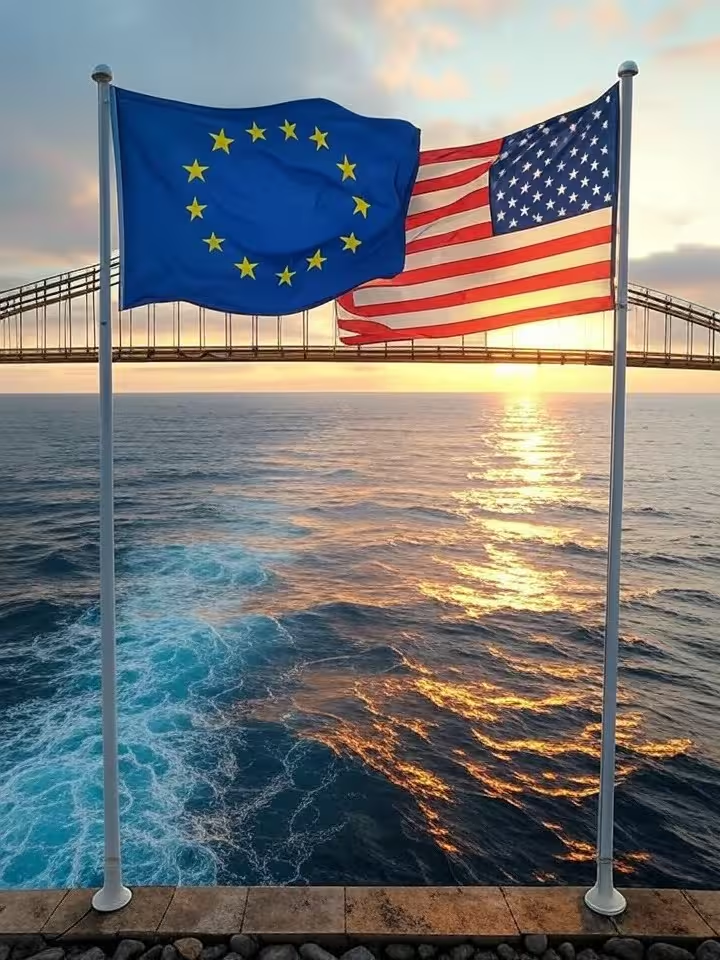
The term “transatlantic” defines the very essence of the Bilderberg Group, representing 70 years of Europe-North America dialogue that has shaped Western policy, economic alliances, and security frameworks.
Essential Facts About “Transatlantic” in Bilderberg Context
- “Transatlantic” specifically refers to political, economic, and security relations between Europe and North America
- The Bilderberg Group was founded in 1954 explicitly to strengthen transatlantic cooperation during Cold War tensions
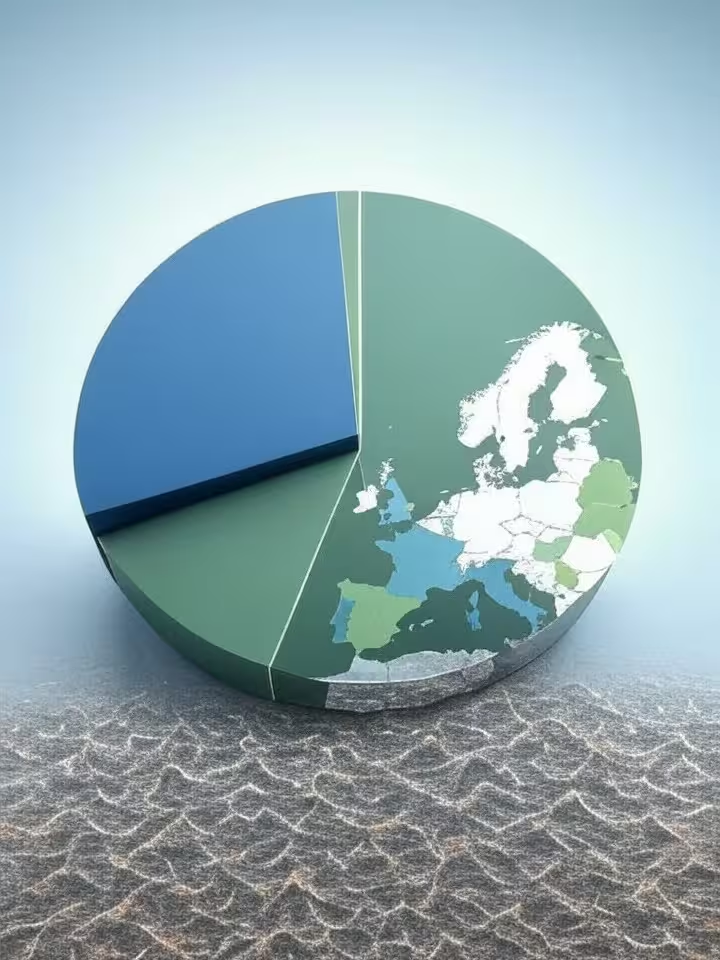
- Approximately two-thirds of participants come from Europe, one-third from North America, maintaining balanced representation
- Official agendas consistently feature “transatlantic relations” as core discussion topics
- The term encompasses trade, defense, technology policy, and shared Western democratic values
- Transatlantic focus continues to evolve with contemporary challenges like AI regulation and climate policy
- This geographic limitation differentiates Bilderberg from truly global forums
Introduction: Why “Transatlantic” Matters in Understanding Bilderberg
The term “transatlantic” represents far more than a geographic descriptor in Bilderberg terminology—it defines the fundamental purpose and structure of one of the world’s most influential private forums. When Bilderberg uses “transatlantic,” it specifically denotes the complex web of relationships between European nations and North America, particularly the United States and Canada.
This matters because understanding the transatlantic framework reveals how Western elite networks coordinate on global challenges. Since 1954, the first Bilderberg meeting established this geographic focus as central to preventing misunderstandings that could fracture the Western alliance.
In this comprehensive analysis, you’ll discover:
- The historical origins of “transatlantic” in Bilderberg’s founding mission
- How the term shapes participant selection and discussion agendas
- Practical applications across economic, security, and technology policy
- Evolution of transatlantic cooperation from Cold War to digital age
- Criticisms and limitations of this geographic focus
- Connections to broader global governance structures
At a time when Western unity faces unprecedented challenges—from trade tensions to divergent approaches on China and climate change—understanding how Bilderberg conceptualizes and reinforces transatlantic ties provides crucial insight into informal power networks shaping international policy.
The Historical Foundation: Why Bilderberg Adopted “Transatlantic” as Core Identity
The Bilderberg Group’s transatlantic focus emerged directly from post-World War II geopolitical realities. In 1954, when Polish political adviser Jozef Retinger and Prince Bernhard of the Netherlands convened the first meeting at Hotel de Bilderberg in Oosterbeek, Netherlands, their explicit goal was addressing rising anti-American sentiment in Europe.
Official archives from the Bilderberg Meetings website confirm that the inaugural agenda centered on “European unity and Atlantic community.” This wasn’t accidental—it reflected urgent concerns that misunderstandings between Europe and America could undermine the nascent Western alliance against Soviet expansion.
The North Atlantic Treaty Organization (NATO), established just five years earlier in 1949, provided the institutional framework for transatlantic military cooperation. Bilderberg complemented this by creating an informal space where leaders could discuss sensitive topics without diplomatic constraints or public scrutiny.
Throughout the 1950s and 1960s, “transatlantic” in Bilderberg terminology remained tightly linked to Cold War strategy. Verified participant lists show figures like Henry Kissinger and David Rockefeller attending regularly, representing the elite networks coordinating Western responses to communist challenges.
The steering committee structure—still in place today—ensures balanced transatlantic representation, with members from both European and North American countries selecting participants and shaping agendas. This institutional design embeds the transatlantic principle into Bilderberg’s operational DNA.
By the 1970s and 1980s, as globalization accelerated, the term evolved beyond pure security concerns. The 1986 Gleneagles meeting addressed transatlantic economic relations amid Reagan-era monetary policies, demonstrating how “transatlantic” adapted while maintaining its core geographic meaning—always Europe and North America, never expanding to genuinely global representation.
How “Transatlantic” Shapes Bilderberg Meeting Structure and Participation
The transatlantic framework directly determines who receives invitations to Bilderberg conferences. Official participant lists, published after each meeting, consistently show approximately two-thirds European and one-third North American attendees—a ratio maintained deliberately to reflect the geographic balance.
This selection process follows specific criteria focused on transatlantic influence. Potential participants must hold positions enabling them to affect policy or opinion across the Atlantic divide. This explains why European Commission presidents, NATO officials, and executives from multinational corporations dominate attendance—they operate in inherently transatlantic contexts.
The agenda structure reinforces this focus. Recent official agendas from 2019-2023 include explicit items like “The Future of Transatlantic Relations,” “Transatlantic Trade,” and “Transatlantic Defense.” These aren’t vague placeholders—they represent substantive discussion frameworks for addressing specific policy challenges.
Meeting locations alternate between Europe and North America, further embodying the transatlantic principle. The 2022 Washington, D.C. conference focused heavily on transatlantic responses to the Russia-Ukraine conflict, while the 2023 Lisbon gathering addressed shared European-American challenges in AI regulation.
Importantly, while participants occasionally include figures from Asia, Africa, or Latin America, they attend as observers or topic specialists, not as representatives of additional geographic blocs. The core identity remains strictly transatlantic, distinguishing Bilderberg from broader forums like the World Economic Forum or G20 summits.
Transatlantic Economic Cooperation: From TTIP to Digital Trade
Economic policy represents perhaps the most concrete application of “transatlantic” in Bilderberg discussions. The Europe-North America economic relationship constitutes the world’s largest bilateral trade partnership, valued at over $1 trillion annually according to U.S. Department of Commerce data.
Bilderberg meetings have frequently addressed frameworks for deepening this integration. The Transatlantic Trade and Investment Partnership (TTIP), negotiated during the Obama administration, appeared on the 2015 agenda as participants debated regulatory harmonization and investment protections. Though TTIP ultimately stalled, these discussions revealed how informal elite networks shape formal trade negotiations.
Financial regulation provides another transatlantic dimension. Following the 2008 financial crisis, Bilderberg agendas included items on coordinating European and American banking reforms. Participants like Goldman Sachs executives and European Central Bank officials could discuss supervisory approaches beyond official diplomatic channels.
More recently, digital economy challenges have emerged as central transatlantic concerns. The 2023 meeting addressed divergent approaches to data privacy, with Europe’s GDPR representing stricter standards than American frameworks. These discussions matter because they involve executives from Google, Meta, and other tech giants alongside government officials who will implement regulations.
Energy policy has also featured prominently, especially since Russia’s invasion of Ukraine. The 2022 agenda included “Energy Security and Sustainability,” reflecting European dependence on American liquefied natural gas exports and coordination on sanctions against Russian energy revenues.
Critics note that this economic focus can prioritize corporate interests over public welfare, but verified discussions center on maintaining competitive advantage for transatlantic economies against emerging powers, particularly China.
Security and Defense: NATO’s Informal Complement
The security dimension of “transatlantic” in Bilderberg terminology closely parallels NATO’s mission while operating without formal structure. Meetings regularly address defense spending, cyber threats, counterterrorism, and strategic challenges from adversaries.
The 2022 Washington conference occurred amid unprecedented unity on supporting Ukraine against Russian aggression. Discussions reportedly focused on sustaining military aid, coordinating sanctions, and managing escalation risks—all quintessentially transatlantic security concerns requiring European-American coordination.
Cybersecurity represents an evolving transatlantic priority. The 2019 Montreux agenda included “Cyber Threats,” acknowledging that digital infrastructure vulnerabilities affect both continents equally. Participants from intelligence agencies and cybersecurity firms could discuss threats beyond what public forums allow under Chatham House Rule protections.
NATO officials frequently attend Bilderberg, including former Secretary General Jens Stoltenberg and current leadership. Their presence underscores how the conference serves as an unofficial complement to formal alliance structures, allowing for franker exchanges on burden-sharing and strategic priorities.
China’s rise has increasingly shaped transatlantic security discussions. The 2018 Turin meeting addressed “US World Leadership” and “China,” reflecting debates about whether Washington and European capitals should coordinate containment strategies or pursue different engagement approaches.
Critically, these security discussions never include Russian or Chinese participants, maintaining the exclusive transatlantic character even when discussing those powers.
Evolution and Adaptation: From Cold War to Multipolar World
While “transatlantic” has remained Bilderberg’s geographic core, its application has evolved significantly across seven decades. During the Cold War, the term essentially meant “anti-Soviet Western alliance.” Today it encompasses far broader challenges.
Climate policy emerged as a transatlantic concern in the 2000s, with meetings addressing coordination on carbon reduction and clean energy transitions. The 2023 agenda included “Climate Change and Sustainability,” reflecting recognition that environmental challenges require coordinated European-American leadership regardless of political changes.
Artificial intelligence represents the newest frontier for transatlantic coordination. AI governance discussions in recent meetings acknowledge that regulatory frameworks developed separately in Brussels and Washington could fragment global technology markets or create competitive disadvantages against Chinese AI development.
Demographic and migration challenges have also entered transatlantic discourse. Both Europe and North America face aging populations, labor shortages, and contentious debates over immigration policy. Bilderberg discussions reportedly explore how these shared challenges might require coordinated approaches.
The rise of populist movements challenging transatlantic cooperation itself has become a discussion topic. The 2016 meeting occurred shortly before Brexit and Trump’s election—both events threatening established transatlantic frameworks. Subsequent agendas have addressed “Populism in Europe” and political polarization.
This adaptability demonstrates that “transatlantic” in Bilderberg terminology isn’t frozen in Cold War amber but rather represents an ongoing commitment to Europe-North America coordination across whatever issues emerge as priorities.
Criticisms and Limitations of the Transatlantic Focus
The exclusive transatlantic character of Bilderberg has drawn substantial criticism, particularly as global power dynamics shift toward multipolarity. Critics argue that limiting participation to European and North American elites creates blind spots and perpetuates Western-centric worldviews.
Reports from outlets like Politico have suggested this geographic restriction marginalizes perspectives from rapidly growing economies in Asia, Africa, and Latin America. In an era when China’s economy rivals America’s and India emerges as a major power, critics question whether purely transatlantic forums can effectively address genuinely global challenges.
The lack of transparency compounds these concerns. While Bilderberg publishes participant lists and agendas, actual discussion content remains private under Chatham House Rule. This prevents outsiders from verifying whether transatlantic cooperation truly serves broad public interests or primarily elite economic interests.
Defenders respond that focused geographic scope enables more productive dialogue than unwieldy global forums. They argue that Europe and North America share fundamental democratic values, legal traditions, and economic systems that justify privileged cooperation channels. Official statements emphasize strengthening this alliance doesn’t preclude engagement with other regions through different mechanisms.
Public perceptions vary by region. European surveys generally show strong support for transatlantic cooperation, viewing American partnership as essential for security and prosperity. American foreign policy establishments traditionally prioritize Atlantic alliances, though this consensus has weakened amid recent political polarization.
Academic analyses acknowledge Bilderberg’s role in maintaining transatlantic elite cohesion but question whether this informal network should wield such influence without democratic accountability. The tension between effective coordination and representative governance remains unresolved.
Frequently Asked Questions About “Transatlantic” in Bilderberg Context
Does “transatlantic” in Bilderberg include countries outside Europe and North America?
No, “transatlantic” specifically refers to Europe-North America relations. While occasional participants from other regions attend as topic specialists, the core geographic focus remains strictly limited to countries on both sides of the Atlantic Ocean. This distinguishes Bilderberg from truly global forums.
Why does Bilderberg maintain this transatlantic limitation rather than expanding globally?
The transatlantic focus reflects Bilderberg’s founding mission to strengthen Europe-North America understanding and prevent alliance fractures. Organizers argue that shared democratic values, legal traditions, and security interests among Atlantic nations justify dedicated cooperation channels. Expanding beyond this scope would fundamentally alter the group’s identity and purpose.
How does the transatlantic framework affect discussion topics at Bilderberg meetings?
The transatlantic lens shapes how global issues are discussed. Topics like China’s rise, climate change, or AI regulation are examined specifically through implications for Europe-North America coordination and competitive positioning. Official agendas consistently feature items explicitly labeled “transatlantic” to maintain this geographic focus.
Has the meaning of “transatlantic” in Bilderberg changed since 1954?
While the geographic definition remains constant (Europe-North America), the substantive areas of cooperation have expanded dramatically. Cold War security concerns have given way to broader discussions encompassing digital regulation, climate policy, and managing relations with rising powers. The term has adapted to contemporary challenges while maintaining its core geographic meaning.
Do participants view “transatlantic” as superior to other regional partnerships?
Available evidence suggests participants view transatlantic cooperation as uniquely important due to shared values and intertwined security interests, but not necessarily superior to all other partnerships. The exclusive focus reflects practical considerations about productive dialogue rather than explicit claims of Western superiority, though critics interpret the structure differently.
Key Takeaways: Understanding Bilderberg’s Transatlantic Framework
- Geographic Specificity: “Transatlantic” in Bilderberg terminology means exclusively Europe-North America relations, not broader global cooperation. This geographic limitation defines participant selection and discussion frameworks.
- Historical Foundation: The term emerged from Bilderberg’s 1954 founding mission to strengthen Western alliance during Cold War tensions, building on NATO’s security framework with informal elite dialogue.
- Structural Embedding: The steering committee’s balanced representation and consistent two-thirds European, one-third North American participant ratios institutionalize the transatlantic principle in Bilderberg’s operational structure.
- Evolving Applications: While maintaining geographic focus, “transatlantic” has expanded from pure security concerns to encompass trade, technology regulation, climate policy, and managing relations with rising powers like China.
- Ongoing Relevance: Despite multipolar shifts in global power, Bilderberg maintains that dedicated transatlantic cooperation channels remain essential for coordinating between democracies facing shared challenges from authoritarian competitors.
- Legitimate Criticisms: The exclusive geographic focus faces valid critiques about Western-centrism and lack of representation for emerging economies, raising questions about whether such forums can effectively address truly global issues.
- Practical Impact: Understanding Bilderberg’s transatlantic framework reveals how informal elite networks complement formal institutions like NATO and the EU in shaping Western policy coordination beyond public democratic processes.
Verified Sources and References
- News: The Guardian, “Bilderberg Group Meeting Global Elites” (2019) – Guardian Report
- News: Politico, “Bilderberg Group Meeting Washington DC” (2022) – Politico Analysis
- News: BBC, “Bilderberg History Overview” – BBC Report
- External Authority: U.S. Department of Commerce, Transatlantic Trade Data – Commerce.gov