The Bilderberg Meetings have gathered the world’s most powerful figures behind closed doors, sparking debate about whether such secrecy enables genuine dialogue or hides undemocratic influence. This investigation examines both sides using only verified sources.
- The Bilderberg Group has operated under strict confidentiality rules since 1954, using the Chatham House Rule to protect speaker identities
- 120-150 global elites attend annually, including heads of state, CEOs, and intelligence officials
- Supporters claim secrecy enables candid discussions on global challenges without political grandstanding
- Critics argue the lack of transparency fuels justified suspicions about backroom deals affecting public policy
- Since 2010, the group has published participant lists and topics afterward—a partial transparency measure
- The debate reflects broader tensions between elite deliberation and democratic accountability
- No verified evidence exists of illegal activity, but the secrecy itself remains controversial
Introduction: Why Bilderberg’s Secrecy Matters in 2024
When approximately 130 of the world’s most influential people gather each year at a luxury hotel surrounded by armed security, no press allowed, what exactly happens inside? This question has haunted the Bilderberg Meetings since their founding in 1954, creating one of international relations’ most persistent controversies.
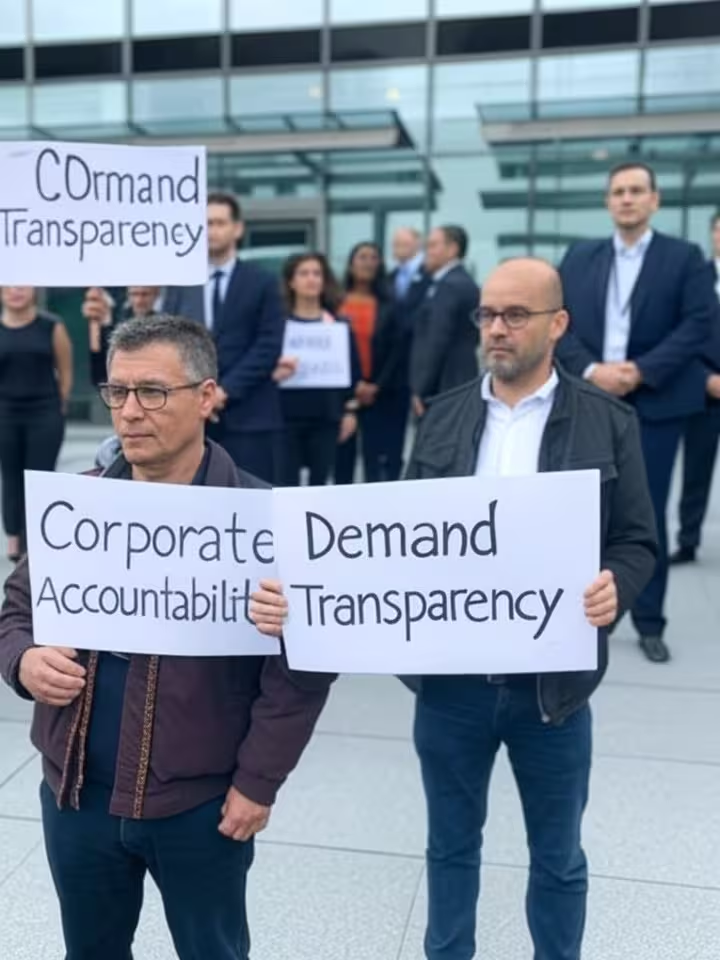
The stakes of this debate extend far beyond conspiracy theories. In an era when public trust in institutions has reached historic lows, the question of whether powerful figures should meet in secret touches fundamental issues of democratic accountability. The Bilderberg approach represents a particular philosophy: that genuine dialogue requires confidentiality, free from media distortion and political posturing.
In this article, you’ll learn:
- The historical origins and evolution of Bilderberg’s secrecy protocols
- Evidence-based arguments supporting confidential elite discussions
- Legitimate criticisms and their factual basis
- How Bilderberg’s approach compares to other global forums
- What we actually know versus unverified speculation
Historical Foundation: Why Secrecy Was Built Into Bilderberg From Day One
The Cold War Context of 1954
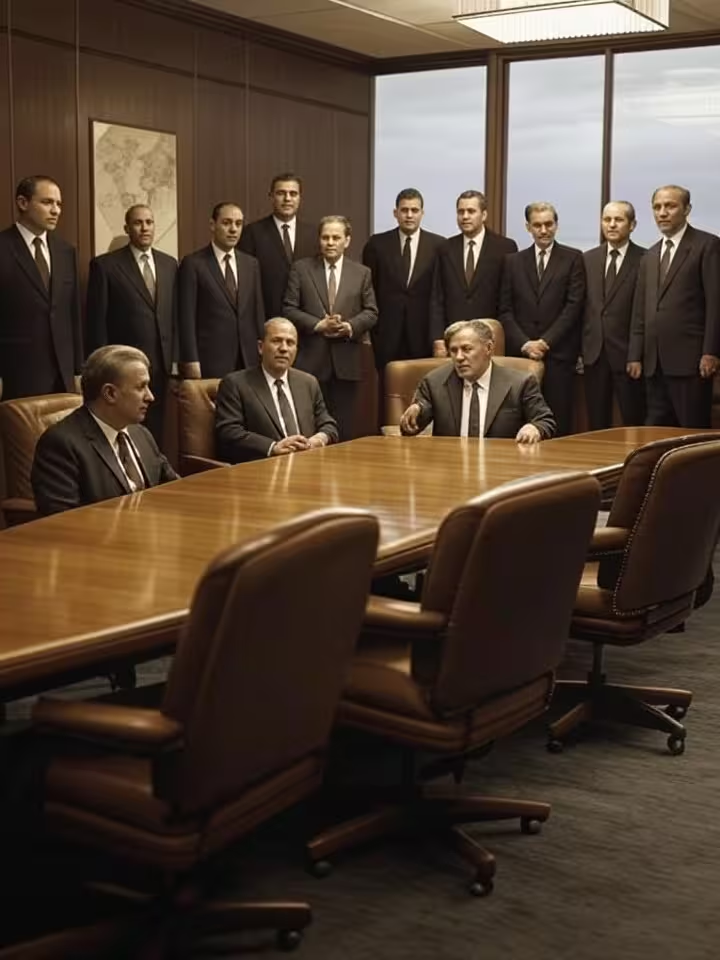
The first Bilderberg conference took place May 29-31, 1954, at the Hotel de Bilderberg in Oosterbeek, Netherlands. Founder Jozef Retinger, along with Dutch Prince Bernhard and CIA officer Walter Bedell Smith, designed the meetings to address growing anti-American sentiment in Western Europe during the Cold War.
From the beginning, confidentiality was considered essential. Prince Bernhard, the group’s first chairman, explained that only private settings would allow European and American leaders to speak frankly about communism, trade barriers, and emerging nuclear tensions without triggering diplomatic incidents.
The founding participants included then-CIA Director Walter Bedell Smith, Unilever chairman Paul Rijkens, and David Rockefeller—establishing a pattern of mixing political, corporate, and intelligence figures that continues today.
Evolution Through Decades of Global Change
Bilderberg topics have shifted with geopolitical realities. The 1973 Saltsjöbaden meeting reportedly discussed the oil crisis during the OPEC embargo. The 1991 Baden-Baden meeting famously included then-Arkansas Governor Bill Clinton, who would become president 18 months later.
By the 2000s, discussions expanded to globalization, digital technology, and later cybersecurity. The 2022 Washington DC meeting addressed post-pandemic geopolitical realignment, while 2023’s Lisbon gathering focused on Ukraine and artificial intelligence.
Throughout these shifts, the core secrecy principle has remained unchanged, defended as necessary for substantive rather than performative dialogue.

The Case FOR Secrecy: Evidence-Based Arguments
How the Chatham House Rule Functions
Bilderberg operates under the Chatham House Rule, established by the Royal Institute of International Affairs in 1927. This protocol allows participants to use information discussed but prohibits attributing statements to specific individuals or their organizations.
According to the official Bilderberg website, this approach “encourages openness and the sharing of information” by removing the political and reputational risks of public attribution. A CEO can explore controversial policy ideas without immediately facing shareholder backlash. A minister can test positions without triggering diplomatic crises.
Preventing Grandstanding and Media Distortion
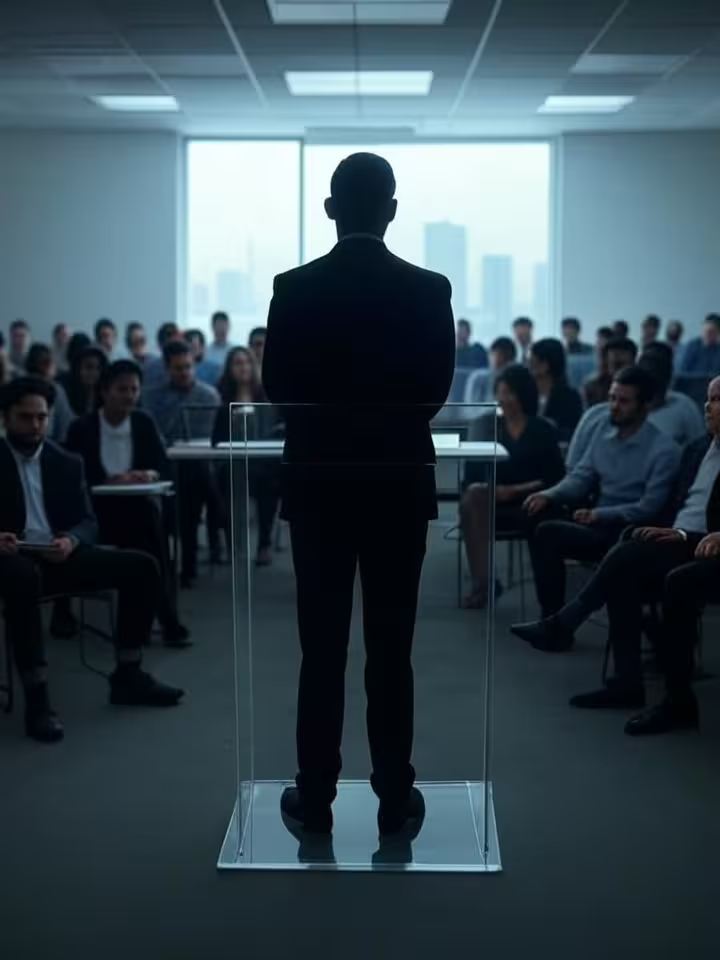
Steering Committee member Victor Halberstadt argued in a 2018 Financial Times interview that secrecy prevents the “theatrical performances” common in public forums. Without cameras and reporters, participants can change their minds, admit uncertainty, and engage in genuine problem-solving rather than position-defending.
This is particularly relevant in the social media age, where a single comment can be stripped of context and amplified globally within hours. Supporters contend that substantive discussions on sensitive topics—from financial regulation to intelligence sharing—simply cannot happen under constant public scrutiny.
Partial Transparency as a Compromise
Since 2010, Bilderberg has published participant lists and discussion topics on its official website after each meeting. The 2023 Lisbon agenda included “Banking System Stability,” “Ukraine,” “AI,” and “China”—providing broad public knowledge without compromising speaker confidentiality.
This represents more transparency than many government meetings or corporate board sessions, defenders argue, while maintaining the private character necessary for frank exchange.
The Case AGAINST Secrecy: Legitimate Concerns and Evidence
The Democratic Accountability Problem
When elected officials meet privately with corporate executives and intelligence chiefs, it raises fundamental questions about who influences policy decisions. Guardian journalist Charlie Skelton has documented how multiple political leaders attended Bilderberg shortly before ascending to higher office, including Tony Blair (1993), José Manuel Barroso (2004), and Emmanuel Macron (2014).
While correlation doesn’t prove causation, critics argue that citizens have a right to know when their representatives engage in private discussions with powerful interests on topics affecting public policy.
Composition Raises Conflict-of-Interest Questions
The 2023 participant list included Pfizer CEO Albert Bourla alongside health ministry officials, defense industry executives alongside NATO leaders, and banking CEOs alongside central bankers. Critics contend these combinations create obvious opportunities for regulatory capture and policy coordination that benefits elite interests over public welfare.
The security measures surrounding meetings—police cordons, no-fly zones, and heavily restricted access—fuel suspicions that something more than “informal discussion” occurs inside.
How Secrecy Enables Conspiracy Theories
Paradoxically, Bilderberg’s secrecy creates information vacuums filled by speculation. While most conspiracy theories about the group are unverified, the lack of transparency makes them impossible to definitively disprove, allowing unfounded claims to persist alongside legitimate concerns.
As BBC reporting has noted, this dynamic undermines public trust in institutions more broadly, creating a self-reinforcing cycle where secrecy breeds suspicion, which justifies further secrecy to “prevent misunderstanding.”

Comparative Analysis: How Other Elite Forums Handle Transparency
The World Economic Forum’s Different Approach
Davos meetings feature press access, live-streamed sessions, and extensive media coverage. While private side meetings certainly occur, the overall framework embraces public visibility. This hasn’t prevented criticism, but it provides accountability mechanisms absent from Bilderberg.
G7/G20 Summits and Public Diplomacy
Government-to-government meetings include press briefings, communiqués, and official records. While private discussions happen, the outcomes are public and subject to democratic scrutiny through legislatures and elections.
Bilderberg’s Unique Position
Bilderberg occupies a middle ground: more transparent than completely secret intelligence cooperation, but far less accountable than diplomatic summits or public policy conferences. Whether this position is optimal for frank discussion or problematic for democracy remains the central question.
What We Actually Know Versus Speculation
Verified Facts
- Approximately 120-150 participants attend annually
- Meetings last 2-3 days at luxury hotels
- No formal resolutions or votes occur (according to official statements)
- Participant lists and topics are published afterward
- The Chatham House Rule governs all discussions
Unverified Claims Without Evidence
- That Bilderberg “selects” world leaders
- That binding agreements are made
- That a “world government” agenda exists
- That journalists are “banned” from reporting (they simply aren’t granted access to private discussions)
The Gray Area: Informal Influence
The most difficult question involves informal influence. While no evidence suggests Bilderberg makes binding decisions, it clearly facilitates network-building among elites who do make decisions in their official capacities. Whether this constitutes improper influence or simply efficient coordination remains disputed.
Recent Developments and Future Trajectory
2024 Madrid Meeting Focus
The 2024 meeting addressed artificial intelligence governance, US-China relations, and European security following Ukraine developments. The inclusion of AI as a core agenda item reflects growing elite concern about technology governance.
Increased Transparency Pressures
Digital activism and FOIA requests have forced marginally greater openness. Some participants now acknowledge attendance publicly, though discussing content remains forbidden. This gradual shift may represent a long-term trend toward accountability.
The Generational Question
Younger participants, raised in an era of radical transparency and social media, may eventually push for reform from within. Whether the Bilderberg model can survive in its current form remains uncertain as expectations about elite accountability evolve.
Why does Bilderberg need to be secret if they claim nothing illegal happens?
Supporters argue that confidentiality enables participants to speak candidly without political consequences, explore controversial ideas, and change positions without public embarrassment. The Chatham House Rule protects speakers, not necessarily the content. Critics counter that this justification is insufficient given the power concentration involved and the public interest in knowing what’s discussed.
Has any verified information ever leaked from Bilderberg meetings?
Very few substantive leaks have occurred despite 70 years of meetings. Occasional participants have shared general impressions in interviews, but specific quotes or detailed accounts remain extremely rare. Major leaks throughout history typically involved participant lists before they were published officially, not meeting content. This could indicate either that confidentiality is genuinely respected or that participants have strong incentives not to violate it.
How does Bilderberg select participants?
A Steering Committee composed of European and American members coordinates invitations. According to official statements, about two-thirds are European and one-third North American, with a mix of political, corporate, academic, and media figures. The selection process remains largely opaque, though being a head of state, Fortune 500 CEO, or leading academic increases probability. There’s no public application process.
What is the relationship between Bilderberg and other elite groups like the Trilateral Commission or CFR?
Significant overlap exists in membership. Many Bilderberg participants are also members of the Council on Foreign Relations or Trilateral Commission. These organizations share similar transatlantic cooperation goals but differ in structure—CFR is a formal membership organization with published research, while Bilderberg remains an annual invitation-only meeting. Critics see this as an interconnected elite network; supporters view it as natural coordination among people working on similar issues.
Is there any evidence that Bilderberg discussions directly influence policy outcomes?
No smoking gun exists proving direct causation. However, circumstantial evidence shows policy alignments following meetings. The Euro’s development was reportedly discussed at Bilderberg in the 1990s before implementation. Iraq War planning allegedly involved Bilderberg discussions in 2002-2003, though this remains unverified. The challenge is distinguishing between Bilderberg influence versus participants simply discussing issues they’re already working on in official capacities. The secrecy makes definitive conclusions impossible.
Why don’t more journalists investigate or report on Bilderberg?
Several factors limit coverage: lack of access makes substantive reporting difficult; the confidentiality rules mean participants won’t provide quotes; and mainstream outlets sometimes have executives who attend (creating potential conflicts of interest). Some journalists like Daniel Estulin have made careers covering Bilderberg, but without inside sources, reporting often relies on external observation and official statements. Additionally, editors may view it as conspiracy-adjacent territory that damages credibility, despite legitimate transparency concerns.
Key Takeaways
- Bilderberg’s secrecy is intentional, not accidental — The confidentiality protocol was built into the meeting structure from 1954 specifically to enable candid dialogue among transatlantic elites without public attribution.
- Both sides have evidence-based arguments — Supporters credibly claim privacy enables substantive discussion; critics legitimately question democratic accountability when powerful figures meet secretly.
- Partial transparency exists but remains insufficient for critics — Publishing participant lists and topics afterward represents progress since 2010, but doesn’t address concerns about backroom influence or lack of real-time accountability.
- No verified evidence of conspiracy exists, but informal influence is real — While claims of “world government” planning lack proof, the networking and coordination among elites attending Bilderberg undoubtedly creates informal policy alignment.
- The debate reflects broader tensions in global governance — Bilderberg exemplifies the fundamental conflict between efficient elite coordination and democratic participation in an interconnected world.
- Comparison with other forums reveals a spectrum — Between completely transparent public conferences and classified government meetings, Bilderberg occupies a controversial middle ground with unique justifications and criticisms.
- The future of elite secrecy faces challenges — Generational expectations, digital transparency norms, and declining institutional trust may force evolution in how Bilderberg and similar groups operate.
Sources
- The Guardian – Bilderberg Coverage – Charlie Skelton’s investigative reporting (2009-2023)
- BBC News – Bilderberg Group Reports – Mainstream coverage and analysis (2004-2023)
- The New York Times – Bilderberg Archives – Historical reporting (1957-2024)
- Politico Europe – Bilderberg Analysis – European perspective on meetings (2015-2024)
- Chatham House – Official Rule Explanation – The confidentiality protocol used by Bilderberg
- Financial Times – Bilderberg Reports – Business and economic analysis (2010-2023)
- Pew Research Center – Public trust in institutions data (2023)