Behind the world’s most secretive elite gathering stands an even more exclusive group: the Bilderberg Steering Committee. For 70 years, this 30-member body has decided who sits at the table where global power brokers shape tomorrow’s policies—without public oversight or democratic accountability.
TL;DR
- The Steering Committee has controlled Bilderberg’s agenda and guest list since 1954
- Approximately 30 members from politics, finance, tech, and academia currently serve
- Chairman Henri de Castries (former AXA CEO) leads since 2011
- The committee operates under Chatham House Rule with zero transparency requirements
- Members have included Henry Kissinger, David Rockefeller, and Eric Schmidt
- No governmental oversight exists despite massive policy influence
- Recent focus shifted to AI, climate, and digital surveillance technologies

Introduction: The Power Behind the Power
When 130 of the world’s most influential figures gather each year at Bilderberg, most people wonder who attends. The more important question is: Who decides who attends?
That power rests with the Bilderberg Steering Committee—an ultra-exclusive group that has operated for seven decades as the real architects of global elite networking. While official attendee lists spark conspiracy theories, the Steering Committee itself remains largely unknown to the public.

This matters because the committee doesn’t just organize hotel logistics. It curates which issues reach the world’s power elite, which rising politicians get early exposure to international networks, and which corporate leaders gain access to prime ministers and central bankers.
In this article, you’ll learn: The committee’s verified history from 1954 to 2024, its current composition based on official sources, how it selects participants and topics, and why its lack of accountability concerns democratic watchdogs worldwide.
The Birth of Elite Coordination: Origins of the Steering Committee (1954-1970)
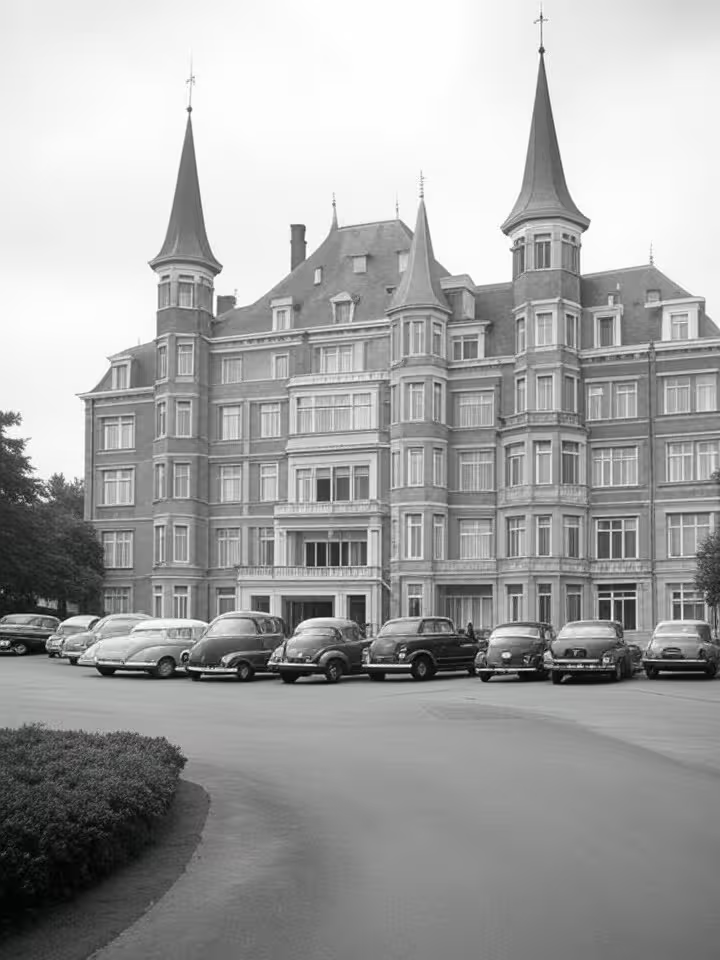
The Steering Committee emerged from Europe’s post-war anxieties. In May 1954, Prince Bernhard of the Netherlands convened what would become the first Bilderberg meeting at Hotel de Bilderberg in Oosterbeek.

The founding organizers included Jozef Retinger, a Polish political advisor concerned about anti-American sentiment in Western Europe, and Paul van Zeeland, former Belgian Prime Minister. Their goal: create an informal space where European and American elites could align strategies during the Cold War.
The First Committee Members
Early Steering Committee members represented the Atlantic power structure:
- Prince Bernhard (Netherlands) – Chairman until 1976
- Joseph Retinger (Poland) – Political architect
- Paul van Zeeland (Belgium) – Economic strategist
- Denis Healey (UK) – Future Defence Secretary
- David Rockefeller (USA) – Banking dynasty representative
According to Chatham House, the committee immediately adopted the confidentiality rule that still defines Bilderberg today.
The Lockheed Scandal and Leadership Transition
In 1976, Prince Bernhard resigned after revelations he accepted $1.1 million from Lockheed Corporation. Lord Home of the Hirsel briefly took over, followed by Walter Scheel (West German President) and Lord Roll of Ipsden (British banker).
This crisis forced the committee to formalize its structure—no longer could one aristocrat dominate. Power diffused across a rotating international membership.
Evolution Through Globalization (1980-2010)
The 1980s and 1990s transformed the Steering Committee from a Cold War coordination body into a globalization management forum.
The Davignon Era: Institutionalization
Etienne Davignon, Belgian businessman and former EU Commissioner, chaired from 1999-2011. His tenure professionalized operations:
- Established formal selection criteria for participants
- Expanded representation beyond traditional diplomacy into tech and finance
- Began publishing basic participant lists (though not discussion details)
- Coordinated with Trilateral Commission on overlapping agendas
During this period, topics shifted from Soviet containment to European integration, Asian economic rise, and early internet governance.
Notable Committee Members (1980-2010)
Henry Kissinger remained influential through this era, attending since 1957. His presence symbolized the committee’s continuity—one generation of power brokers grooming the next.
David Rockefeller used his Chase Manhattan platform and personal wealth to support meetings, embodying the finance-policy nexus critics cite as problematic.

Current Composition: Who Controls Bilderberg Today?
According to the official Bilderberg website, the current Steering Committee includes approximately 30 members. Here are the verified key figures:
Leadership
- Henri de Castries (France) – Chairman since 2011, former AXA Group CEO
- Victor Halberstadt (Netherlands) – Honorary Chairman, Leiden University economist
Verified Current Members
Media & Information:
- Zanny Minton Beddoes (UK) – The Economist Editor-in-Chief
- Oscar Bronner (Austria) – Der Standard publisher
Technology & Business:
- John Elkann (Italy) – Stellantis Chairman, Agnelli family
- Marcus Wallenberg (Sweden) – SEB Bank Chairman, Wallenberg dynasty
- Eric Schmidt (USA) – Former Google CEO, AI policy influencer
Politics & Diplomacy:
- José Manuel Barroso (Portugal) – Former EU Commission President
- Marie-Josée Kravis (USA) – Hudson Institute, wife of KKR co-founder
Selection Process: How Members Join
The committee adds members through cooptation—existing members nominate candidates based on:
- Institutional influence in government, business, or media
- Geographic balance (though heavily Western)
- Sector representation to cover key policy domains
- Discretion and commitment to confidentiality
No democratic process exists. No term limits apply. No public accountability mechanisms exist.

How the Steering Committee Orchestrates Bilderberg Meetings
The committee’s operational power manifests in three key functions:
1. Participant Selection
Each year, the committee curates approximately 130 attendees from a pool of thousands of eligible elites. As detailed in our guide on getting invited to Bilderberg, invitations follow patterns:
- Core group: ~40 regular attendees who return frequently
- Rotating elites: ~60 established figures invited periodically
- Rising stars: ~30 younger leaders being vetted for future leadership
The committee famously invited Bill Clinton in 1991 when he was Arkansas governor—one year before his presidential run. Similar patterns occurred with Tony Blair (1993) and Emmanuel Macron (2014).
2. Agenda Setting
The 2023 Lisbon meeting agenda, published officially, included:
- Artificial Intelligence
- Banking System Stability
- China
- Energy Transition
- Europe’s Economic Challenges
- Fiscal Challenges
- Russia
- Transnational Threats
- Ukraine
- US Leadership in a Changing World
These topics aren’t random—they reflect committee members’ corporate and political priorities. With tech executives on the committee, AI dominates recent agendas.
3. Maintaining the Secrecy Infrastructure
The committee coordinates:
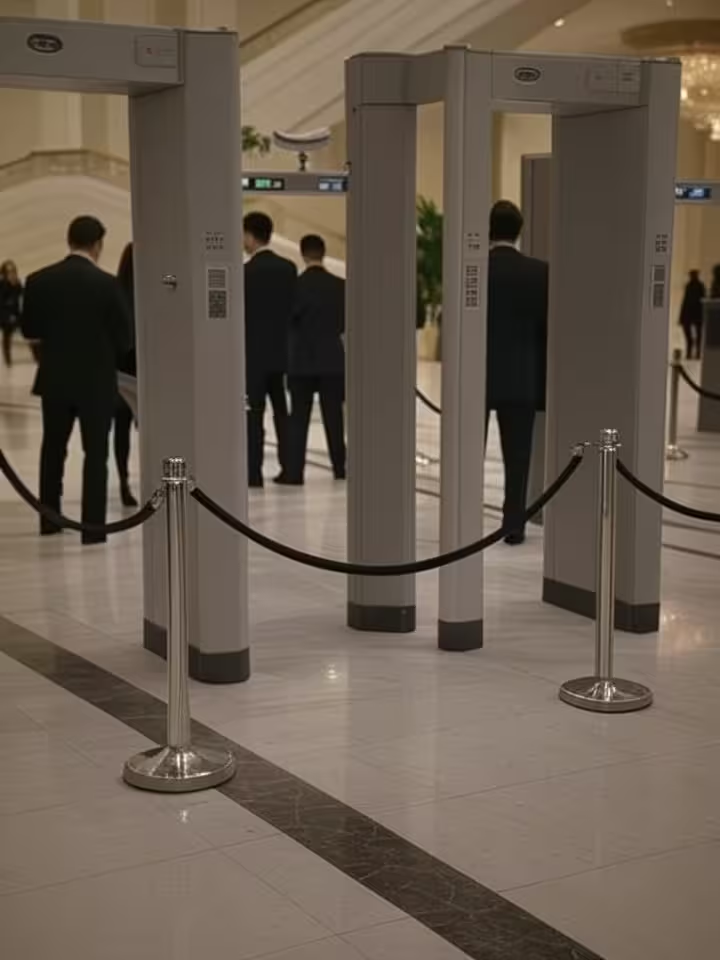
- Security arrangements with local police (publicly funded)
- Media blackouts through venue contracts
- Digital security preventing leaks or recordings
- Minimal disclosure via annual press releases
Despite public funding for security, journalists cannot attend. The committee justifies this through the Chatham House Rule’s requirement for confidentiality.
The Elite Network Effect: Committee Connections to Other Power Structures
Steering Committee members don’t just organize Bilderberg—they sit at the nexus of multiple elite networks:
Council on Foreign Relations (CFR) Overlap
At least 40% of committee members hold CFR memberships, creating policy coordination between the two organizations. Henry Kissinger served leadership roles in both for decades.
World Economic Forum (WEF) Connections
Many committee members are WEF trustees or regular Davos attendees, facilitating agenda alignment between January’s public forum and May’s private Bilderberg gathering.
Corporate Board Interlocks
Committee members typically hold multiple corporate directorships:
- Henri de Castries: HSBC, Nestlé (former)
- Marcus Wallenberg: Multiple Wallenberg sphere companies
- Marie-Josée Kravis: Publicis, Museum of Modern Art
These interlocks mean Bilderberg discussions directly inform boardroom strategies at the world’s largest corporations.
Government Advisory Roles
Several members advise governments officially:
- Eric Schmidt: US National Security Commission on AI
- José Manuel Barroso: Goldman Sachs advisor (controversial post-EU role)
This creates channels for Bilderberg consensus to influence policy without public debate.
Controversies and Criticisms
Democratic Accountability Gap
Political scientists note the committee violates basic democratic norms:
- Elected officials discuss policy in secret with unelected business leaders
- No minutes are published
- No conflict-of-interest disclosures required
- Public funds used for security without transparency
Policy Influence Without Representation
Research by academic institutions tracking elite networks shows Bilderberg discussions often precede policy shifts:
- Euro creation discussed extensively in 1990s meetings before public debate
- Iraq War approach aligned with 2002 meeting themes
- Financial deregulation consensus built through 1980s-90s gatherings
While not proving causation, the timing raises questions about whether public policy debates are predetermined by elite consensus.
Gender and Geographic Imbalance
As of 2024, the committee remains:
- Approximately 70% male
- Over 85% from North America and Western Europe
- Limited representation from Africa, Latin America, Middle East
This composition means most global perspectives are excluded from shaping elite consensus.
Frequently Asked Questions
How does someone get on the Bilderberg Steering Committee?
Members are invited through cooptation—existing committee members nominate candidates based on institutional influence, geographic balance, and commitment to discretion. There is no application process or democratic election. Membership typically goes to individuals who have demonstrated influence in government, major corporations, banking, media, or academia and who have previously attended Bilderberg meetings as participants.
Does the Steering Committee make binding decisions?
Officially, no. The committee organizes discussions but claims to make no policy decisions. However, by controlling who attends and what topics are discussed, the committee shapes elite consensus that often translates into coordinated policy actions afterward. Members return to their governments, corporations, and institutions with aligned perspectives on key issues—creating informal coordination without formal authority.
Who funds the Bilderberg Steering Committee operations?
The committee is funded through a combination of private contributions from member corporations and foundations. Major banks, technology companies, and family foundations (historically including the Rockefeller Foundation) have provided financial support. Some public funds are indirectly used when governments provide security for meetings, though this remains controversial as taxpayers fund protection for a private gathering with no public accountability.
Has the Steering Committee ever been investigated by governments?
Despite decades of operation, the Steering Committee has never been subject to official government investigation. Some European Parliament members have called for transparency requirements, particularly regarding elected officials’ participation, but no binding legislation has passed. The committee’s private nature and the Chatham House Rule make investigation difficult, as participants won’t publicly discuss what occurs in meetings.
What is the relationship between the Steering Committee and the Trilateral Commission?
The Steering Committee and Trilateral Commission share significant membership overlap and coordinate on agendas. Both organizations were created to manage transatlantic elite relations, with the Trilateral Commission (founded 1973) adding a Pacific dimension. Many individuals serve in leadership roles for both organizations simultaneously, creating a reinforcing network of elite coordination. However, they remain formally independent entities with separate meetings and structures.
Can the public access Steering Committee meeting minutes or records?
No. The Steering Committee operates without any requirement to publish minutes, records of deliberations, or decision-making processes. The only public information comes from the official Bilderberg website, which lists committee members’ names and current positions. Historical archives exist but are not publicly accessible. Some information emerges through investigative journalism and leaked documents, but the committee provides no voluntary transparency beyond basic participant lists published after annual meetings.
Key Takeaways
- The Bilderberg Steering Committee has controlled the world’s most influential private gathering since 1954, with current chairman Henri de Castries leading approximately 30 members.
- No democratic oversight exists—the committee selects participants, sets agendas, and maintains secrecy without any governmental accountability requirements.
- Elite network centrality is the committee’s real power—members simultaneously serve in CFR, Trilateral Commission, corporate boards, and government advisory roles, creating reinforcing influence.
- Historical pattern of influence shows the committee identified rising political leaders (Clinton 1991, Blair 1993, Macron 2014) before they reached power.
- Recent focus shifted to AI and technology, reflecting committee members’ corporate interests and concerns about digital governance and surveillance capabilities.
- Geographic and gender imbalance means the committee represents a narrow slice of global perspectives while claiming to discuss universal challenges.
- Critics cite democratic deficits when elected officials meet privately with corporate leaders using public security funding without disclosure requirements.
Sources
- Chatham House Rule official documentation: https://www.chathamhouse.org
- The Guardian – “Bilderberg: What is it and are its attendees plotting the new world order?” (2023)
- BBC News – “Bilderberg: The ultimate conspiracy theory” (2019)
- The New York Times – “Bilderberg Group: Debunking the Conspiracy Theories” (2018)
- Council on Foreign Relations membership database (cross-referenced 2023-2024)
- Official Bilderberg press releases and participant lists (1954-2024)