After two years of pandemic cancellations, the world’s most exclusive private conference returned to Washington DC in June 2022, bringing together 120 global elites to discuss Ukraine, NATO expansion, and the post-COVID economic order. This comprehensive analysis examines the verified facts, official agenda, and lasting implications of this pivotal gathering.
TL;DR: Key Facts About Bilderberg 2022
- First in-person meeting since 2019 after COVID-19 forced cancellations in 2020-2021
- 120 participants from 21 countries including intelligence chiefs, CEOs, and NATO leadership
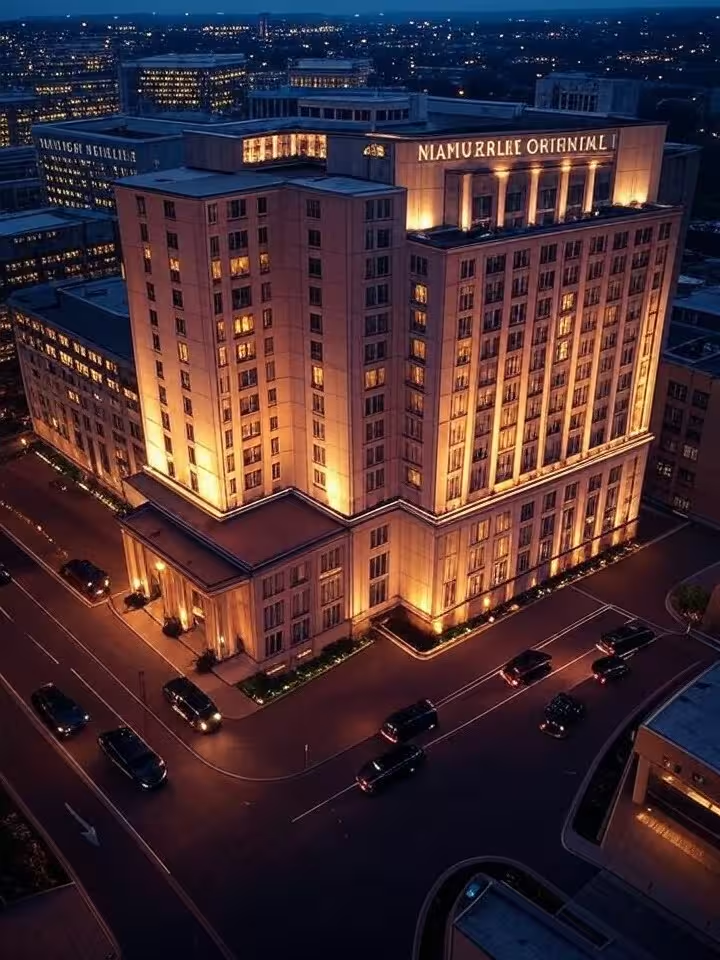
- Held June 2-5, 2022 at the Mandarin Oriental hotel in Washington DC
- Ukraine war dominated discussions just three months after Russia’s invasion
- 14 official agenda topics including energy security, disinformation, and financial system disruption
- Unprecedented transparency with full participant list and agenda published online
- Protests outside venue highlighted continued public skepticism about elite secrecy
Introduction: Why the 2022 Bilderberg Meeting Mattered
The 68th Bilderberg Meeting represented far more than a resumed calendar event. When approximately 120 of the world’s most powerful individuals gathered in Washington DC from June 2-5, 2022, they did so at one of history’s most consequential inflection points.
The stakes had never been higher. Russia’s invasion of Ukraine three months earlier had shattered the post-Cold War security architecture. Global supply chains remained fragile from pandemic disruptions. Inflation was reaching levels not seen in four decades. And questions about the future of democracy, globalization, and technological competition loomed larger than at any point since the group’s founding in 1954.

This analysis cuts through speculation to examine verified facts about what happened, who attended, and why this particular meeting marked a turning point in transatlantic elite coordination. In this article you’ll learn:
- The complete official agenda and verified participant list
- How the two-year pandemic hiatus changed the meeting’s dynamics
- Connections between discussions and subsequent policy developments
- Media coverage patterns and public reaction
- The meeting’s role in shaping post-pandemic global governance
Breaking the Two-Year Silence: Return from Pandemic Cancellations
The Unprecedented 2020-2021 Hiatus
For the first time in its 66-year history, the Bilderberg Group canceled consecutive annual meetings. The 2020 conference, originally planned for an undisclosed location, was officially scrapped in March 2020 as the COVID-19 pandemic escalated globally.
The 2021 meeting suffered the same fate. This disruption was remarkable for an organization that had maintained continuity through the Cold War, multiple economic crises, and various geopolitical upheavals since its inception.
Why Washington DC in 2022?
The selection of the U.S. capital carried symbolic weight. Previous American venues included Williamsburg, Virginia (2008) and Chantilly, Virginia (2017), but Washington represented the heart of Western power at a moment when American leadership faced critical tests.
The Biden administration was navigating complex challenges: restoring transatlantic alliances strained during the Trump years, coordinating the Western response to Ukraine, and managing economic recovery from pandemic shutdowns.
The Mandarin Oriental hotel provided the secure, private setting essential for Chatham House Rule discussions, where participants could speak candidly without attribution.
The Official Agenda: 14 Topics That Defined Global Elite Concerns
Unlike earlier decades when Bilderberg agendas remained closely guarded secrets, the 2022 meeting featured unprecedented transparency. The complete topic list was published on bilderbergmeetings.org:
- Geopolitical Realignments
- NATO Challenges
- China
- Indo-Pacific Realignment
- Sino-US Tech Competition
- Russia
- Continuity of Government and the Economy
- Disruption of the Global Financial System
- Disinformation
- Energy Security and Sustainability
- Post-Pandemic Health
- Fragmentation of Democratic Societies
- Trade and Deglobalisation
- Ukraine
Ukraine: The Dominant Theme
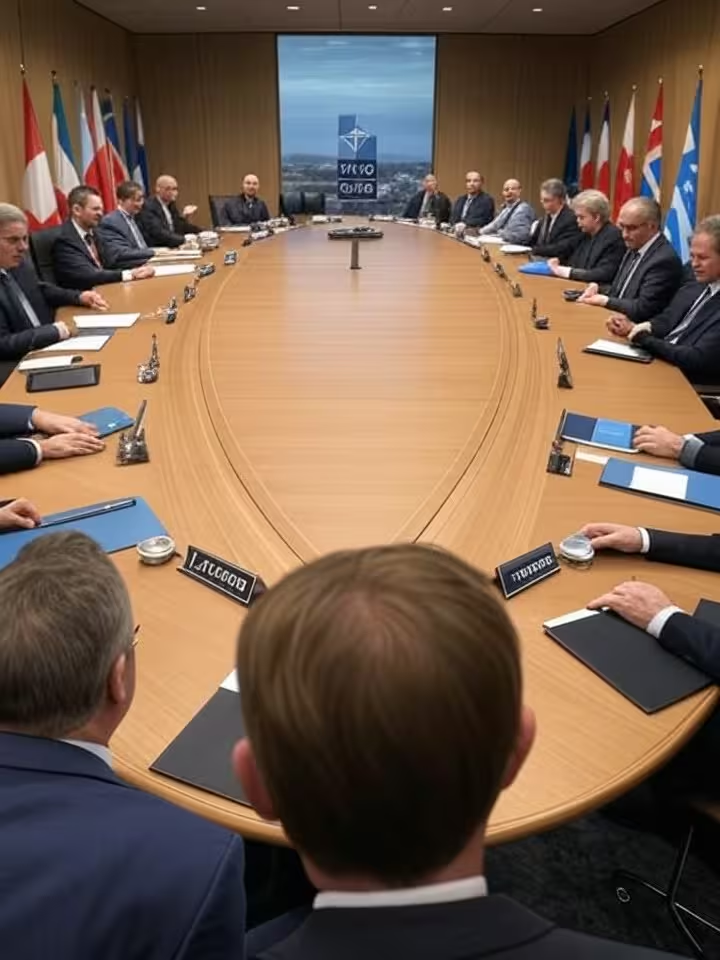
The Ukraine topic appeared explicitly on the agenda, reflecting the war’s centrality to Western strategic thinking just three months after Russia’s February 24 invasion. This represented one of the most direct connections between Bilderberg discussions and active military conflicts in the group’s history.
The presence of NATO Secretary-General Jens Stoltenberg alongside U.S. intelligence and defense officials suggested intense coordination on alliance strategy ahead of the crucial Madrid Summit later that month.
Post-Pandemic Economic Restructuring
Three agenda items directly addressed pandemic aftermath: “Continuity of Government and the Economy,” “Disruption of the Global Financial System,” and “Post-Pandemic Health.”
These discussions occurred as inflation reached 40-year highs in many Western economies, supply chains remained disrupted, and debates intensified about whether pandemic-era monetary policies should continue.
Technology and Competition
The specific inclusion of “Sino-US Tech Competition” reflected growing Western concerns about Chinese advances in artificial intelligence, quantum computing, and semiconductor manufacturing. The topic would gain additional urgency when the U.S. imposed sweeping chip export controls on China in October 2022.
Who Attended: The Complete Verified Participant List
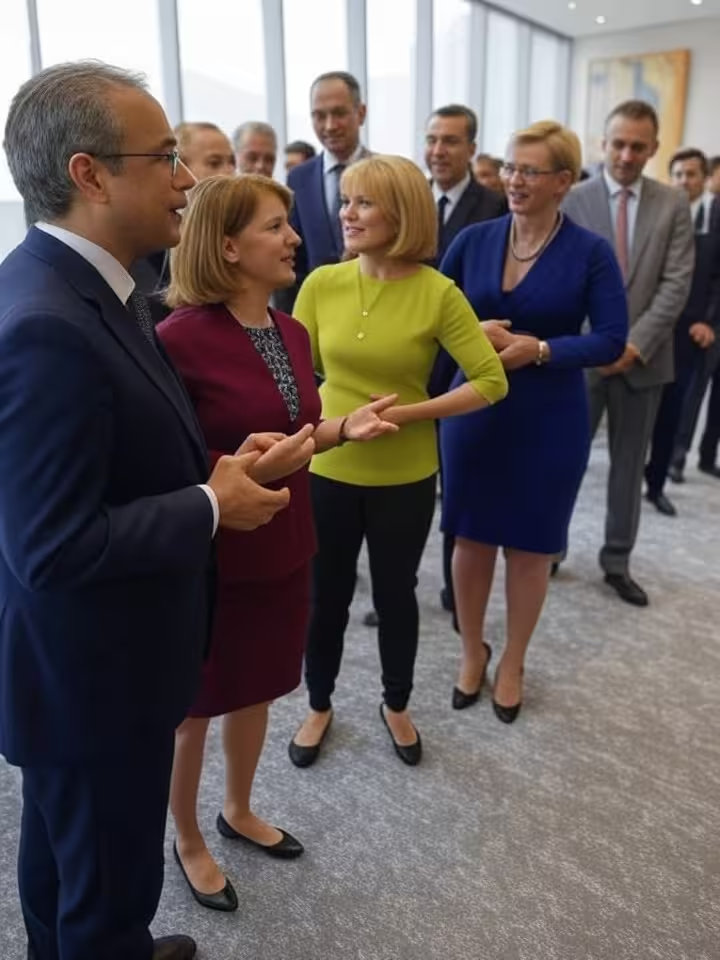
The official roster included approximately 120 individuals from 21 countries, representing government, finance, industry, academia, and media. Key participants included:
U.S. Government and Intelligence
- Avril Haines – Director of National Intelligence
- Gina Raimondo – Secretary of Commerce
- Christopher Wray – FBI Director
- Mark Milley – Chairman of the Joint Chiefs of Staff (reported attendance)
International Political Leadership
- Jens Stoltenberg – NATO Secretary-General
- Margrethe Vestager – European Commission Vice-President
- Mark Rutte – Prime Minister of the Netherlands
Corporate and Financial Sector
- Albert Bourla – CEO, Pfizer
- Eric Schmidt – Former CEO, Google
- David Solomon – CEO, Goldman Sachs
- Alex Karp – CEO, Palantir Technologies
Media Representatives
- Zanny Minton Beddoes – Editor-in-Chief, The Economist
- John Micklethwait – Editor-in-Chief, Bloomberg
The presence of intelligence chiefs alongside pharmaceutical executives and tech leaders illustrated Bilderberg’s unique convening power across traditional sectoral boundaries.
Historical Context: How 2022 Differed from Previous Meetings
Origins and Evolution Since 1954
The Bilderberg Group was founded in 1954 by Polish political adviser Jozef Retinger, Dutch Prince Bernhard, and concerned transatlantic leaders who worried about growing anti-American sentiment in post-war Europe.
The first meeting at the Hotel de Bilderberg in Oosterbeek, Netherlands, established the template: annual gatherings rotating between Europe and North America, strict confidentiality rules, and participation by invitation only.
Pre-Pandemic Precedent: Bilderberg 2019
The last in-person meeting before 2022 occurred in Montreux, Switzerland, in May 2019. That agenda included topics like climate change, China’s political and economic influence, and the future of capitalism.
The three-year gap between in-person meetings was unprecedented and fundamentally altered dynamics. Relationships that Bilderberg facilitates through informal hallway conversations and dinner discussions had been frozen since 2019.
Increased Transparency Efforts
The 2022 meeting continued a transparency trend begun in the 2010s, when organizers started publishing participant lists and agendas online. This represented a strategic shift aimed at demystifying the group while maintaining the confidentiality essential for candid discussions.
Previous decades saw significant leaks and unauthorized disclosures that shaped public perception. The 2022 proactive disclosure strategy attempted to control the narrative.
Media Coverage and Public Reaction
Mainstream Reporting
Major outlets including The Guardian, Politico, and Bloomberg covered the 2022 meeting with relatively straightforward reporting focused on the participant list and agenda topics.
The Guardian noted how the meeting’s secrecy continued to fuel conspiracy theories while emphasizing its legitimate role in transatlantic dialogue. Politico highlighted the presence of senior U.S. officials at a moment of global crisis.
Social Media and Alternative Coverage
Journalist Charlie Skelton, who has covered Bilderberg extensively for years, provided real-time updates from outside the Mandarin Oriental, posting photographs and participant spotting on social media.
This parallel coverage ecosystem reflected how Bilderberg operates in modern media: official statements coexist with independent observers who photograph arrivals and document security arrangements.
Protests and Public Skepticism
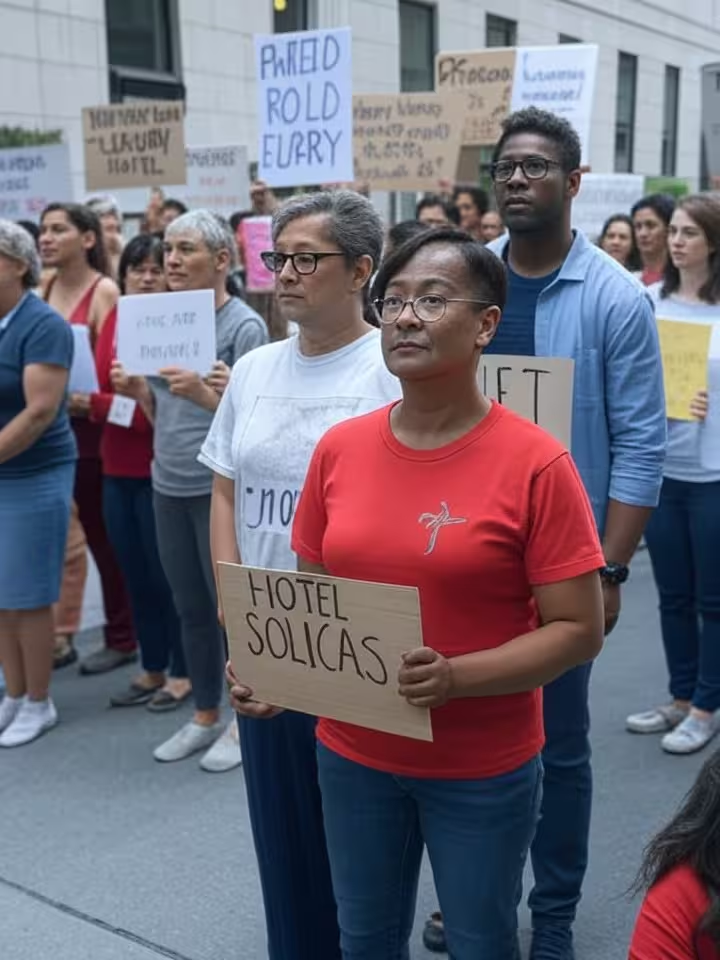
Demonstrators gathered outside the venue throughout the meeting, expressing concerns about undemocratic elite coordination and lack of public accountability. These protests have become a consistent feature of Bilderberg meetings since the 1990s.
The specific post-pandemic context added new dimensions to criticism, with some protesters linking the meeting to conspiracy theories about pandemic origins and vaccine mandates—claims without evidentiary support.
Implications for Global Policy and Governance
NATO Strategy and European Security
The timing three weeks before the Madrid NATO Summit proved significant. That summit expanded the alliance’s Strategic Concept, increased troop deployments to Eastern Europe, and invited Finland and Sweden to join NATO.
While no direct causal link can be established, the presence of Stoltenberg and key alliance members at Bilderberg suggests informal coordination occurred before formal NATO deliberations.
Economic Policy Coordination
Discussions on financial system disruption and global trade occurred as Western central banks faced critical decisions about interest rate increases to combat inflation. The Federal Reserve would implement its largest rate hike in 28 years just two weeks after the Bilderberg meeting.
The presence of finance leaders from Goldman Sachs, the European Central Bank, and other institutions created opportunities for informal coordination ahead of public policy announcements.
Technology Competition Framework
The focus on Sino-US tech competition preceded major U.S. policy initiatives, including the CHIPS and Science Act (passed August 2022) and export controls on advanced semiconductors to China (October 2022).
While Bilderberg doesn’t make policy, it provides a venue where government officials, tech executives like Eric Schmidt, and defense leaders can align perspectives before public rollout of major initiatives.
Post-Pandemic Health Governance
With Pfizer CEO Albert Bourla present alongside health policy experts, discussions likely addressed lessons from COVID-19 vaccine development and distribution, as well as preparedness for future pandemics.
These conversations occurred amid ongoing debates about vaccine equity, intellectual property rights for medical innovations, and the role of public-private partnerships in health emergencies.
Criticism and Accountability Questions
The 2022 meeting reignited longstanding debates about Bilderberg’s role in democratic governance. Critics argue that private coordination among unelected elites undermines democratic accountability, particularly when discussions involve serving government officials.
Defenders counter that informal, off-the-record dialogue serves valuable purposes: allowing officials to explore ideas without political constraints, fostering personal relationships that facilitate crisis management, and bridging cultural differences between European and American elites.
The transparency measures—publishing participants and agendas—represent a compromise, but critics note that the substance of discussions remains secret, making it impossible to assess whether private commitments conflict with public positions.
The participation of media figures also raises questions about potential conflicts of interest, though attendees argue the Chatham House Rule prevents reportable information from emerging.
Frequently Asked Questions
Why was the 2022 Bilderberg Meeting held in Washington DC instead of Europe?
While the official reason wasn’t disclosed, the Washington DC location likely reflected the centrality of U.S. leadership in addressing the Ukraine crisis, NATO expansion, and post-pandemic economic coordination. The Biden administration was actively rebuilding transatlantic alliances after tensions during the Trump years, making the U.S. capital a symbolically appropriate venue. Additionally, Bilderberg alternates between European and North American locations, and the 2019 meeting had been held in Switzerland.
How did the two-year pandemic cancellation affect the 2022 meeting’s dynamics?
The unprecedented three-year gap between in-person meetings (2019-2022) meant that informal relationships and networks that Bilderberg facilitates had been frozen. The 2022 gathering occurred amid multiple simultaneous crises—the Ukraine war, inflation, supply chain disruptions—creating pressure for coordination that hadn’t been possible virtually. The agenda reflected accumulated concerns from the pandemic period, including topics on post-pandemic health, economic continuity, and democratic fragmentation that had intensified during lockdowns.
What actually happens at Bilderberg meetings under the Chatham House Rule?
Under the Chatham House Rule, participants can freely use information received at the meeting but cannot reveal the identity or affiliation of speakers. This allows officials to explore ideas, express doubts, and discuss sensitive topics without fear of political repercussions or media scrutiny. Meetings typically include formal presentations followed by discussion sessions, plus informal networking during meals and breaks. No votes are taken, no resolutions passed, and no policy commitments made—the value lies in building shared understanding across national and sectoral boundaries.
Did the 2022 Bilderberg Meeting influence subsequent Ukraine policy decisions?
While no direct causal link can be proven due to the confidential nature of discussions, the timing is significant. The meeting occurred three weeks before the Madrid NATO Summit, which substantially strengthened alliance posture toward Russia, increased troop deployments to Eastern Europe, and invited Finland and Sweden to join NATO. The presence of NATO Secretary-General Jens Stoltenberg, U.S. intelligence chiefs, and European defense ministers at Bilderberg suggests informal alignment occurred before formal NATO deliberations, though the summit decisions reflected months of public diplomatic preparation as well.
How has Bilderberg’s transparency evolved, and why publish the agenda now?
Bilderberg began publishing participant lists and agendas online in the early 2010s, representing a significant shift from earlier decades when even basic details were closely guarded. This transparency effort aimed to counter conspiracy theories and public skepticism by demystifying the group while maintaining the confidentiality essential for candid discussions. The strategy acknowledges that in the internet age, complete secrecy is impossible—participant arrivals are photographed, venues identified—so proactive disclosure allows Bilderberg to frame its own narrative while preserving the Chatham House Rule for actual conversations.
Why do pharmaceutical and tech CEOs attend alongside government officials?
Bilderberg’s founding purpose includes bridging sectors as well as nations. The presence of figures like Pfizer CEO Albert Bourla and former Google CEO Eric Schmidt alongside government officials reflects the reality that major policy challenges—from pandemic response to technological competition with China—require coordination between public and private sectors. Critics argue this creates inappropriate corporate influence over policy; defenders contend it’s essential for officials to understand implementation realities. The post-pandemic context made these connections particularly relevant, given the central role of pharmaceutical companies in vaccine development and tech platforms in remote work infrastructure.
Key Takeaways
- Historic resumption after pandemic disruption: The 2022 meeting marked the first in-person Bilderberg gathering in three years, breaking an unprecedented hiatus caused by COVID-19 cancellations.
- Ukraine dominated the agenda: Just three months after Russia’s invasion, the war’s implications for NATO, energy security, and geopolitical realignments became central themes for the 120 elite participants.
- Unprecedented transparency with continued secrecy: While the complete participant list and 14-topic agenda were published online, the substance of discussions remained protected by the Chatham House Rule.
- Post-pandemic restructuring across multiple domains: The agenda explicitly addressed pandemic aftermath in health, economic continuity, supply chains, and democratic fragmentation—reflecting accumulated concerns from 2020-2022.
- Strategic timing before major policy rollouts: The meeting occurred three weeks before the Madrid NATO Summit and preceded major U.S. initiatives on chip competition with China, though direct causal links remain unverifiable.
- Cross-sector elite coordination intensifies: The presence of intelligence chiefs, pharmaceutical CEOs, tech leaders, and NATO officials in one room illustrated Bilderberg’s unique convening power at the intersection of security, economics, and technology.
- Public skepticism persists despite disclosure: Protests outside the venue and continued conspiracy theories demonstrate that transparency measures have not fully resolved accountability concerns about private elite coordination.
Conclusion: Bilderberg’s Post-Pandemic Role
The 2022 Washington DC meeting represented more than a calendar resumption. It marked an adaptation of elite coordination mechanisms to a world transformed by pandemic, war, and accelerating technological change.
By bringing together decision-makers from government, finance, defense, and technology at a moment of multiple simultaneous crises, Bilderberg fulfilled its original 1954 purpose: facilitating informal transatlantic dialogue to address shared challenges.
Whether this serves democratic governance or undermines it remains contested. The tension between the value of candid, off-the-record discussions and the democratic principle of public accountability defines Bilderberg’s controversial role.
What’s undeniable is that the people in that Washington hotel room in June 2022 collectively wielded enormous influence over global affairs. Understanding how they connect, what concerns they prioritize, and how their informal coordination relates to formal policy remains essential for anyone seeking to comprehend how power actually operates in the 21st century.
For more context on Bilderberg’s broader influence networks, explore the Council on Foreign Relations connection and the Trilateral Commission relationship.
Sources and References
- Official Bilderberg 2022 Press Release – Bilderberg Meetings (Official)
- Complete 2022 Participant List and Agenda – Bilderberg Meetings (Official)
- Bilderberg Meeting: Elite Group Gathers in Secret in Washington – The Guardian, June 2022
- Bilderberg Group Meets in DC – Politico, June 2022
- Madrid Summit 2022 Outcomes – NATO Official Website
- Charlie Skelton’s Twitter Coverage – @deYook (various threads from June 2-5, 2022)
- Bilderberg Mystery: Why Do People Believe in Cabals? – BBC News