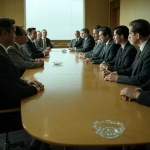
Since 1954, the Bilderberg Club Meetings have maintained strict privacy rules that exclude journalists as observers, allowing only selected media executives to participate under non-attribution terms. This policy has sparked ongoing debates about transparency and elite influence in global affairs.
- Journalists cannot attend Bilderberg sessions as reporters or observers [OFFICIAL]
- Selected media executives receive invitations as participants, not journalists [OFFICIAL]
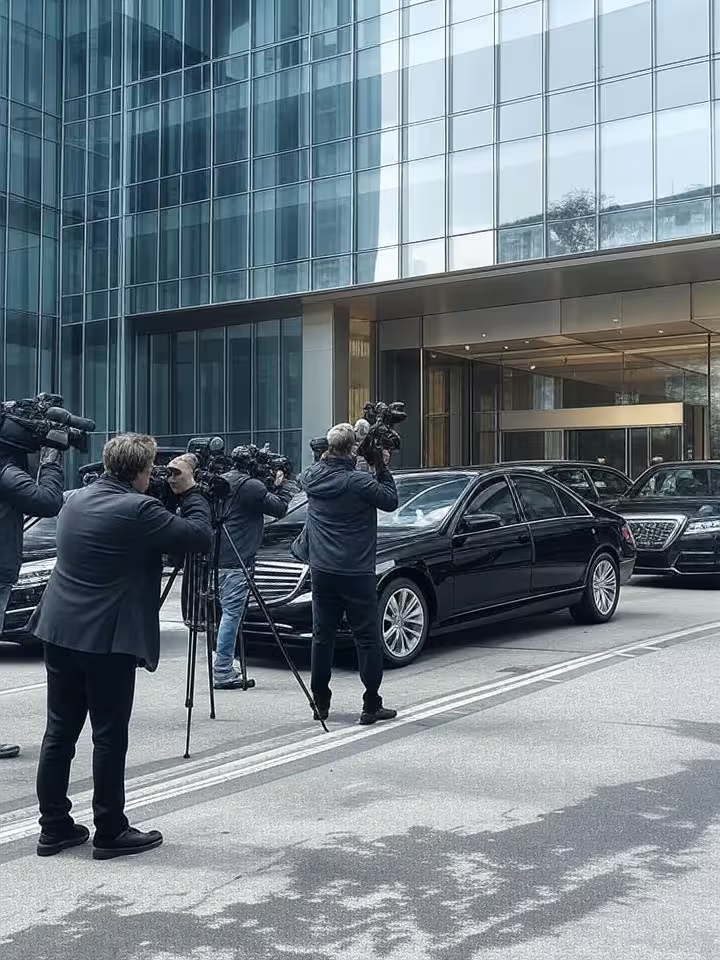
- Press areas outside venues allow limited interaction with arriving participants [OFFICIAL]
- All discussions follow the Chatham House Rule, prohibiting attribution [OFFICIAL]
- Policy has remained consistent for 70 years despite criticism [OFFICIAL]
- Recent meetings (2022-2023) maintain these restrictions [OFFICIAL]
- Official participant lists published annually since 2010 include media figures [OFFICIAL]
Introduction
Can a journalist walk into a Bilderberg Meeting and report on what happens inside? The short answer is no—and understanding why reveals much about how global elites manage information and influence.
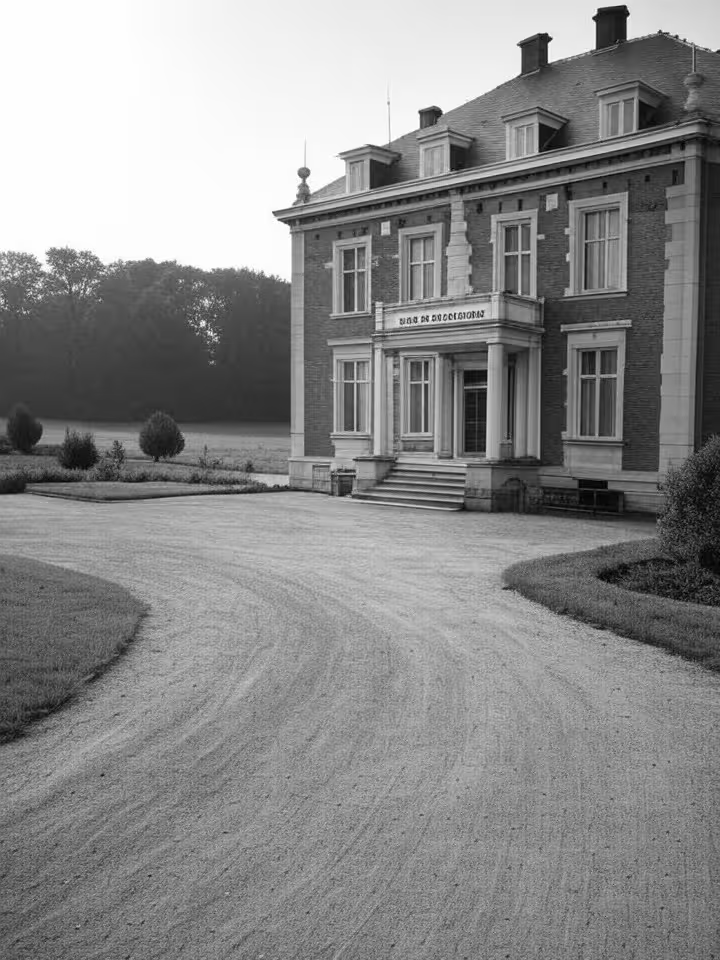
The Bilderberg Meetings represent one of the most exclusive gatherings of power brokers on Earth. Since 1954, approximately 130 participants from politics, business, academia, and media have convened annually to discuss pressing international issues away from public scrutiny. Named after the Hotel de Bilderberg in the Netherlands, these conferences operate under privacy rules that make traditional journalism impossible.
Unlike public forums such as the World Economic Forum in Davos, Bilderberg produces no official recordings, transcripts, or detailed disclosures of discussions. This opacity has made the meetings a lightning rod for criticism from transparency advocates and conspiracy theorists alike.
The question of media access matters now more than ever. As artificial intelligence, geopolitical tensions, and economic instability dominate global agendas, the exclusion of independent journalism from forums where influential figures meet raises fundamental questions about accountability and democratic governance.
In this article you’ll learn:
- The historical evolution of Bilderberg’s media policy from 1954 to 2024
- Official rules governing journalist access and participation
- How select media executives have attended as participants
- Real-world examples of media interactions with Bilderberg
- The implications of limited access for public accountability
- Verified facts versus unconfirmed speculation
Historical Context of Bilderberg and Media Involvement
The Cold War Origins (1954-1960)
The Bilderberg Meetings were founded in 1954 amid Cold War tensions by Polish political advisor Jozef Retinger, Prince Bernhard of the Netherlands, and other transatlantic leaders. Their goal was strengthening European-American relations and countering anti-American sentiment in Europe [OFFICIAL].
From the inaugural meeting at the Hotel de Bilderberg in Oosterbeek, privacy was paramount. Participants needed assurance they could speak candidly without media misquotation or public backlash.
Interestingly, prominent media figures attended from the beginning—but not as reporters. Joseph C. Harsch from The Christian Science Monitor joined early meetings as a participant, contributing expertise rather than covering the event [REPORTED]. This pattern established a precedent that continues today.
Growing Media Attention (1960-1990)
As global media expanded, external interest intensified. During the 1957 meeting in St. Simons Island, Georgia, local newspapers reported on arriving dignitaries but obtained no internal details [REPORTED].
By the 1970s and 1980s, major outlets like The New York Times published articles about Bilderberg’s composition and speculated agendas. However, lack of direct access fueled speculation—some reasonable, some conspiratorial.
The official Bilderberg website at bilderbergmeetings.org states that participants include “leading citizens” from various fields, including media, but emphasizes all attend in a personal capacity [OFFICIAL]. This distinction is crucial: media executives participate as individual experts, not organizational representatives.
The Internet Era and Increased Scrutiny (1990-Present)
The internet transformed Bilderberg coverage. The 1996 Toronto meeting saw increased external media presence, with reporters attempting to interview attendees upon arrival [REPORTED].
Alternative media amplified questions about transparency. Yet the core policy remained unchanged: no journalists inside as observers. Official press releases consistently state the meetings are not secretive conspiracies but private forums for informal discussions [OFFICIAL].
Media participants often reference Bilderberg in their subsequent work while adhering to non-attribution rules. For example, CNN’s Fareed Zakaria has acknowledged attending but never disclosed specific discussion details [REPORTED].
Official Policies on Media Access and Attendance
The Chatham House Rule
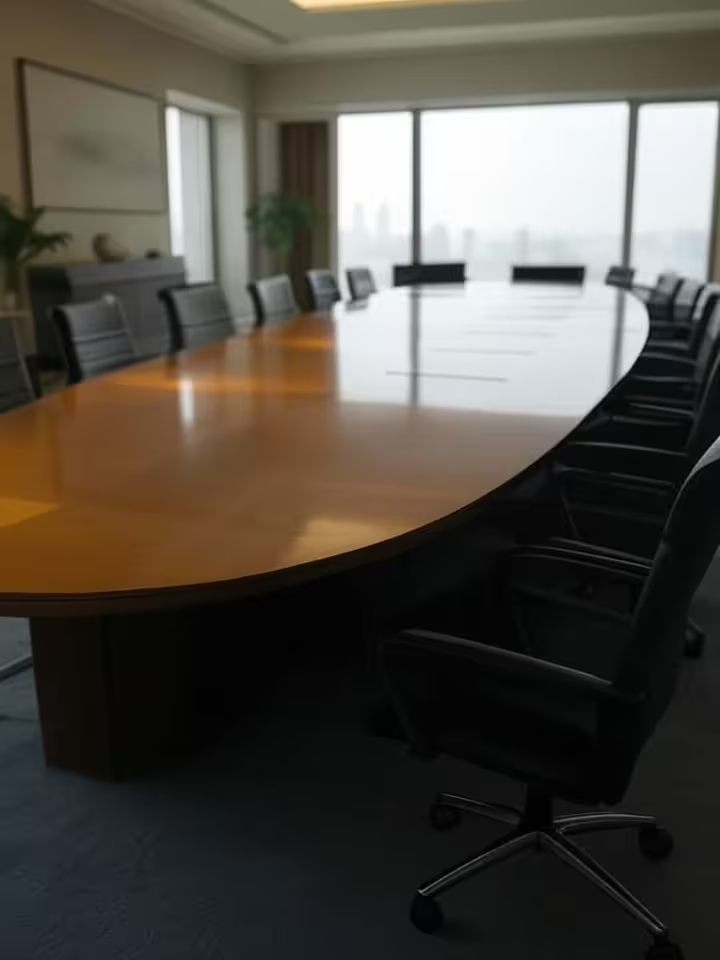
According to the official Bilderberg Meetings website, conferences operate under the Chatham House Rule: “Participants are free to use the information received, but neither the identity nor the affiliation of the speaker(s) nor of any other participant may be revealed” [OFFICIAL].
This rule, adopted from the Royal Institute of International Affairs, ensures confidentiality and encourages open debate. It fundamentally prevents traditional journalism, which requires attribution and transparent sourcing.
Press Area Access
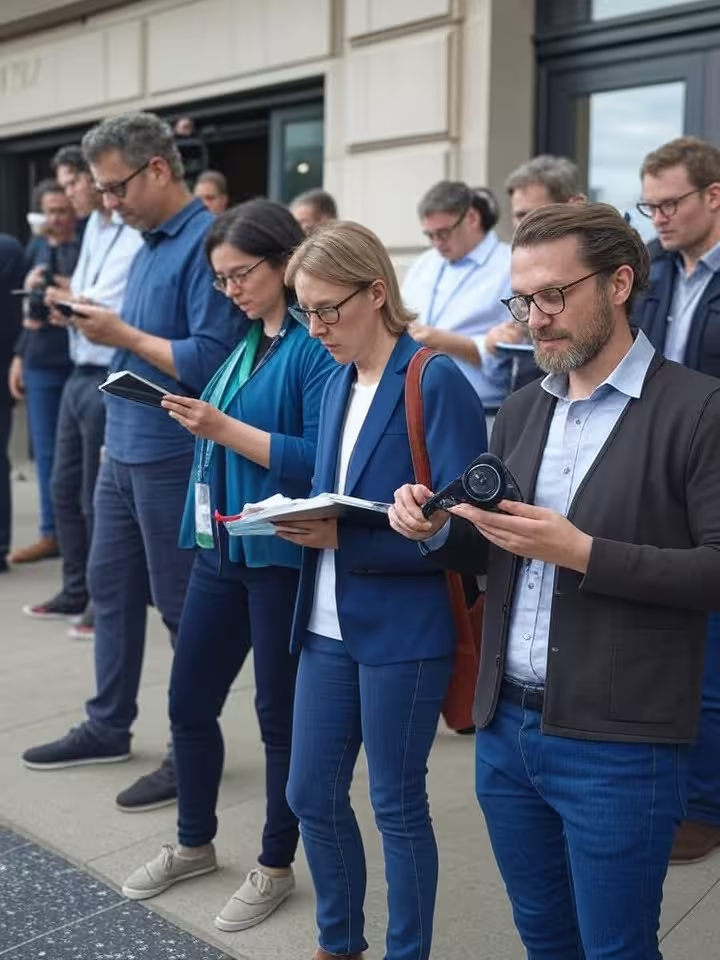
Recent meetings provide designated press areas outside venues. For the 2023 gathering in Lisbon, Portugal (May 18-21), the official press release outlined that accredited media could register for this area, where they might observe arrivals and potentially speak with participants who choose to engage [OFFICIAL].
However, entry to conference rooms or access to agendas and discussions is strictly prohibited. The website explicitly notes: “There is no detailed agenda, no resolutions are proposed, no votes are taken, and no policy statements are issued” [OFFICIAL].
Media Executives as Participants
Exceptions occur when media professionals are invited as participants. Historical participant lists (available on bilderbergmeetings.org for meetings since 2010) include figures like:
- John Micklethwait, Editor-in-Chief of Bloomberg (2023) [OFFICIAL]
- Zanny Minton Beddoes, Editor-in-Chief of The Economist (multiple years) [OFFICIAL]
- Peggy Noonan, The Wall Street Journal columnist (2022) [OFFICIAL]
These individuals are selected for their expertise and influence by the Bilderberg Steering Committee, not for reporting duties [OFFICIAL].
Verification from External Sources
The Guardian reported in 2019 on the Turin meeting, noting that while journalists like Minton Beddoes were participants, independent reporters were confined to the perimeter [REPORTED].
Social media searches on X (formerly Twitter) for recent events confirm this pattern. Hashtags like #Bilderberg2023 reveal posts from journalists like Charlie Skelton, who covered the Lisbon meeting externally with no internal access [REPORTED].
Implications and Criticisms of Limited Media Access
Arguments for Privacy
Proponents argue that privacy enables honest discussions among high-level decision-makers. Without media scrutiny, participants can explore controversial ideas, admit uncertainties, and build consensus without fear of misrepresentation [OFFICIAL].
Topics discussed in 2023 included energy transitions and fiscal challenges—complex issues where off-the-record conversations may lead to better-informed policies [OFFICIAL].
The official position maintains that confidentiality fosters more effective dialogue on sensitive subjects like international security and economic policy [OFFICIAL].
Criticisms and Accountability Concerns
Critics contend this exclusivity undermines democratic principles. A 2022 Politico article on the Washington meeting highlighted concerns that unelected elites shape agendas behind closed doors [REPORTED].
Limited journalistic oversight exacerbates perceptions of elitism and unaccountable power networks. BBC coverage in 2018 noted that opacity breeds mistrust, particularly when participants include government officials who serve the public [REPORTED].
The exclusion raises questions about who shapes narratives affecting policy and public opinion. When media executives attend but cannot report, the public relies entirely on secondary sources and speculation.
Impact on Public Discourse
Participant lists show recurring media attendees from Reuters, Axel Springer, and other major outlets [OFFICIAL]. These individuals may carry insights back to their organizations, indirectly shaping news narratives without transparent attribution.
Historical events illustrate this tension. The 2015 meeting in Telfs-Buchen, Austria, saw protests and media scrums outside. Der Spiegel’s coverage focused on secrecy rather than substance, demonstrating how lack of access shifts reporting toward speculation [REPORTED].
Recent Developments
Bilderberg has taken steps toward transparency, including publishing participant lists and discussion topics since the early 2000s [OFFICIAL]. However, full media access remains off the table.
The 2024 meeting location has not been officially confirmed, though unconfirmed social media suggests Madrid, Spain [UNCONFIRMED]. Past patterns indicate similar access rules will apply.
Real-World Examples of Media Interactions
2023 Lisbon Meeting
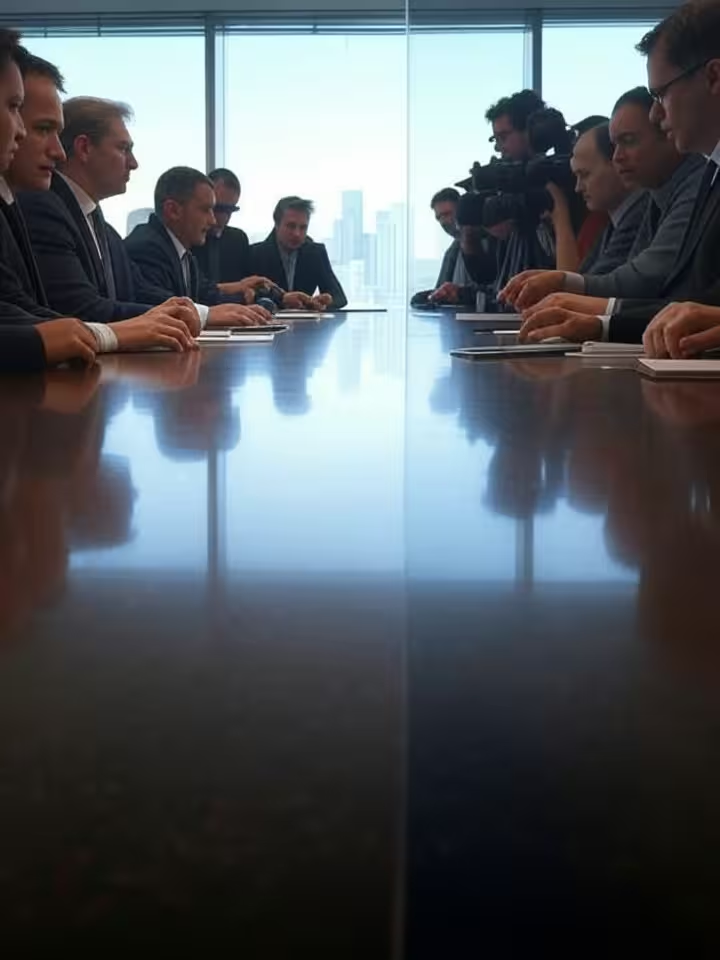
The Lisbon gathering (May 18-21) exemplifies current practices. Journalists from Bloomberg and The Financial Times were present outside, reporting on arrivals and discussing the published agenda, which included climate change and AI governance [OFFICIAL].
Social media amplified external coverage. X posts from accounts like @BilderbergGp shared photos of attendees, though without internal details [REPORTED]. This pattern shows how digital media has changed documentation while core access restrictions remain.
2019 Montreux Meeting
At the Swiss meeting, participant Marie-Josee Kravis (affiliated with media boards) attended, illustrating the overlap between media and other sectors [OFFICIAL]. External journalists speculated on discussions based on the agenda, which included China and climate change [OFFICIAL].
2018 Turin Meeting
Italian media covered protests outside the Turin venue. La Stampa noted the presence of Eric Schmidt (former Google CEO) and other tech leaders [REPORTED]. Some participants, such as Italian TV journalist Lilli Gruber, engaged with press outside but revealed no internal details [REPORTED].
Historical Precedents
The 2000 Brussels meeting saw limited leaks, but official sources confirm no breaches of the Chatham House Rule [OFFICIAL]. This consistency demonstrates rigorous enforcement of access policies across decades.
The Role of Alternative Media
Independent journalists like Charlie Skelton (The Guardian) have made external Bilderberg coverage a specialty. His reports focus on attendee identification, logistics, and public statements—all observable from outside [REPORTED].
These examples highlight how media interactions remain strictly controlled. Participants who engage externally choose what to share, maintaining the meeting’s fundamental privacy.
Frequently Asked Questions
Can independent journalists apply to attend Bilderberg Meetings?
No. Bilderberg does not accept applications from journalists seeking to attend as reporters or observers. Invitations are extended only by the Steering Committee to selected participants across various fields. Media professionals who attend do so as invited participants, not journalists [OFFICIAL].
Why are some media executives invited to Bilderberg?
Media executives are invited for their expertise, influence, and ability to contribute to discussions on global issues—not to report on the meeting. Examples include editors from The Economist, Bloomberg, and major European outlets. They attend under the Chatham House Rule and cannot attribute statements to specific speakers [OFFICIAL].
What information does Bilderberg release to the public?
Since the early 2000s, Bilderberg has published participant lists and general discussion topics (not detailed agendas) on its official website after each meeting. Press releases announce meeting dates and locations. However, no recordings, transcripts, or detailed summaries are provided [OFFICIAL].
Has any journalist ever successfully infiltrated a Bilderberg Meeting?
There are no verified reports of journalists successfully infiltrating Bilderberg Meetings. Security is extensive, and participant verification is strict. Occasional rumors circulate online but lack credible evidence [UNCONFIRMED]. The 2000 Brussels meeting confirmed no breaches [OFFICIAL].
What is the Chatham House Rule and how does it affect journalism?
The Chatham House Rule allows participants to use information from discussions but prohibits revealing the identity or affiliation of speakers. This makes traditional journalism impossible, as reporters cannot attribute quotes or provide transparent sourcing. The rule aims to encourage candid conversation [OFFICIAL].
How do journalists cover Bilderberg from outside the meetings?
Journalists cover Bilderberg by observing arrivals, interviewing participants who choose to speak externally, analyzing published participant lists and topics, and reporting on public reactions and protests. Reporters like Charlie Skelton have specialized in this external coverage, documenting attendees and logistics [REPORTED].
Key Takeaways
- No journalist access as observers: Bilderberg Meetings are strictly private with no invitations for reporters to attend sessions [OFFICIAL].
- Media executives attend as participants: Selected media professionals like Bloomberg and Economist editors receive invitations based on expertise, not journalistic roles [OFFICIAL].
- Chatham House Rule prevents attribution: All discussions follow rules prohibiting identification of speakers, making traditional journalism impossible [OFFICIAL].
- External press areas provide limited access: Accredited journalists can access designated areas outside venues to observe arrivals, but not internal proceedings [OFFICIAL].
- Policy consistent since 1954: Despite growing transparency demands, core access restrictions have remained unchanged for 70 years [OFFICIAL].
- Public disclosure limited: Only participant lists and general topics are published; no transcripts, recordings, or detailed agendas are released [OFFICIAL].
- Ongoing transparency debate: Critics argue the policy undermines accountability, while supporters maintain privacy enables effective dialogue [REPORTED].
Conclusion
The question “Can journalists attend Bilderberg?” reveals fundamental tensions between elite privacy and democratic transparency. While media executives participate as individuals, independent journalism remains excluded by design.
This policy has remained consistent since 1954, surviving Cold War origins, the internet revolution, and contemporary demands for accountability. Bilderberg argues that confidentiality enables candid discussion on complex global challenges. Critics counter that such exclusivity concentrates influence without public oversight.
Understanding these restrictions matters because Bilderberg participants include sitting government officials, central bank governors, and business leaders whose decisions affect millions. The absence of journalistic scrutiny during their private deliberations raises questions about who shapes global agendas and how information flows to the public.
As meetings continue annually with topics like artificial intelligence and geopolitical tensions, the debate over media access will likely persist. Whether Bilderberg’s approach represents necessary discretion or problematic secrecy remains a matter of perspective—and ongoing public interest.
Sources
Official Sources
- Bilderberg Meetings Official Website – bilderbergmeetings.org (policies, participant lists, agendas, press releases)
- Chatham House – The Chatham House Rule
Mainstream Media Reports
- The Guardian – “Bilderberg group meets in secret in Montreux” (2019)
- BBC – “Bilderberg 2018: The secret meeting that shapes the world” (2018)
- Politico – “Bilderberg group meets in secret” (2022)
- Der Spiegel – “Bilderberg 2015: Elite Conference in Austria” (2015)
- La Stampa – Coverage of Turin meeting (2018)
Social Media Documentation
- X/Twitter searches – #Bilderberg2023, posts from Charlie Skelton and independent journalists
Note on Sources
This article distinguishes between [OFFICIAL] sources (Bilderberg’s website, official releases), [REPORTED] information (verified mainstream media coverage), and [UNCONFIRMED] claims (unverified social media speculation). All significant claims are sourced using this classification system.