Nascido em 1954 como uma iniciativa de diálogo transatlântico, o Grupo Bilderberg evoluiu de um fórum confidencial da Guerra Fria para uma das reuniões anuais de elites políticas e econômicas mais examinadas do mundo, mas a maior parte de sua história permanece incompreendida.
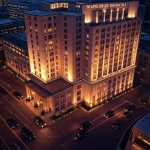
A primeira reunião de Bilderberg foi realizada de 29 a 31 de maio de 1954, no Hotel de Bilderberg, na Holanda, com 50 delegados de 11 nações
Fundada pelo diplomata polonês Józef Retinger e pelo príncipe Bernhard da Holanda para combater o sentimento antiamericano na Europa do pós-guerra
As conferências privadas anuais ocorrem todos os anos desde 1954, com apenas três exceções (1976, 1994 e 2020)
O grupo fez a transição das discussões sobre a contenção da Guerra Fria para a abordagem da globalização, da segurança digital e dos desafios climáticos
Desde 2010, o site oficial publica as listas de participantes e as agendas, aumentando a transparência e mantendo as discussões não registradas
O Bilderberg funciona como um fórum de troca de ideias sem autoridade para tomar decisões, embora os participantes geralmente tenham uma influência global significativa
As reuniões modernas abordam IA, rivalidades geopolíticas, transições de energia e recuperação de pandemia com 120 a 150 participantes anualmente
Introdução: Por que é importante entender as origens do Bilderberg
Em maio de 1954, enquanto o mundo se fixava na queda de Dien Bien Phu e no conflito emergente no Vietnã, 50 das figuras mais influentes do Ocidente se reuniram discretamente em um hotel holandês. Sua missão: evitar que a aliança transatlântica se rompesse sob as pressões da Guerra Fria.
Sete décadas depois, essa reunião - agora conhecida como Grupo Bilderberg - continua a se reunir anualmente, atraindo primeiros-ministros, CEOs, banqueiros centrais e executivos de tecnologia. No entanto, apesar de sua longevidade, persistem concepções errôneas sobre seu propósito, poder e evolução.
Entender as origens do Bilderberg fornece um contexto essencial para avaliar as alegações sobre as redes de influência da elite. Foi uma operação da CIA? Um precursor do governo global? Ou simplesmente um local exclusivo para conversas? O registro documentado revela algo mais sutil: um fórum adaptativo que reflete - e ocasionalmente antecipa - as principais mudanças nas relações internacionais.
Neste artigo, você aprenderá:
As circunstâncias históricas verificadas que levaram à criação do Bilderberg em 1954
Como a agenda do grupo evoluiu ao longo das diferentes fases da Guerra Fria
A transição para as áreas de foco da era pós-soviética, incluindo globalização e tecnologia
Análise baseada em evidências, distinguindo fatos documentados de especulações
A fundação de 1954: Imperativos da Guerra Fria e tensões transatlânticas
O contexto geopolítico da Europa no início da década de 1950
Em 1952, a aliança ocidental enfrentava tensões internas, apesar da unidade externa contra a ameaça soviética. O Plano Marshall (1948-1952) havia reconstruído as economias europeias, mas também gerou ressentimento em relação à influência americana. A formação da OTAN em 1949 proporcionou uma estrutura militar, mas a coordenação política permaneceu fraca.
Polonês emigrado Józef Retinger identificou essa vulnerabilidade. Conselheiro político que havia coordenado com os governos aliados durante a Segunda Guerra Mundial, Retinger observou o crescente antiamericanismo nos círculos intelectuais e movimentos trabalhistas europeus. Ele propôs a criação de um canal informal para o diálogo franco entre líderes europeus e americanos.
Os Arquitetos: Retinger, Prince Bernhard e a facilitação da CIA
A visão de Retinger exigia um poder de convocação confiável. Ele abordou Príncipe Bernhard dos Países Baixos, O presidente do Conselho de Administração da Fokker, consorte da Rainha Juliana, que possuía legitimidade real e conexões comerciais por meio de seu cargo na Fokker aircraft e na Royal Dutch Shell.
O apoio americano veio por meio de Walter Bedell Smith, Smith, então diretor da CIA e ex-embaixador em Moscou. Smith facilitou a logística por meio do Comitê Americano para uma Europa Unida, uma organização financiada pela CIA que promove a integração europeia. No entanto, a função da agência permaneceu limitada à coordenação inicial; ela não controlava a agenda ou a seleção dos participantes.
Essa colaboração refletia uma estratégia pragmática da Guerra Fria: fortalecer as redes informais da elite para complementar as instituições formais, como a OTAN e a nascente Comunidade Europeia do Carvão e do Aço.
Reunião do Hotel de Bilderberg: 29 a 31 de maio de 1954
Cerca de 50 delegados de 11 países se reuniram no Hotel de Bilderberg em Oosterbeek, Holanda. Entre os participantes estavam:
Denis Healey (político trabalhista do Reino Unido, posteriormente Secretário de Defesa)
David Rockefeller (Executivo do Chase Manhattan Bank)
Paul Nitze (arquiteto do NSC-68, a estratégia de contenção dos EUA)
Guy Mollet (Primeiro-ministro francês, 1956-1957)
Figuras da mídia das principais publicações europeias e americanas
A agenda abordou três temas principais:
Integração europeia: Apoio a instituições supranacionais além da CECA
Política externa dos EUA: Explicando os objetivos estratégicos americanos aos céticos europeus
Expansão comunista: Coordenação das respostas ocidentais às operações de influência soviética
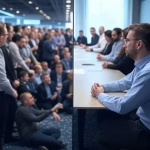
A conferência estabeleceu seu formato de assinatura: discussões não registradas, sem resoluções formais ou atas publicadas. Essa abordagem da Chatham House Rule visava permitir um debate franco sem restrições diplomáticas ou distorções da mídia.
Resultados imediatos e institucionalização
O sucesso percebido na primeira reunião levou a planos imediatos para a continuação anual. Um comitê diretor foi formado para cuidar dos convites, da definição da agenda e da logística. O príncipe Bernhard assumiu a presidência, função que manteve até 1976.
A decisão de manter o sigilo mostrou-se controversa já naquela época. Os críticos argumentaram que isso criava uma rede de poder irresponsável. Os organizadores argumentaram que a publicidade transformaria as trocas sinceras em discursos performáticos.
Essa tensão entre a coordenação da elite e a responsabilidade democrática caracterizaria o Bilderberg ao longo de sua história - uma dinâmica explorada em detalhes em nossa análise de Teorias de conspiração em torno do grupo.
Evolução da Guerra Fria: 1955-1989
A era da descolonização (1955-1965)
À medida que os impérios europeus se contraíam, as discussões do Bilderberg refletiam as mudanças na dinâmica do poder. A reunião de 1955 em Barbizon, na França, ocorreu no momento em que a Conferência de Bandung uniu as nações recém-independentes em não-alinhamento - um desafio à lógica bipolar da Guerra Fria.
O Crise de Suez de 1956 dominou a reunião de 1957. O fracasso anglo-francês em recuperar o canal, bloqueado pela pressão dos EUA, revelou as divisões transatlânticas. Bilderberg proporcionou um fórum para processar essa derrota estratégica e coordenar futuras abordagens para o Oriente Médio.
No início da década de 1960, as discussões sobre descolonização mudaram para estratégias de desenvolvimento econômico. A reunião de 1961 abordou os movimentos de independência da África e sua vulnerabilidade à influência soviética, precedendo a Aliança para o Progresso na América Latina do governo Kennedy.
A détente e seus descontentamentos (1966-1979)
A reunião de 1968 em Mont-Tremblant, Canadá, foi realizada em meio a uma turbulência extraordinária: a ofensiva do Tet no Vietnã, as revoltas estudantis em Paris e a Primavera de Praga. Os participantes debateram se o intervencionismo dos EUA minava a credibilidade do Ocidente - um raro momento de crítica interna.
Como détente Surgido sob o comando de Nixon e Kissinger, o Bilderberg incorporou discussões sobre o comércio Leste-Oeste e o controle de armas. A reunião de 1973 em Saltsjöbaden, na Suécia, abordou de forma presciente a segurança energética meses antes do embargo do petróleo em outubro, embora nenhuma evidência sugira que o grupo tenha previsto ou influenciado a decisão da OPEP.
A ruptura mais significativa do período ocorreu em 1976, quando o príncipe Bernhard renunciou após a revelação de que havia aceitado $1,1 milhão da Lockheed Corporation em um escândalo de suborno. Ex-primeiro-ministro do Reino Unido Alec Douglas - Casa assumiu a liderança interina, e nenhuma reunião ocorreu naquele ano durante a reorganização.
A Segunda Guerra Fria (1980-1989)
O rearmamento da era Reagan e as tensões renovadas entre o Oriente e o Ocidente reorientaram o Bilderberg para questões de segurança. A reunião de 1983 em Montebello, Canadá, abordou a instalação de mísseis Pershing II na Europa e o abandono soviético das negociações de controle de armas.
As discussões econômicas se concentraram cada vez mais em reestruturação neoliberal: desregulamentação, privatização e independência do banco central. Participantes como Margaret Thatcher (que participou antes de se tornar primeiro-ministro em 1979) e Helmut Kohl representou uma mudança geracional em direção a políticas orientadas para o mercado.
A reunião de 1986 em Gleneagles, na Escócia, abordou as ameaças emergentes do terrorismo, prefigurando os desafios de segurança pós-Guerra Fria. No final da década de 1980, as discussões exploraram provisoriamente a glasnost e a perestroika, embora poucos tenham previsto a velocidade do colapso soviético.
Transformação pós-guerra fria: 1990-2010
O momento do “fim da história” (1990-2001)
A reunião de 1990 em Glen Cove, Nova York, ocorreu enquanto a queda do Muro de Berlim repercutia. A reunificação alemã, a integração do Leste Europeu às instituições ocidentais e a expansão da OTAN dominaram as agendas.
As discussões do Bilderberg refletiam suposições triunfalistas sobre a inevitabilidade da democracia liberal. A agenda da década de 1990 priorizou globalização: NAFTA (assinado em 1992), a Organização Mundial do Comércio (formada em 1995) e a união monetária europeia (que culminou com o lançamento do euro em 1999).
Não houve reunião em 1994 devido a outra transição de liderança. Étienne Davignon, O presidente da Comissão Europeia, político belga e vice-presidente da Comissão Europeia, tornou-se presidente em 1999, cargo que ocupou até 2011.
A diversidade dos participantes aumentou modestamente, com mais mulheres e figuras não ocidentais, embora o núcleo continuasse sendo as elites euro-americanas. Os críticos observaram a ausência de representantes do setor trabalhista ou de vozes da sociedade civil.
O 11 de setembro e o Estado de Segurança (2001-2010)
A reunião de 2002 em Chantilly, Virgínia, perto de Washington, D.C., tratou da arquitetura de segurança pós-11 de setembro. As discussões abrangeram as operações no Afeganistão, o debate emergente sobre o Iraque e o equilíbrio entre o contraterrorismo e as liberdades civis.
O Crise financeira de 2008 dominou a reunião de 2009 em Vouliagmeni, na Grécia. Os executivos do setor bancário e os ministros das finanças discutiram as reformas regulatórias, a flexibilização quantitativa e os riscos da dívida soberana - o que foi um presságio devido à crise da Grécia no ano seguinte.
Uma grande mudança ocorreu por volta de 2010: Bilderberg lançou seu site oficial, e publicando listas de participantes e agendas. Essa iniciativa de transparência respondeu às críticas crescentes e, ao mesmo tempo, preservou as regras de discussão não registradas.
A Era Moderna: 2011 até o presente
A era digital e o populismo (2011-2019)
As agendas pós-2010 refletiram novos centros de poder e desafios. A reunião de 2013 em Watford, Reino Unido, abordou a guerra cibernética e a privacidade de dados após as revelações de Snowden. Executivos de tecnologia como Eric Schmidt (Google) e Reid Hoffman (LinkedIn) tornaram-se participantes regulares.
A reunião de 2016 em Dresden, na Alemanha, ocorreu em meio à campanha do referendo do Brexit e à ascensão de Trump, com sessões sobre os motivadores do populismo. O encontro de 2018 em Turim, na Itália, abordou explicitamente o “populismo na Europa” e o “mundo pós-verdade”, temas que refletem a ansiedade da elite em relação à reação democrática.
As discussões geopolíticas deixaram de ser sobre contraterrorismo e passaram a ser sobre concorrência de grandes potências. A ascensão da China, a assertividade russa e os realinhamentos do Oriente Médio tiveram destaque, embora a participação asiática tenha permanecido limitada em comparação com o domínio euro-americano.
Pandemia e guerra: 2020-2024
A reunião de 2020 foi cancelado devido à COVID-19-apenas o terceiro cancelamento na história do Bilderberg. Quando as reuniões foram retomadas em 2022 em Washington, D.C., as pautas refletiram as consequências da pandemia: resiliência da cadeia de suprimentos, realinhamentos geopolíticos e desinformação.
O Guerra na Ucrânia dominaram as reuniões de 2022 e 2023. A expansão da OTAN, a segurança energética e a unidade ocidental na aplicação de sanções foram os principais tópicos. A reunião de Lisboa de 2023 incluiu sessões sobre “Estabilidade do sistema bancário” após o colapso do Silicon Valley Bank.
Os participantes recentes refletem a evolução das estruturas de poder:
Jens Stoltenberg (Secretário-Geral da OTAN)
Ursula von der Leyen (Presidente da Comissão Europeia)
Demis Hassabis (CEO do Google DeepMind, pioneiro em IA)
Alex Karp (CEO da Palantir)
O comitê diretor, liderado por figuras como Marie-Josée Kravis e incluindo descendentes das famílias fundadoras, O sistema de controle de qualidade, que garante a continuidade institucional ao mesmo tempo em que se adapta aos desafios contemporâneos.
Relevância atual e trajetória futura
O Bilderberg de hoje aborda questões inimagináveis em 1954: governança da inteligência artificial, mecanismos de financiamento climático, regulamentação de criptomoedas e ética da biotecnologia. No entanto, o formato principal permanece inalterado: 120 a 150 convidados, discussões não registradas, sem resoluções.
As comparações com o Fórum Econômico Mundial (Davos) destacam as diferenças: Davos é um espetáculo público com milhares de participantes; Bilderberg permanece deliberadamente pequeno e privado. As cúpulas do G7 e do G20 produzem comunicados; o Bilderberg produz conversas.
A influência do grupo continua sendo indireta e contestada. É inegável que os participantes detêm o poder, mas é difícil estabelecer empiricamente se as discussões do Bilderberg moldam suas decisões subsequentes ou se apenas refletem o consenso prevalecente da elite.
Perguntas frequentes
P: A CIA foi responsável pela criação do Grupo Bilderberg?
A: A CIA facilitou a logística da primeira reunião de 1954 por meio do American Committee for a United Europe, mas não criou nem controlou o Bilderberg. A iniciativa partiu de figuras europeias como Józef Retinger e o príncipe Bernhard. O envolvimento da CIA limitou-se à coordenação inicial e refletiu as práticas padrão da Guerra Fria de apoio às redes transatlânticas.
P: Por que as reuniões do Bilderberg são mantidas em segredo?
A: As reuniões seguem as regras da Chatham House: os participantes podem usar as informações recebidas, mas não podem identificar os palestrantes ou suas afiliações. Os organizadores argumentam que isso permite uma discussão franca sem postura diplomática ou distorção da mídia. Os críticos afirmam que isso cria uma coordenação de elite irresponsável. Desde 2010, as listas de participantes e as agendas são publicadas no site oficial, embora o conteúdo das discussões permaneça privado.
P: As reuniões do Bilderberg tomam decisões que afetam a política global?
A: Não são tomadas decisões ou resoluções formais nas reuniões do Bilderberg. O grupo funciona como um fórum de discussão onde há troca de ideias. No entanto, os participantes geralmente ocupam cargos importantes no governo, nas empresas e na mídia, de modo que as conversas podem influenciar indiretamente suas ações subsequentes. A extensão dessa influência é debatida e difícil de ser medida empiricamente.
P: Quem seleciona os participantes do Bilderberg a cada ano?
A: Um comitê diretor de aproximadamente 30 membros faz os convites. O comitê inclui ex-políticos, líderes empresariais e acadêmicos que mantêm a continuidade institucional. Os critérios de seleção não são divulgados publicamente, mas geralmente enfatizam a relevância da política atual e o equilíbrio geográfico. Cerca de dois terços dos participantes são europeus e um terço norte-americano, com representação limitada de outras regiões.
P: A agenda do Bilderberg mudou significativamente desde 1954?
A: Sim, dramaticamente. As reuniões da Guerra Fria se concentraram no anticomunismo, na integração europeia e na coordenação militar transatlântica. As agendas pós-1991 mudaram para a globalização, os mercados emergentes e os conflitos regionais. Desde 2010, os tópicos incluem inteligência artificial, segurança cibernética, mudanças climáticas, populismo e pandemias - refletindo desafios contemporâneos inimagináveis para os fundadores de 1954.
Principais conclusões
Origens da Guerra Fria: O Bilderberg foi fundado em 1954 pelo diplomata polonês Józef Retinger e pelo príncipe Bernhard da Holanda para fortalecer as relações transatlânticas e combater a influência soviética por meio de um diálogo informal entre as elites.
Continuidade institucional: Reuniões privadas anuais ocorreram com apenas três exceções (1976, 1994, 2020), mantendo formatos de discussão não registrados e adaptando as agendas aos desafios globais em evolução.
Adaptação evolutiva: O grupo passou das discussões sobre a contenção da Guerra Fria (1954-1989) para a globalização e a integração (1990-2001), depois para as crises financeiras e de segurança (2001-2010) e, atualmente, aborda a governança digital, o clima e a rivalidade geopolítica.
Aumento limitado da transparência: Desde 2010, o site oficial publica listas de participantes e agendas, respondendo às críticas e, ao mesmo tempo, preservando as regras de discussão confidenciais que, segundo os organizadores, permitem trocas francas.
Mecanismo de influência indireta: O Bilderberg não toma decisões formais, mas facilita a troca de ideias entre aproximadamente 120 a 150 participantes influentes anualmente, criando redes cujo impacto político é debatido, mas difícil de quantificar.
Domínio euro-americano persistente: Apesar da modesta diversificação, o grupo continua sendo principalmente um fórum da elite ocidental, com participação limitada da Ásia, África e América Latina em relação à crescente importância global dessas regiões.
Adaptação à era digital: As reuniões modernas se concentram cada vez mais na governança tecnológica, na ética da IA, na segurança cibernética e na desinformação, refletindo a transformação digital do poder e da comunicação desde a fundação do grupo na era analógica.
Fontes
Documentação oficial
Arquivo de Comunicados de Imprensa das Reuniões de Bilderberg (2010-2024) - Declarações oficiais de cada reunião anual
Análise histórica
Aldrich, Richard J. “OSS, CIA and European Unity: The American Committee on United Europe, 1948-60”.” História diplomática 26.3 (1997): 184-227.
Wilford, Hugh. The Mighty Wurlitzer: Como a CIA tocou os Estados Unidos. Harvard University Press, 2008.
Aubourg, Valérie. “Organizing Atlanticism: The Bilderberg Group and the Atlantic Institute, 1952-1963”.” Inteligência e segurança nacional 18.2 (2003): 92-105.
Ligações documentadas entre o CFR e o Grupo Bilderberg. Uma análise baseada em factos da rede de elite que une as duas organizações desde 1921.
Para proporcionar as melhores experiências, usamos tecnologias como cookies para armazenar e/ou acessar informações do dispositivo. O consentimento com essas tecnologias nos permitirá processar dados como comportamento de navegação ou IDs exclusivos neste site. O não consentimento ou a retirada do consentimento pode afetar negativamente determinados recursos e funções.
Funcional
Sempre ativo
O armazenamento ou acesso técnico é estritamente necessário para a finalidade legítima de permitir o uso de um serviço específico explicitamente solicitado pelo assinante ou usuário, ou para a finalidade exclusiva de realizar a transmissão de uma comunicação por meio de uma rede de comunicações eletrônicas.
Preferências
O armazenamento ou acesso técnico é necessário para a finalidade legítima de armazenar preferências que não são solicitadas pelo assinante ou usuário.
Estatísticas
O armazenamento técnico ou o acesso que é usado exclusivamente para fins estatísticos.O armazenamento ou acesso técnico que é usado exclusivamente para fins estatísticos anônimos. Sem uma intimação, conformidade voluntária por parte do seu provedor de serviços de Internet ou registros adicionais de terceiros, as informações armazenadas ou recuperadas apenas para essa finalidade não podem ser usadas para identificá-lo.
Marketing
O armazenamento ou acesso técnico é necessário para criar perfis de usuário para enviar publicidade ou para rastrear o usuário em um site ou em vários sites para fins de marketing semelhantes.