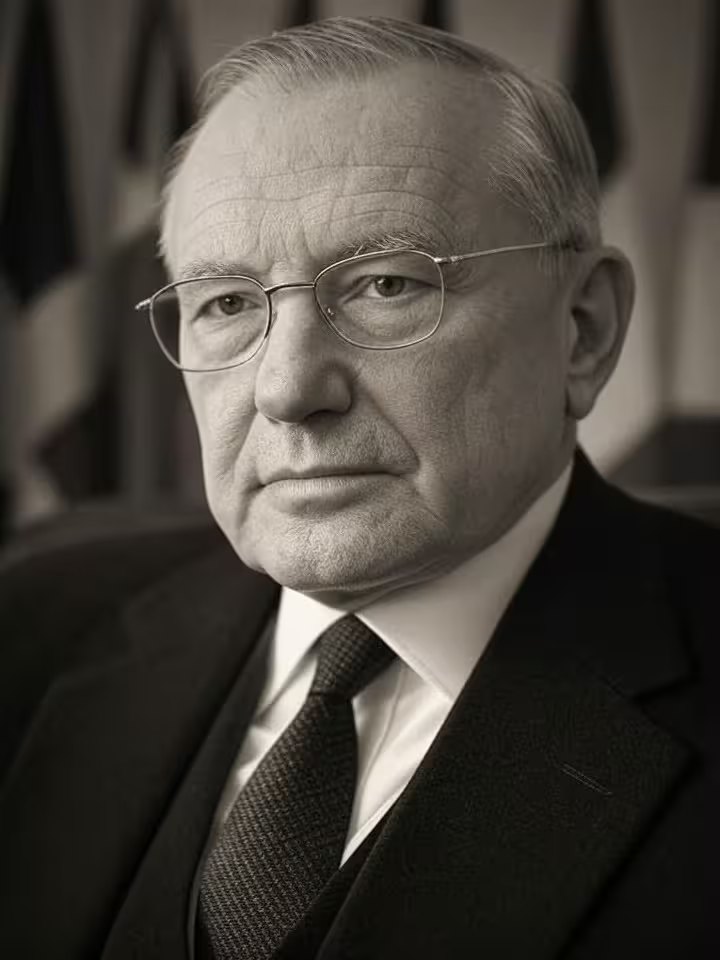
Jozef Retinger (1888-1960), a Polish diplomat and political advisor, was the principal architect behind the Bilderberg Group’s founding in 1954. Working alongside Prince Bernhard of the Netherlands, Retinger envisioned a confidential forum where European and American elites could bridge Cold War divisions through off-the-record dialogue.
Essential Facts About Jozef Retinger
- Born April 17, 1888, in Krakow under Austro-Hungarian rule; died June 12, 1960, in London
- Earned doctorate from Sorbonne at age 20; multilingual diplomat fluent in Polish, French, English, and German
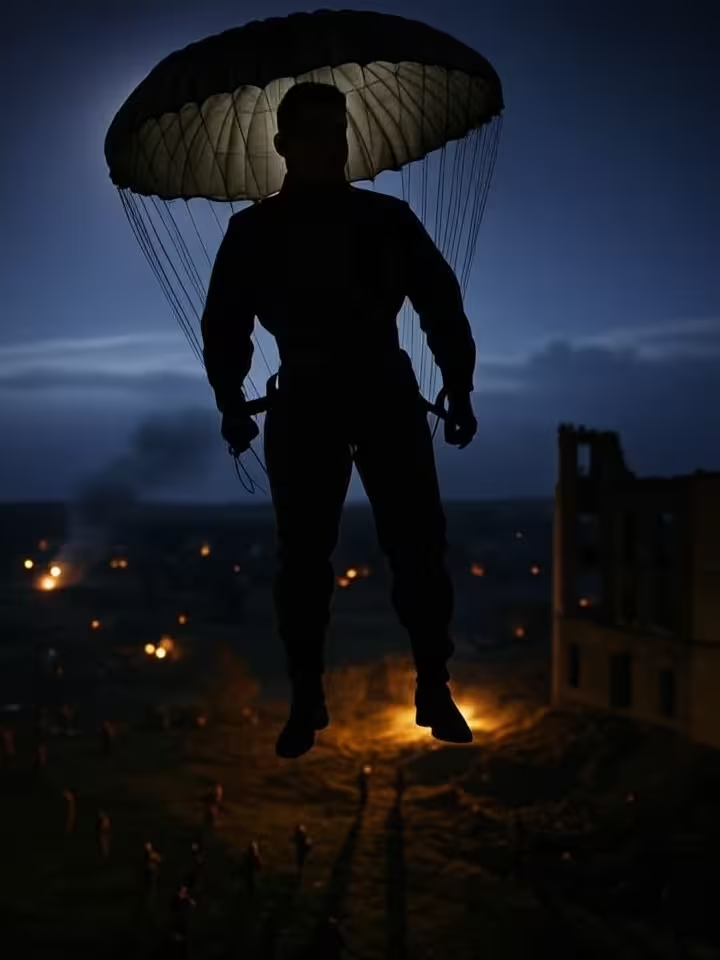
- Served Polish government-in-exile during WWII, parachuting into occupied Poland at age 56
- Initiated the first Bilderberg Conference (May 29-31, 1954) at Hotel de Bilderberg, Netherlands
- Co-founded European League for Economic Cooperation (1946), precursor to EU institutions
- Created informal transatlantic dialogue model still used by Bilderberg today
Introduction: The Man Behind Global Elite Dialogue
Jozef Retinger remains one of the 20th century’s most influential yet least-known diplomatic operators. While Prime Ministers and Presidents commanded public attention, Retinger worked behind the scenes, connecting power brokers across continents during Europe’s most turbulent decades.
Why does this matter today? In our era of digital transparency, understanding how confidential elite forums like Bilderberg originated provides crucial context for evaluating their modern role. Retinger’s founding vision—preventing catastrophic misunderstandings between Western powers—shaped how transatlantic relations evolved from 1954 onward.
In this article you’ll learn:
- Retinger’s formative years and education across European capitals
- His wartime role with Poland’s government-in-exile
- The specific circumstances that led to Bilderberg’s 1954 founding
- His broader contributions to European integration movements
- How his legacy continues influencing international dialogue
Early Life: From Partitioned Poland to Cosmopolitan Diplomat
Origins in Austro-Hungarian Krakow
Jozef Hieronim Retinger entered the world on April 17, 1888, in Krakow—then under Austro-Hungarian control following Poland’s 18th-century partitions. His father practiced law, providing young Jozef access to intellectual circles discussing Polish nationalism.
This environment shaped his worldview profoundly. Growing up in a nation erased from maps, Retinger developed an early understanding of how borders shift through diplomacy rather than warfare alone.
Academic Excellence at the Sorbonne
At just 20 years old, Retinger completed his doctorate in literature at Paris’s prestigious Sorbonne in 1908. This achievement demonstrated exceptional intellectual capacity while immersing him in France’s cosmopolitan culture.
Paris in the early 1900s served as Europe’s diplomatic crossroads. Retinger absorbed progressive ideas about international cooperation that would resurface decades later in his post-war initiatives.

Pre-WWI Political Activism
Before 1914, Retinger established connections with Polish independence advocates across Europe. He befriended novelist Joseph Conrad during time spent in London, demonstrating his ability to network across cultural boundaries.
His linguistic skills—fluency in Polish, French, English, and German—made him invaluable as a liaison. By WWI’s outbreak, Retinger was already traveling between capitals seeking Allied support for Polish sovereignty.
According to historical records from Encyclopaedia Britannica, Retinger’s pre-war diplomatic efforts focused on securing recognition for Polish independence from France and Britain, laying groundwork for the nation’s 1918 restoration.
World War II: From Exile Government to Occupied Territory
Advisor to the Polish Government-in-Exile
When Nazi Germany invaded Poland in September 1939, Retinger joined the government-in-exile established in London. He served as close advisor to Prime Minister General Władysław Sikorski, coordinating resistance efforts.
This role placed Retinger at the heart of Allied planning. He participated in discussions about post-war European reconstruction even as battles raged, demonstrating his forward-thinking approach to diplomacy.
The 1944 Parachute Mission
In April 1944, at age 56, Retinger undertook an extraordinary mission—parachuting into Nazi-occupied Poland to coordinate with underground resistance fighters. This operation demonstrated physical courage rare among diplomatic advisors.
The mission’s objective involved assessing resistance capabilities and ensuring London-based leadership maintained contact with forces inside Poland. Retinger spent weeks behind enemy lines before exfiltration.
Post-War Vision for European Unity
Following Germany’s 1945 defeat, Retinger immediately pivoted to reconstruction advocacy. He co-founded the European League for Economic Cooperation in 1946, promoting economic integration as a path to lasting peace.
This organization became a precursor to institutions like the European Coal and Steel Community (1951) and eventually the European Union. Retinger’s 1946 book “The European Continent?” outlined federalist principles that influenced post-war planners.
His network during this period included Winston Churchill, Jean Monnet, and other architects of European integration. These connections would prove crucial when organizing the first Bilderberg meeting.
Founding the Bilderberg Group: Creating Elite Dialogue
The 1952 Conversation with Prince Bernhard
By 1952, Retinger identified a dangerous communication gap between American and European elites. McCarthyism fueled anti-European sentiment in the U.S., while European intellectuals harbored anti-American views regarding Korean War policies.
Retinger approached Prince Bernhard of the Netherlands with a proposal: an annual private conference where leaders could discuss concerns candidly without press scrutiny. The Prince, internationally connected through royal networks, agreed to co-organize.
The Inaugural 1954 Conference
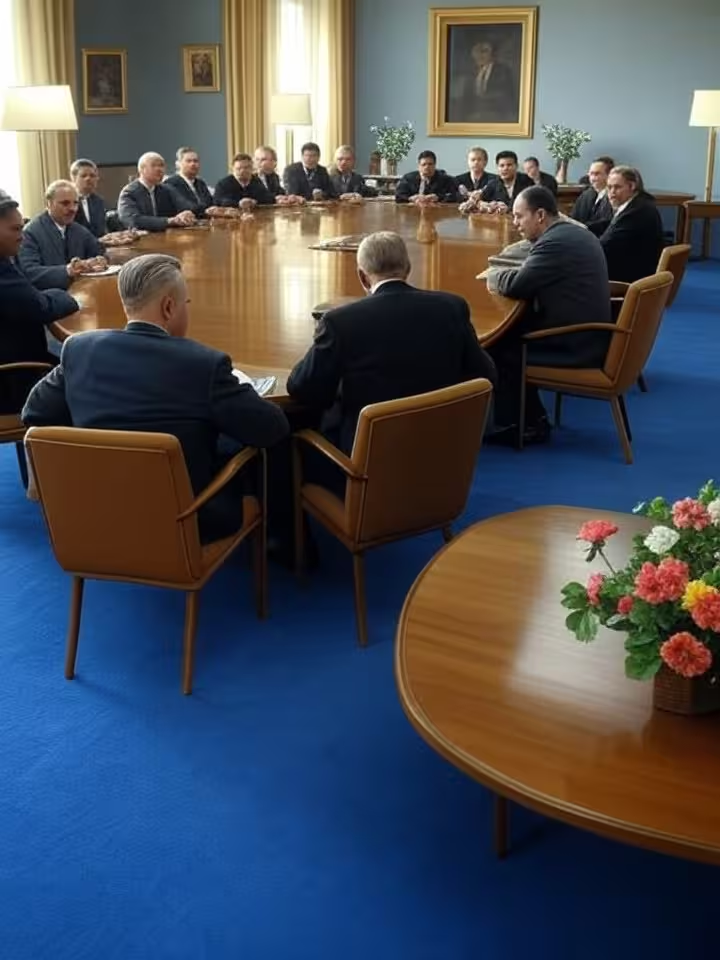
From May 29-31, 1954, approximately 50 delegates gathered at Hotel de Bilderberg in Oosterbeek, Netherlands. The inaugural Bilderberg meeting assembled politicians, business leaders, and academics for off-the-record discussions.
Retinger assembled the steering committee carefully, including Paul Rijkens (Unilever chairman) and Joseph Johnson (Carnegie Endowment president). Topics ranged from communist containment strategies to international trade liberalization.
Establishing the Chatham House Rule Framework
Retinger insisted on strict confidentiality protocols adapted from London’s Royal Institute of International Affairs. Participants could use information discussed but not attribute statements to specific individuals.
This Chatham House Rule approach enabled frank exchanges impossible in public forums. Retinger believed genuine dialogue required psychological safety from media misrepresentation.
The format proved successful enough that annual meetings continued uninterrupted through the 1950s, expanding to include Japanese and Canadian participants by decade’s end.
Broader Legacy: European Integration and Transatlantic Relations
Influence on European Institutions
Beyond Bilderberg, Retinger’s advocacy contributed to multiple foundational European structures. His European League for Economic Cooperation influenced the 1949 Council of Europe establishment and the 1951 European Coal and Steel Community formation.
He maintained correspondence with Konrad Adenauer (West German Chancellor) and Alcide De Gasperi (Italian Prime Minister), both key figures in post-war European construction. These relationships facilitated policy coordination across national boundaries.
The Informal Diplomacy Model
Retinger pioneered what scholars now term “Track II diplomacy”—unofficial dialogue channels parallel to formal government negotiations. This approach allowed ideas to circulate before political commitments became necessary.
His model influenced subsequent initiatives like the Trilateral Commission (1973) and various regional dialogue forums. The concept that elite consensus-building can precede policy implementation became standard practice.
Death and Posthumous Influence
Jozef Retinger died on June 12, 1960, in London at age 72. His health had declined through the late 1950s, limiting his active involvement in Bilderberg’s later meetings.
Prince Bernhard continued chairing the group until 1976, maintaining Retinger’s confidentiality principles and transatlantic focus. Modern Bilderberg meetings still address contemporary challenges like artificial intelligence using Retinger’s dialogue framework.
Frequently Asked Questions
Retinger created Bilderberg in response to growing anti-American sentiment in post-war Europe and anti-European views in the United States during the early 1950s. He believed private, off-the-record discussions between Western elites could prevent misunderstandings that might escalate tensions during the Cold War. The Korean War and McCarthyism had created transatlantic friction that Retinger sought to address through informal dialogue.
Retinger served as a close advisor to General Władysław Sikorski, Prime Minister of Poland’s government-in-exile based in London. His most remarkable wartime action occurred in April 1944 when, at age 56, he parachuted into Nazi-occupied Poland to coordinate with underground resistance forces. This dangerous mission demonstrated both his commitment to Polish liberation and his willingness to take personal risks for diplomatic objectives.
Retinger’s co-founding of the European League for Economic Cooperation in 1946 established his methodology for promoting integration through elite consensus-building rather than popular movements. This approach directly informed Bilderberg’s structure—bringing together influential decision-makers for confidential discussions that could shape policy without immediate public accountability. His network from European integration work provided the initial contacts for assembling Bilderberg’s first attendee list.
While some narratives suggest Retinger maintained intelligence agency connections, these claims lack substantiation in official historical records. His wartime role with Poland’s government-in-exile naturally involved liaising with Allied intelligence for resistance coordination, but no verified documentation establishes formal espionage roles beyond standard diplomatic-military cooperation during wartime. Such claims should be treated as unconfirmed speculation rather than established fact.
Retinger pioneered the “Track II diplomacy” model—informal dialogue channels parallel to official government negotiations that allow ideas to circulate before political commitments become necessary. This approach influenced subsequent initiatives like the Trilateral Commission and various regional forums. His belief that elite consensus-building can precede formal policy implementation became standard practice in international relations, making him one of the most significant yet underrecognized architects of post-war diplomatic methodology.
Key Takeaways
- Diplomatic Architect: Jozef Retinger single-handedly initiated the Bilderberg Group in 1952-1954, convincing Prince Bernhard to co-host the inaugural conference that established a new model for transatlantic elite dialogue.
- Wartime Courage: At age 56, Retinger parachuted into Nazi-occupied Poland in 1944, demonstrating personal bravery rare among diplomatic advisors while coordinating with underground resistance fighters.
- European Integration Pioneer: His co-founding of the European League for Economic Cooperation (1946) and advocacy for federalist principles influenced the creation of institutions that eventually became the European Union.
- Track II Diplomacy Innovator: Retinger established the methodology of using informal, confidential elite forums to build consensus before formal policy commitments—a model still used globally today.
- Multilingual Network Builder: Fluent in Polish, French, English, and German, Retinger connected leaders across Europe and America throughout five decades of tumultuous history, from Polish independence movements to Cold War tensions.
- Confidentiality Protocol Designer: He adapted the Chatham House Rule for Bilderberg meetings, creating the psychological safety that enabled frank exchanges impossible in public diplomatic forums.
- Enduring Institutional Impact: Though he died in 1960, Retinger’s founding principles continue shaping annual Bilderberg conferences that address contemporary challenges from artificial intelligence to geopolitical realignment.
Sources and Further Reading
- Encyclopaedia Britannica – Biographical information on Jozef Retinger
- The Guardian: “Bilderberg: The ultimate conspiracy theory” (2004) – Historical context on founding
- European University Institute Historical Archives – Documents on post-war European integration movements
- BBC News historical profiles and analysis of Bilderberg origins